

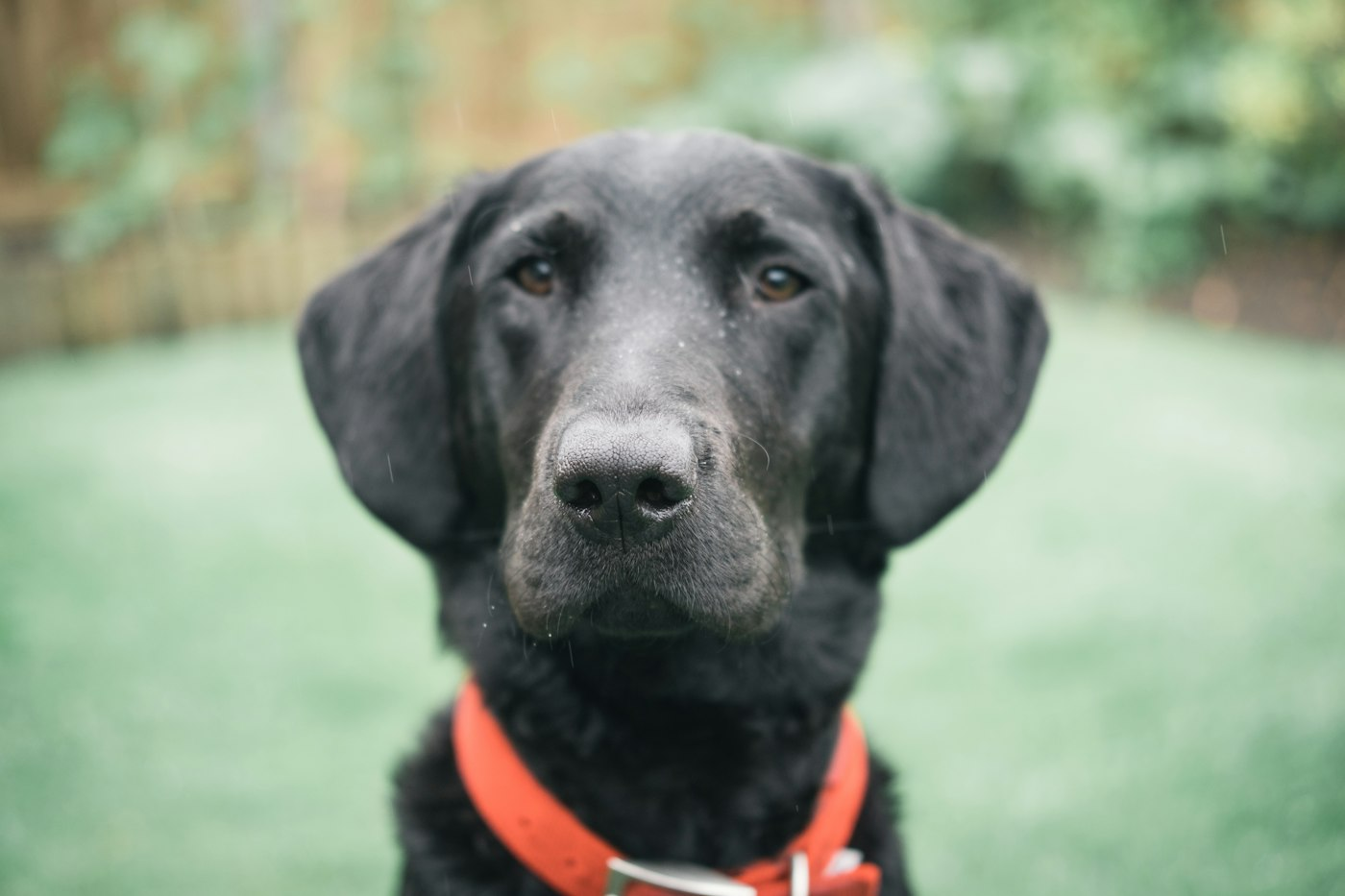
A dog collar goes everywhere your dog goes: lakes, mud, dog parks, food bowls. Over time it collects dirt, oil, hair and odor. A dirty collar is not just unpleasant to touch. It can irritate the skin underneath and wear out faster. Early fall, after a season of outdoor fun, is a natural time to give it a proper clean.
Always check the manufacturer’s care instructions first. The guidance below is general, and specific materials, coatings and trims may need different handling.
Before you start
- Remove ID tags, QR tags and any charms so they do not scratch or get lost.
- Look over the collar for frayed stitching, cracked leather, bent buckles or worn reflective trim.
- Have a backup collar with ID ready, so your dog is never without identification while the collar dries.
Nylon and webbing collars
Nylon and similar synthetic webbing collars are usually the easiest to clean.
- Soak in warm water with a small amount of mild, unscented soap or dog-safe shampoo.
- Scrub gently with a soft brush, paying attention to the inside surface and around the hardware.
- Rinse thoroughly so no soap residue stays against your dog’s skin.
- Air dry completely before putting the collar back on.
Some nylon collars can go in the washing machine inside a mesh bag, but hardware can bang around and coatings can wear. Hand washing is the gentler choice when in doubt.
Leather collars
Leather needs a lighter touch. Soaking can cause it to stiffen, crack or lose its shape.
- Wipe with a damp cloth to remove surface dirt.
- Use a cleaner made for leather, following its instructions.
- Let it dry naturally, away from direct heat such as heaters or hair dryers.
- Condition with a leather conditioner afterward to keep it supple.
If a leather collar has been soaked in a pond or rain, pat it dry and let it dry slowly at room temperature.
Buckles, rings and hardware
Metal hardware can collect grime in its crevices. An old toothbrush helps. Dry hardware completely to reduce the chance of rust. Check that buckles click securely, that the D-ring is not bent or cracked and that any quick-release clip closes firmly. If hardware shows damage, replace the collar. A failed buckle on a busy street is not worth the risk.
Do not forget the tags
Wash ID tags with warm soapy water and a soft cloth. If you use a QR ID tag, make sure the code is clean and not scratched, then scan it with your phone to confirm it still opens your dog’s profile and that the contact details are current. Put tags back on the clean, dry collar and check fit: you should be able to slide two fingers under it comfortably.
A clean collar every few weeks during muddy season, and a deeper clean at each change of season, keeps it comfortable and working the way it should.












