

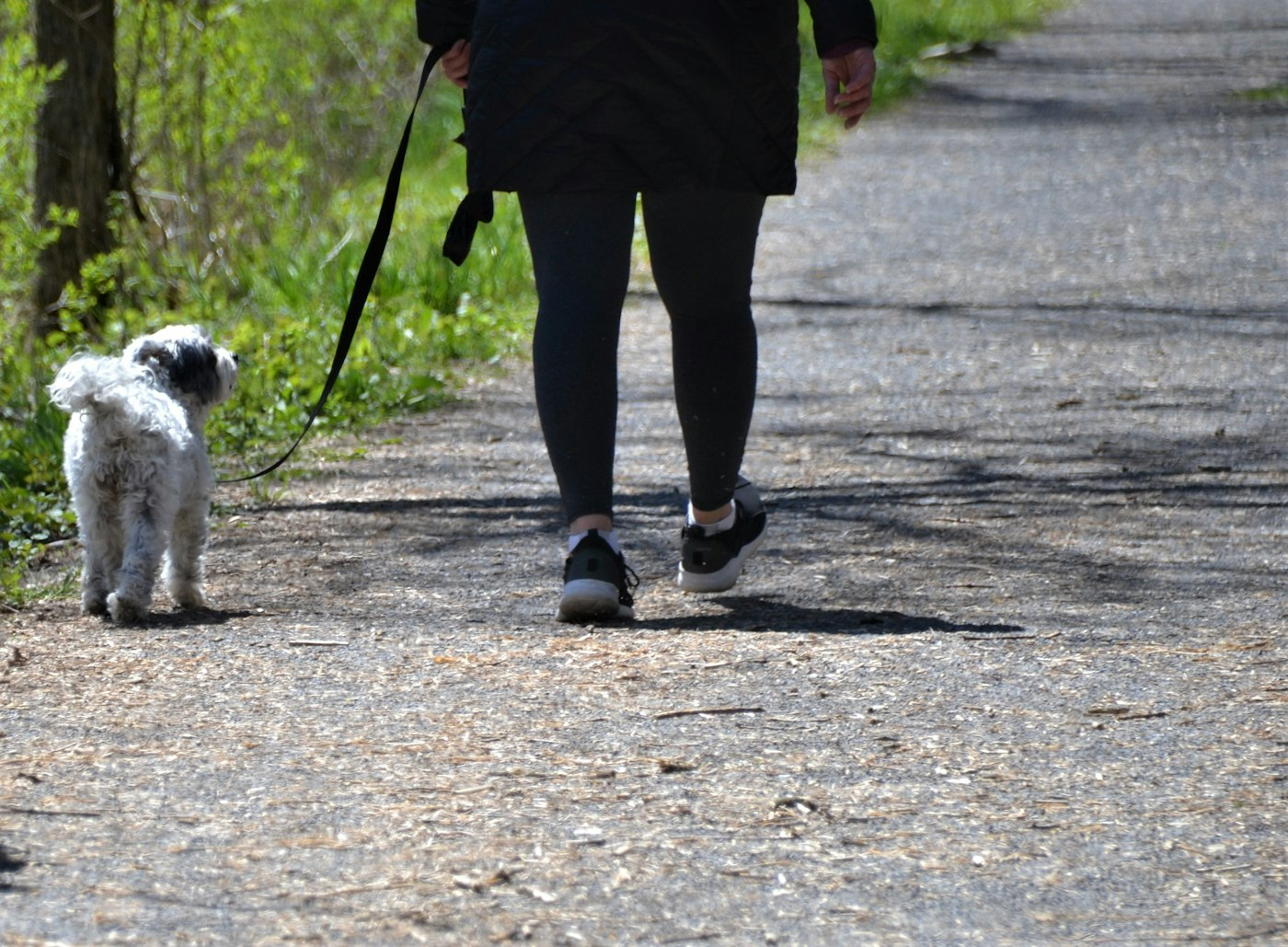
A leash seems simple until you start shopping. Lengths, widths, materials and hardware vary widely, and each choice changes how a walk feels. The best leash for your dog depends on its size and strength, how it walks and where you spend time together. Here is a practical look at the main options.
Length
A leash around six feet long is a common all-purpose choice. It gives a dog room to sniff and move while keeping it close enough for sidewalks and neighborhood walks. Shorter leashes, around four feet, offer more control in crowded places, like busy streets, vet waiting rooms and events. Long lines, often fifteen to thirty feet or more, are useful for practicing recall in open spaces or giving a dog more freedom on a quiet trail, but they take practice to handle without tangling.
Before using any long leash in a park or public space, check local leash rules, which often specify a maximum length.
Materials
- Nylon is lightweight, affordable and available in many colors. It can cause rope burn if it slides quickly through your hand.
- Leather softens with use and is comfortable to hold, but it needs some care and should be kept from staying wet.
- Biothane and other coated materials resist water, mud and odor and wipe clean easily, which makes them popular for dogs who love puddles.
- Rope leashes are strong and comfortable to grip, and they often feel good for larger dogs.
Width matters too. A thicker leash is generally better for a strong dog, while a narrower, lighter one suits a small dog who might feel weighed down by heavy gear.
Handles and hardware
Look closely at the clip that attaches to the collar or harness. It should be sturdy, close smoothly and feel secure. Some leashes include a padded handle, which can be easier on the hands during long walks. Others have a second traffic handle near the clip for quick control. Hands-free leashes that wrap around the waist can be handy for jogging or carrying coffee, though they are best for dogs with reliable leash manners, since a sudden lunge can pull you off balance.
A note on retractable leashes
Retractable leashes let a dog roam farther, but they also have drawbacks. The thin cord can cause injuries if it wraps around fingers or legs, the handle can be dropped and clatter behind a startled dog, and it can be hard to bring a dog back quickly in an emergency. Many trainers recommend a standard leash or a long line instead, especially for dogs still learning leash skills.
Match the leash to the walk
Many households end up with two or three leashes for different situations: a standard leash for daily walks, a short one for busy places and a long line for training. Whatever you choose, inspect it regularly for fraying, cracking or weak hardware, and pair it with a well-fitted collar or harness and a current ID tag.












