

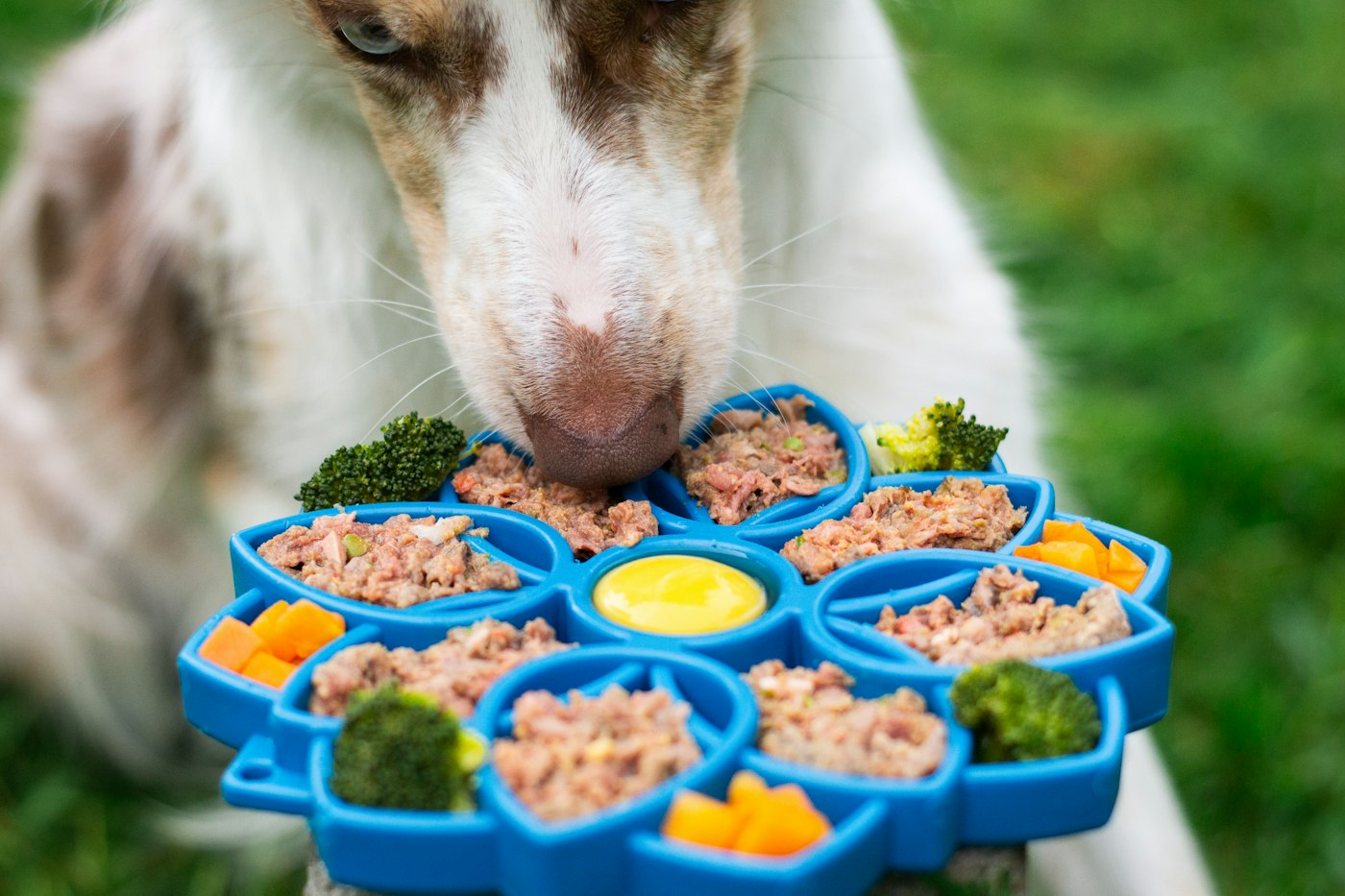
When the family heads back to work and school, many dogs face longer stretches with nothing to do. Enrichment gives a dog an outlet for natural behaviors like sniffing, chewing, licking and problem-solving. Used well, it can help a dog settle into the quiet hours instead of inventing its own entertainment. The trick is choosing activities that are safe without supervision.
Food puzzles and feeders
Turning a meal into an activity is one of the easiest forms of enrichment. Instead of a bowl, try:
- A food-dispensing ball or toy that releases kibble as it rolls
- A stuffed rubber toy filled with your dog’s regular food, softened with water and frozen overnight for a longer challenge
- A snuffle mat, which hides kibble in fabric strips for your dog to sniff out
- A lick mat spread with a vet-approved topping
Start with easy puzzles so your dog succeeds quickly, then gradually increase the difficulty. Watch your dog use any new puzzle several times while you are home before leaving it alone with one. Some dogs try to chew the toy itself instead of working on it, and those dogs may need sturdier options.
Safe chewing
Chewing is calming for many dogs. Choose chews that match your dog’s size and chewing strength, and ask your veterinarian which types are appropriate. Avoid items small enough to swallow whole, ones that splinter and very hard items that can damage teeth. Rawhide and other edible chews can be a concern for some dogs if large pieces break off. When in doubt, save those for supervised time.
Rotate toys to keep things fresh
Dogs, like people, get bored with the same things. Keep a small collection of toys and puzzles and rotate them every few days, putting some away while bringing others back. A toy that has been out of sight for a week can feel new again. Rotation also gives you a chance to inspect toys and throw out anything damaged before it becomes a hazard.
Set up the space
Enrichment works best in a safe, comfortable area. Many owners use a crate the dog already enjoys, a gated room or a dog-proofed kitchen. Remove anything that could be chewed and swallowed, secure electrical cords and keep trash out of reach. Fresh water should always be available. Take off collars with dangling tags if your dog will be crated, and put the collar back on before walks.
Some dogs like a view of the yard, while others get worked up barking at everything that passes. If window watching makes your dog tense, block the view with frosted film or close the blinds.
Enrichment before and after
The hours you are home matter just as much. A morning walk that includes plenty of sniffing, a short training session or a game of tug before you leave can help your dog rest while you are gone. After you come home, another walk and some quality time help balance the day. If your dog seems distressed rather than bored while alone, talk to your veterinarian, since more toys alone will not resolve true separation anxiety.












