

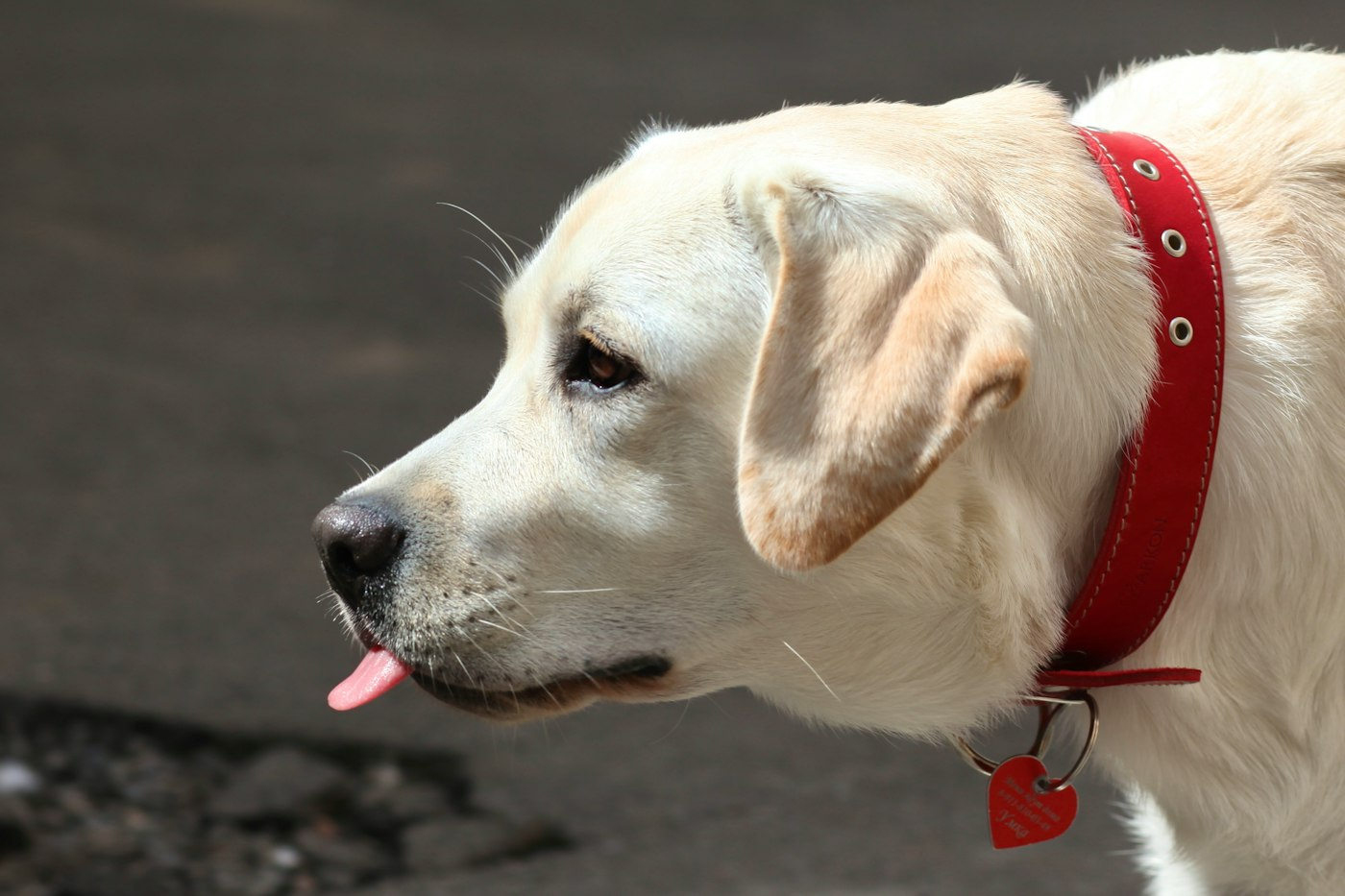
A collar does several important jobs. It holds your dog’s ID tag, gives you something to grab in a pinch and, for many dogs, attaches to a leash on everyday walks. None of that works well if the collar does not fit. Checking fit is quick, and it is worth doing more often than most people think.
The two-finger rule
The most common guideline is simple. With the collar buckled, you should be able to slide two fingers flat between the collar and your dog’s neck. If you cannot fit two fingers, the collar is likely too tight. If you can fit your whole hand or the collar slides easily over your dog’s head, it is too loose.
For very small dogs, one finger may be a better guide. For large dogs with thick necks, two fingers still works, but pay attention to how the collar sits once your dog moves around.
Where the collar should sit
A flat collar usually sits comfortably at the base of the neck, a bit above the shoulders. It should not ride up right behind the ears, where it can feel restrictive, or slide down onto the shoulders, where it can rub. Breeds with narrow heads, such as Greyhounds and Whippets, can slip out of a standard flat collar more easily, which is why many owners of sighthounds use a martingale-style collar designed for their shape. Ask a trainer or your veterinarian if you are unsure which style is right.
Signs the fit needs adjusting
- Hair loss, redness or rubbing marks under the collar
- A collar that rotates freely so the buckle ends up under the chin
- Your dog scratching at its neck after the collar goes on
- Difficulty getting two fingers underneath after a growth spurt or weight change
- Fraying edges, cracked buckles or a stretched-out slot or hole
How often to check
Puppies can outgrow a collar remarkably fast, so check fit every week or two while they are growing. Adult dogs need checks too, especially after grooming, a change in weight or a season in a heavier coat. Doodles and other fluffy breeds can feel very different before and after a haircut, and a collar that fit perfectly over a full coat may be loose afterward.
Collars and safety
Even a well-fitted collar can catch on things. Many trainers recommend removing collars during unsupervised crate time and during rough play between dogs, where a jaw or paw can get caught. Check your collar’s hardware regularly and replace anything worn. Buckles, D-rings and stitching take a lot of daily stress, and a small crack or loose thread is far easier to deal with at home than on a busy sidewalk. Keep the ID tag or QR tag attached securely with a sturdy ring, and make sure the information on it is current. A good fit, a little routine attention and clear identification together make an everyday collar both comfortable and useful.












