

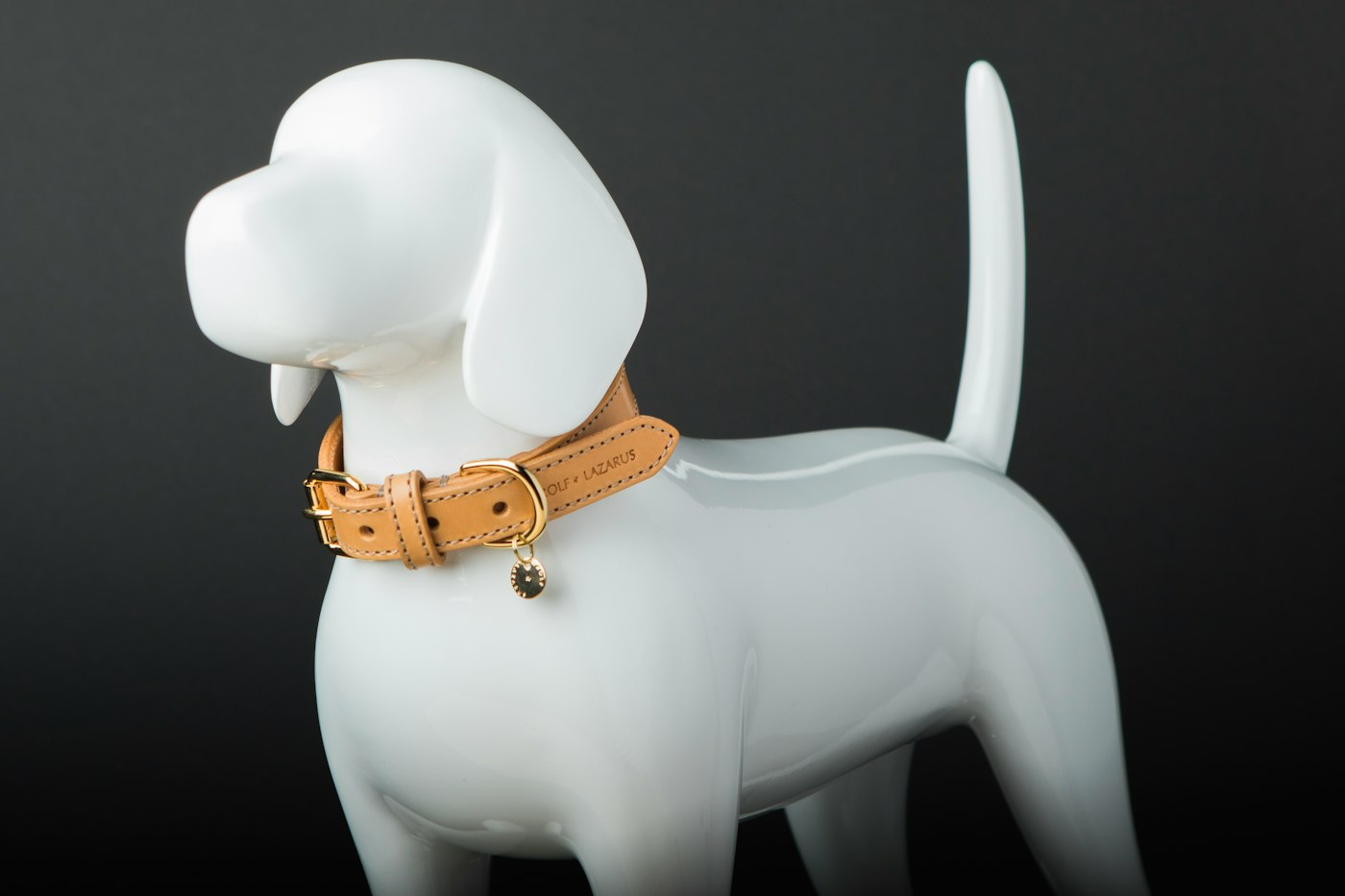
Collars come in a wide range of widths, materials and hardware styles, and it can be hard to know which combination makes sense. Fit at the neck is only part of the story. Width and weight affect comfort, durability and how a collar sits on your dog, and the best choice often changes with size, coat and lifestyle.
Why width matters
A wider collar spreads pressure across more of the neck, which can be more comfortable for a large, strong dog that occasionally pulls. It is also generally more durable. A narrow collar is lighter and less bulky, which suits small dogs who might feel weighed down by heavy gear.
As a general guide:
- Toy and very small dogs usually do well in narrow, lightweight collars.
- Small to medium dogs often fit comfortably in a moderate width.
- Large and giant dogs typically need wider, sturdier collars with strong hardware.
Many collar makers publish their own recommendations by neck size, which can be a helpful starting point. Your dog’s comfort and how the collar sits matter most.
Material choices
- Nylon and polyester webbing are lightweight, affordable and easy to wash. They are a good everyday choice for many dogs.
- Leather is durable and comfortable once broken in. Rolled leather collars can reduce matting in long or curly coats. Leather should be dried thoroughly if it gets wet.
- Coated webbing, such as biothane, resists water, mud and odor and wipes clean easily, which makes it popular for swimmers and outdoor dogs.
- Padded collars add a soft lining that can be comfortable for dogs with sensitive skin or short coats.
Consider your dog’s coat too. A rough edge can create friction mats in a Doodle or Poodle coat, while a dog with a thin coat may be more prone to rubbing.
Hardware and buckles
Look closely at the buckle and the D-ring where you attach the leash and the ID tag. Metal buckles are typically very secure and are often recommended for large or strong dogs. Quick-release plastic buckles are convenient and adjustable, and many are sturdy enough for small and medium dogs. Whatever the style, check that the buckle closes firmly and that the D-ring is welded or otherwise strong enough for your dog’s size.
Special collar styles
Some dogs benefit from specific designs. Martingale collars tighten slightly when a dog pulls back, which helps prevent slipping out, and are often used for sighthounds with narrow heads. Breakaway collars release under pressure and are designed for dogs who spend time unsupervised, though they should not be used for leash walking. A trainer or veterinarian can help you decide whether a special style suits your dog.
Putting it together
Choose a collar that fits correctly, matches your dog’s size and coat and is built well enough for daily life. Attach a clear ID tag or QR tag with a secure split ring, and check the whole collar regularly for wear. A good collar should be something your dog hardly notices and you never have to worry about.












