

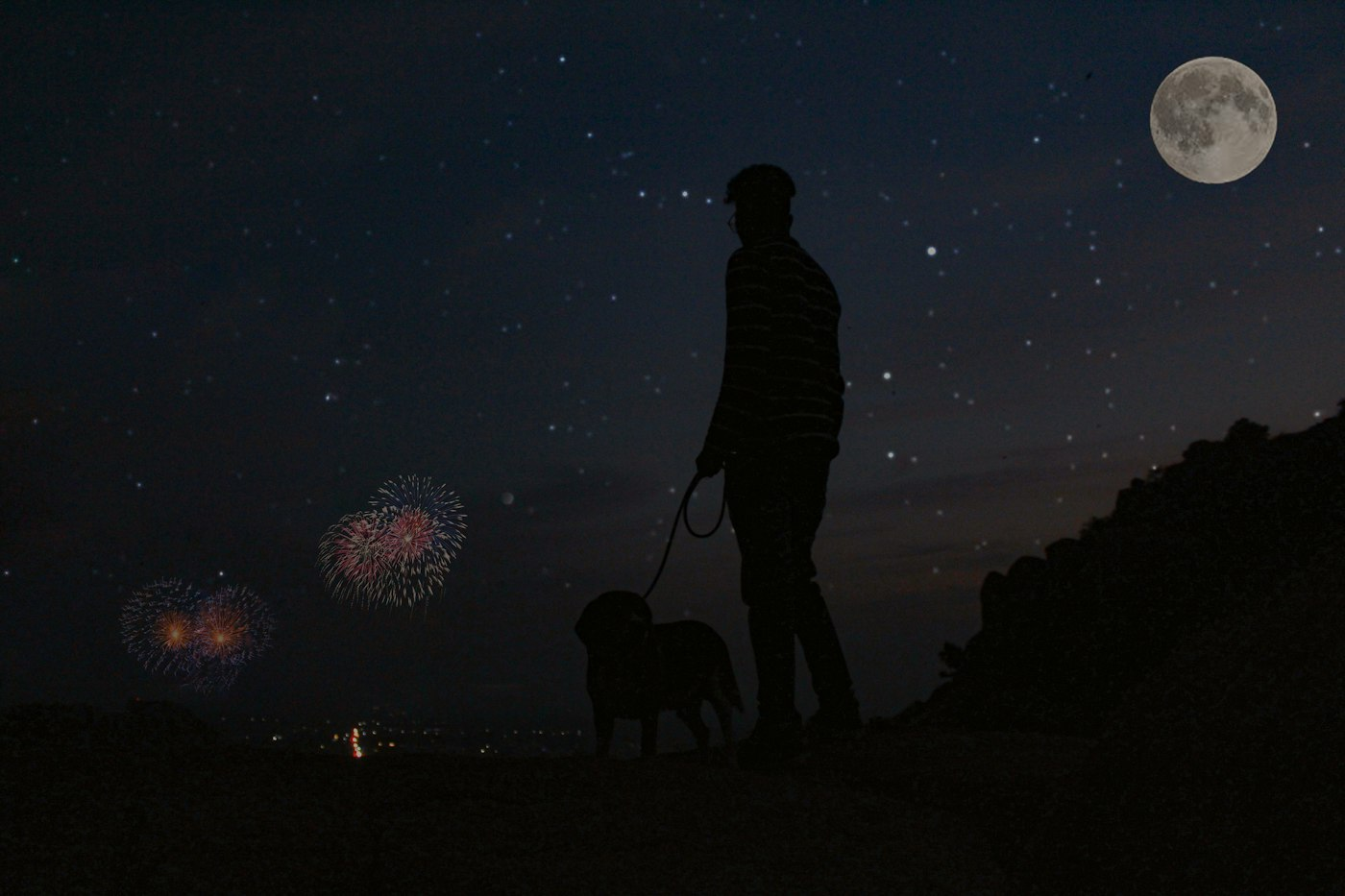
Animal shelters and rescue groups often report that the days around the Fourth of July are among the busiest of the year for lost dogs. It makes sense. A dog who is terrified of fireworks may slip through a door left open for guests, dig under a fence or pull out of a collar on a walk. A frightened dog may run far and fast before stopping.
Prevention comes first, but identification is the safety net. Here is how to make sure your dog has the best chance of getting home quickly.
Prevention is still the first line
- Keep your dog indoors during fireworks, in a secure room.
- Use a leash for every bathroom break, even in a fenced yard, during fireworks season.
- Check that your dog’s collar or harness is snug enough that they cannot back out of it.
- Ask guests to keep doors and gates closed, and consider putting your dog in a separate room when guests arrive and leave.
- Do not bring dogs to fireworks shows or loud gatherings.
The ID tag: fastest way home
Many lost dogs are found by neighbors, not by shelters. The quickest way for a neighbor to reach you is a tag on your dog’s collar with a phone number they can call right away.
Keep the information simple and current. Your cell phone number is the most important detail. Some owners add a second number or a note such as needs medication. A QR tag can add more: when someone scans it with a phone camera, it can bring up a profile with your contact details, and you can usually update it whenever your information changes.
Make sure the tag stays on. Check split rings and attachments for wear, and choose a collar that fits well and is comfortable enough for your dog to wear all day.
The microchip: a permanent backup
A microchip is a tiny device placed under the skin that stores an identification number. A shelter or veterinary clinic can scan it and look up the registration. It cannot fall off, which makes it an important backup to a tag.
A chip is only as useful as its registration. Make sure your chip is registered and your contact details are current. Your veterinarian can scan your dog to confirm the chip is working, and you can check with the chip’s registry to review your information.
If your dog does go missing
Act quickly. Search your neighborhood, and check hiding spots near home, since frightened dogs often hide nearby. Call local shelters and animal control, and visit in person if you can. Post a clear photo and description on neighborhood groups and lost pet boards. Leave an item with your scent, such as a worn shirt, near your door.
A dog wearing current ID gives every person who finds them a way to reach you, whether that is a neighbor, a passing driver or a shelter worker. A few minutes spent checking your dog’s collar, tag and chip before the holiday can make that reunion much faster.












