

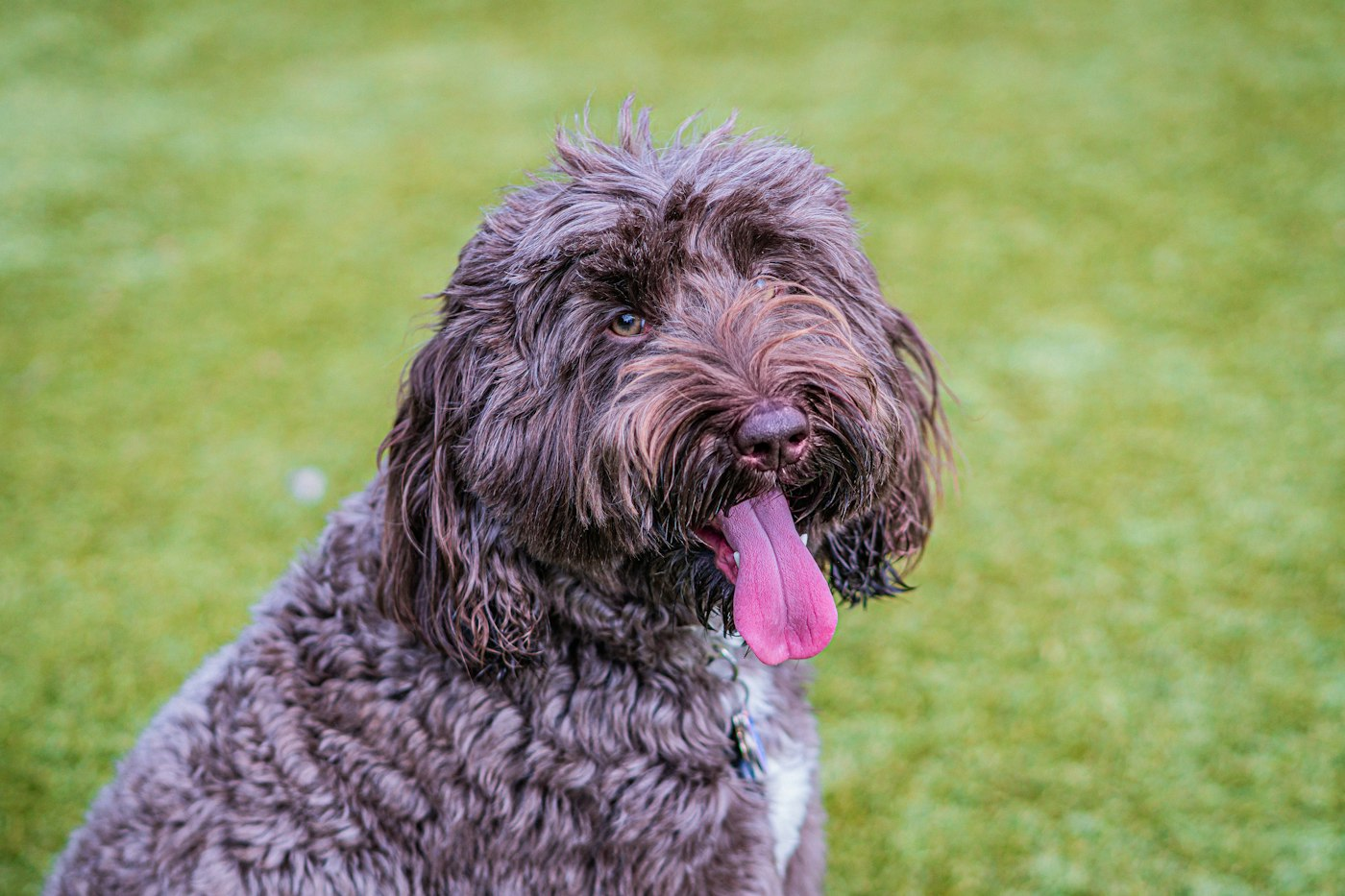
Doodles were developed in part for their curly, low-shedding coats, and those coats are a big part of their appeal. In summer, though, curly coats come with challenges. Humidity, swims, sprinklers and damp grass can leave fur wet for hours, and wet curls tangle quickly. Moisture trapped against the skin can also lead to irritation.
A simple summer routine keeps the coat comfortable and makes grooming appointments easier.
Why curly coats mat faster in summer
Curly and wavy coats hold onto shed hairs rather than letting them fall out. Those hairs wrap around one another, especially when wet, and form tangles that tighten into mats. Friction makes it worse, which is why mats often form under collars and harnesses, behind the ears, in the armpits and on the legs.
Water speeds up the process. When a curly coat gets wet and is left to air dry, the curls can shrink and tighten around tangles.
Dry thoroughly after every soak
After a swim, a bath or a romp through the sprinklers:
- Rinse off chlorine, salt water or lake water with fresh water.
- Squeeze out excess water and blot with an absorbent towel rather than rubbing, which can create tangles.
- Use a pet dryer or a human dryer on a cool or low setting if your dog tolerates it, keeping it moving.
- Pay extra attention to the armpits, belly, ears, between the toes and under the collar.
- Let your dog finish drying in a cool, air-conditioned room rather than outside in humid air.
Take off wet collars and harnesses and let them dry separately. Wet gear sitting against damp fur is a common cause of mats and skin irritation.
Brush to the skin
Surface brushing can make a coat look fluffy while mats hide underneath. Use a slicker brush to work through the coat in small sections, then follow with a metal comb. If the comb glides all the way to the skin, that section is done. If it catches, gently work the tangle loose, holding the hair near the skin to avoid pulling.
Short, frequent sessions are easier on both of you than a long struggle once a week. Reward your dog with treats and keep the mood positive. If you find tight mats close to the skin, ask your groomer to handle them.
Check the skin and ears
While you brush, look at the skin. Redness, moist patches, a sour smell, flaking or areas your dog keeps licking can signal irritation that should be checked by your veterinarian. Ears deserve attention too, since many doodles have floppy, furry ears that hold moisture. Head shaking, scratching, odor or discharge are reasons to call your vet.
A moderate summer trim, discussed with your groomer, can make this whole routine faster. The goal is a coat you can keep brushed and dry, so your doodle stays comfortable through the muggiest days.












