

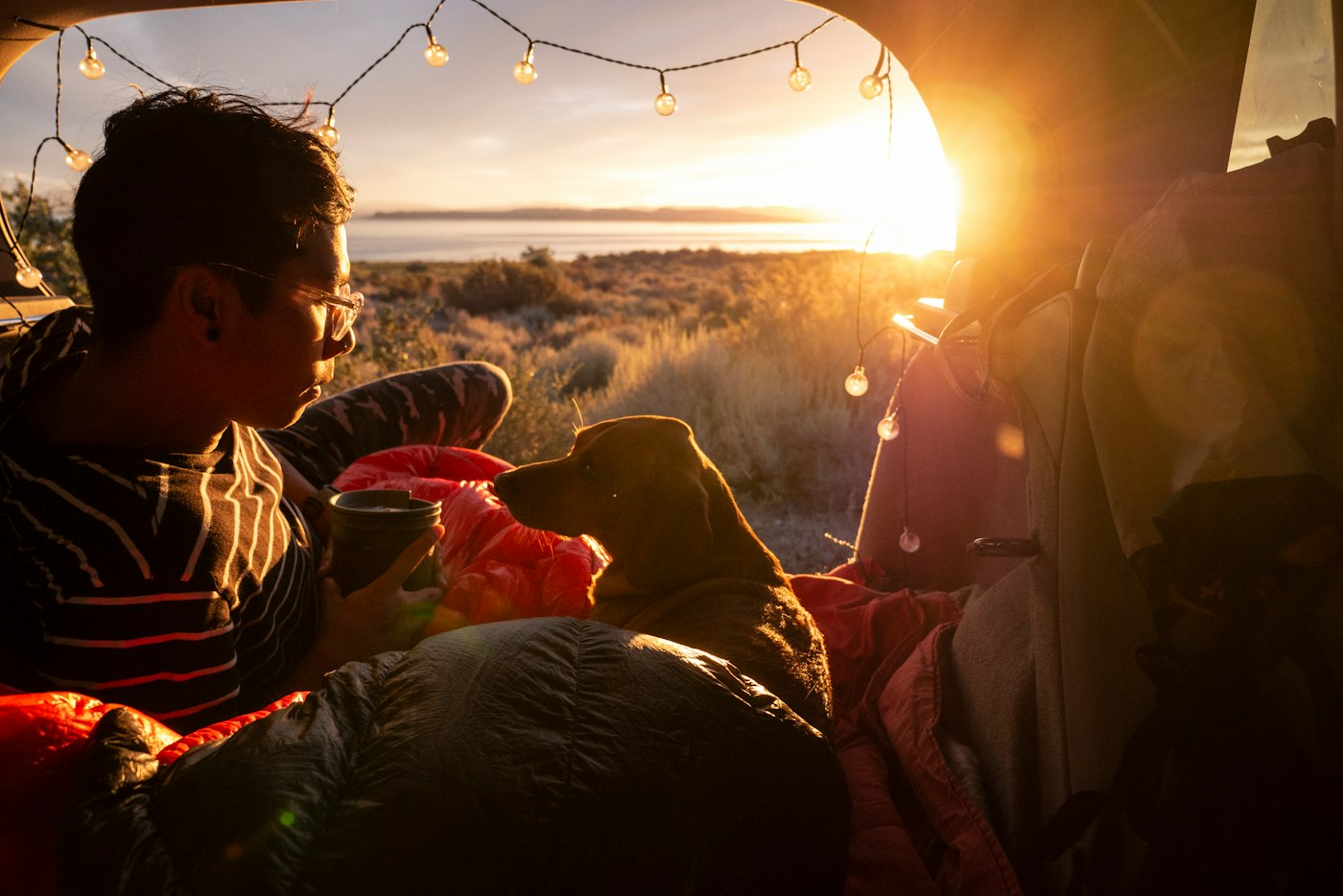
A camping trip can be a wonderful adventure for a dog: new smells, long walks and the whole family close by around the clock. It can also be overwhelming if you arrive without the basics. Packing with your dog in mind helps the trip go smoothly for everyone.
Before you pack, confirm that your campground or park allows dogs, and read its pet rules. Many parks require leashes at all times and limit where dogs can go. For national parks, the official site at nps.gov lists pet rules for each park.
Food and water
- Your dog’s regular food, measured into daily portions, plus a little extra in case the trip runs long.
- Plenty of drinking water, or a reliable plan to get safe water. Do not rely on lakes and streams for your dog’s drinking water.
- Food and water bowls, including a collapsible one for hikes.
- A sealed, critter-resistant container for food storage. Follow campground rules about storing food, especially in bear country.
- Treats for rewarding calm behavior.
Comfort and shelter
- A familiar bed, blanket or mat, which helps your dog settle in a new place.
- A raised cot or sleeping pad to keep your dog off hot or damp ground.
- A shade canopy or tarp for daytime rest.
- A crate or travel kennel, if your dog is crate trained.
- Towels for drying off after swims, rain or muddy walks.
- A cooling mat or vest for hot afternoons.
Leashes, tethers and ID
- A standard leash for walks and a long line for supervised exploring where permitted.
- A tie-out or tether designed for dogs, with a secure stake. Never leave a tethered dog unsupervised.
- A well-fitting collar or harness with an ID tag that includes your cell phone number. A QR tag lets you keep your contact details up to date from your phone.
- A light-up or reflective collar or clip-on light for nighttime bathroom trips.
- Make sure your dog’s microchip registration is current before you leave.
Health and safety
- A pet first aid kit, and the knowledge to use it. Ask your veterinarian what to include.
- Any medications your dog takes, plus parasite prevention recommended by your vet.
- A tick removal tool and a brush for after-hike checks.
- A copy of vaccination records, which some campgrounds request.
- The name and location of the nearest emergency animal hospital.
- Plenty of waste bags. Pack out everything.
It also helps to do a short trial run before a longer trip. A single night at a nearby campground, or even an evening in the backyard with the tent set up, shows you how your dog handles the new routine and what you might have forgotten. Finally, pack patience. The first night at a campsite can be exciting for a dog, with new sounds and smells. A quiet evening routine, a familiar bed and your company nearby will help them settle in.












