

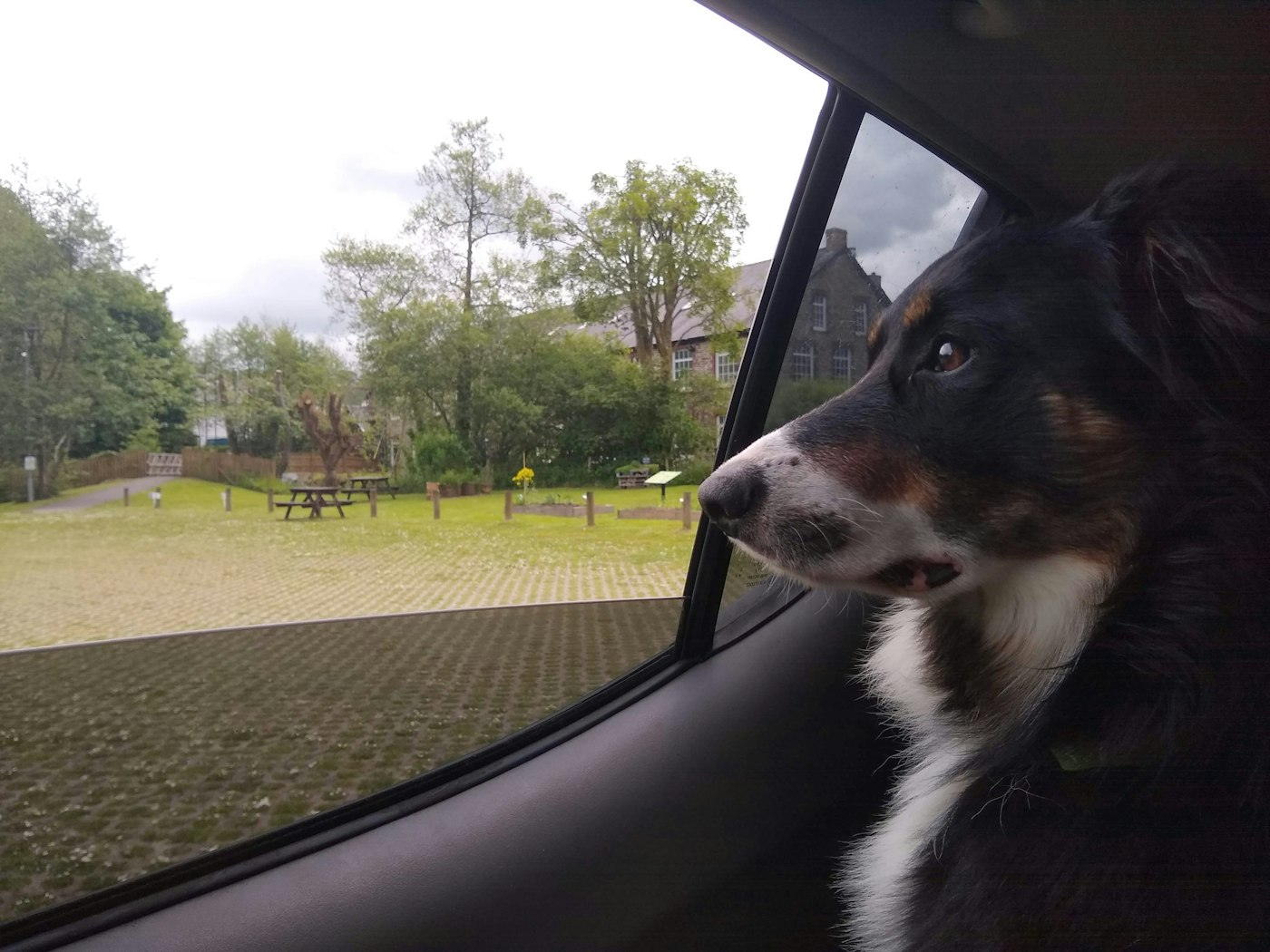
Most dog owners have heard the warning, yet it bears repeating every summer: a parked car is not a safe place for a dog on a warm day. Not for a quick stop, not in the shade and not with the windows down a few inches. Understanding why can make it easier to stick to the rule.
A car works like a greenhouse
Sunlight passes through a car’s windows and heats the seats, dashboard and other surfaces inside. Those surfaces release heat into the air, and the closed cabin traps it. The interior temperature can climb far above the outdoor temperature, and much of that increase happens in the first several minutes.
This happens even on days that feel pleasant. A mild, sunny afternoon can still produce a dangerously hot car. Cracking the windows makes little difference, and shade moves as the sun moves.
Why dogs are especially vulnerable
Dogs cool themselves mostly by panting, and panting becomes less effective as the surrounding air gets hotter and more humid. A dog trapped in a hot car has no way to escape the heat, and the stress of being left can increase panting and body temperature even more.
Puppies, older dogs, flat-faced breeds, overweight dogs and dogs with health conditions face even greater risk, but no dog is immune. Running the engine with the air conditioning on is not a reliable solution either, since cars can stall or systems can fail.
Planning errands around your dog
The simplest solution is to leave your dog at home in a cool space when you have stops to make. When your dog is coming along:
- Choose dog-friendly destinations where your dog can come inside with you.
- Use drive-through windows, curbside pickup or delivery when available.
- Bring another adult who can stay outside in the shade with your dog.
- Plan routes so your dog stays home for the stops where they cannot join you.
Some people keep a simple reminder in the car, such as a leash on the passenger seat, to make it impossible to forget a quiet dog in the back.
If you see a dog in a hot car
If you come across a dog alone in a parked car on a warm day, note the car’s details and location. Ask nearby businesses to page the owner. If the dog appears to be in distress, contact local animal control or emergency services right away; they can tell you what to do.
Laws about intervening vary by state and city, so let the authorities guide you. Your call may be what gets help there in time.
And when your own dog has been in a warm car, even briefly, watch them closely afterward for heavy panting, weakness or other signs of overheating, and call your veterinarian if you are concerned.












