

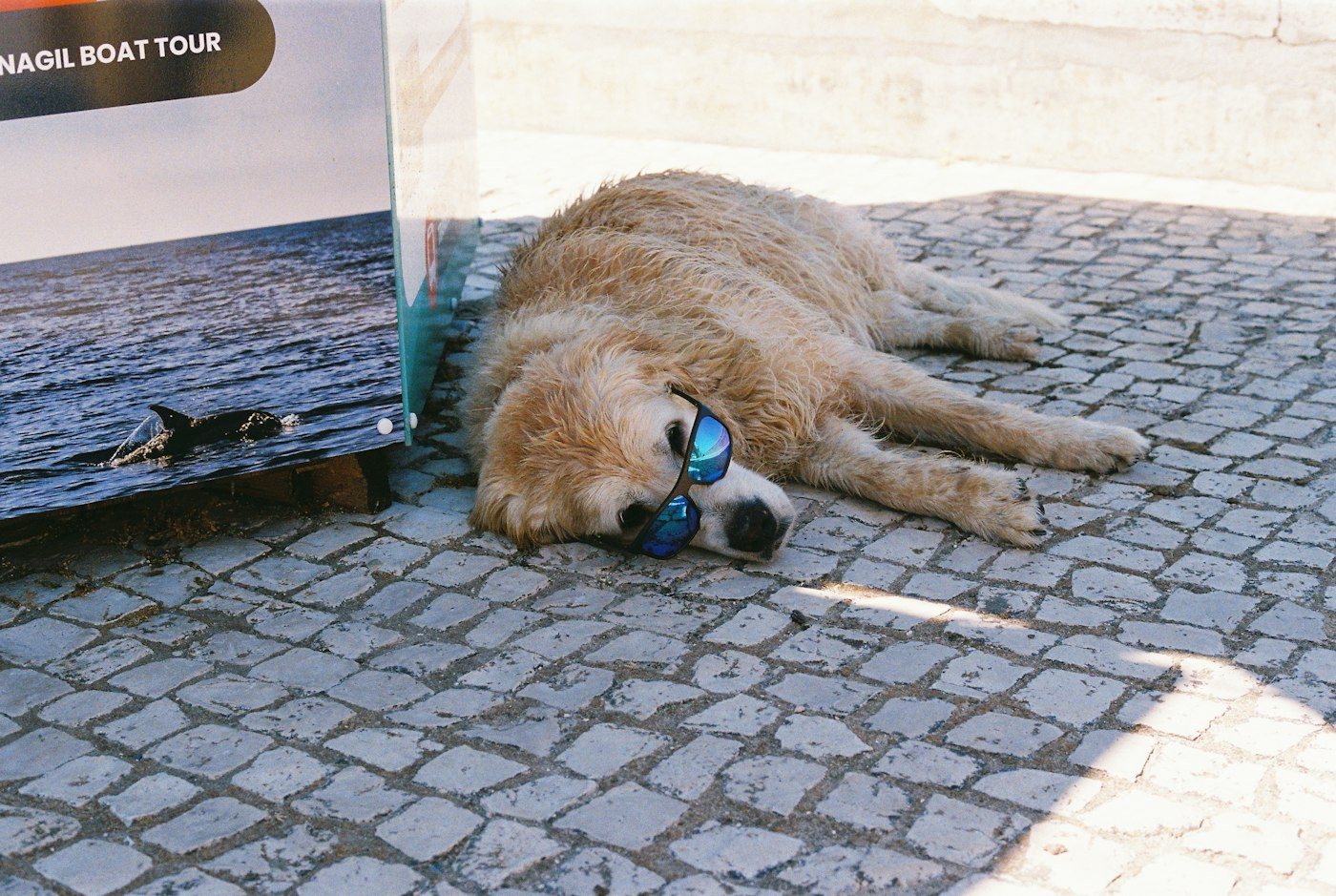
It surprises some owners to learn that dogs can get sunburned. Fur offers a lot of protection, but not every part of a dog is covered equally, and some dogs have very little natural shielding. If your dog loves lying in the sun, the topic is worth a conversation with your veterinarian.
Which dogs and which areas are vulnerable
Dogs with white or light-colored coats, pink skin, thin or very short fur, or a fresh close clip tend to be more vulnerable. Some dogs also have medical conditions or hair loss that leave skin exposed.
On almost any dog, the areas with the least fur get the most exposure:
- The bridge of the nose and the nose itself, especially if it is pink.
- The tips of the ears.
- The belly and groin, which are exposed when a dog sunbathes on its back.
- Areas around the eyes and lips.
Why not just use your own sunscreen
Many human sunscreens contain ingredients that are not intended to be swallowed, and dogs lick their noses and fur constantly. Zinc oxide, a common ingredient in some sunscreens, can be harmful to dogs if ingested. Some other sunscreen ingredients are also considered a concern for pets.
Because of this, it is best not to grab whatever is in your beach bag. Ask your veterinarian whether sun protection is a good idea for your dog and, if so, which product they recommend and how to apply it.
Questions to ask at your next visit
- Is my dog’s skin, coat color or haircut likely to burn?
- Is there a product you recommend that is formulated for dogs?
- Where should I apply it, and how often?
- What should I do if my dog licks it off or swallows some?
- Are there any spots on my dog’s skin you would like me to watch?
Shade is still the best protection
Whatever your vet recommends, shade and timing do most of the work. Limit long stretches in direct sun during the middle of the day. Bring a shade canopy to the beach or the ballfield. Choose a moderate summer haircut rather than a very close shave for coated dogs.
Lightweight clothing designed for sun protection can help some short-coated or thin-skinned dogs, as long as it fits well and does not cause overheating. Try it in short sessions and watch how your dog responds.
If your dog likes to sunbathe on the deck or by a sunny window, offer an appealing shaded alternative nearby, such as a cooling mat or a raised cot under an umbrella. Many dogs will choose the comfortable spot if it is close to where the family is. Finally, check your dog’s skin regularly. Redness, flaking or sores on sun-exposed areas, or any new lump or spot that changes, are reasons to call your veterinarian.












