

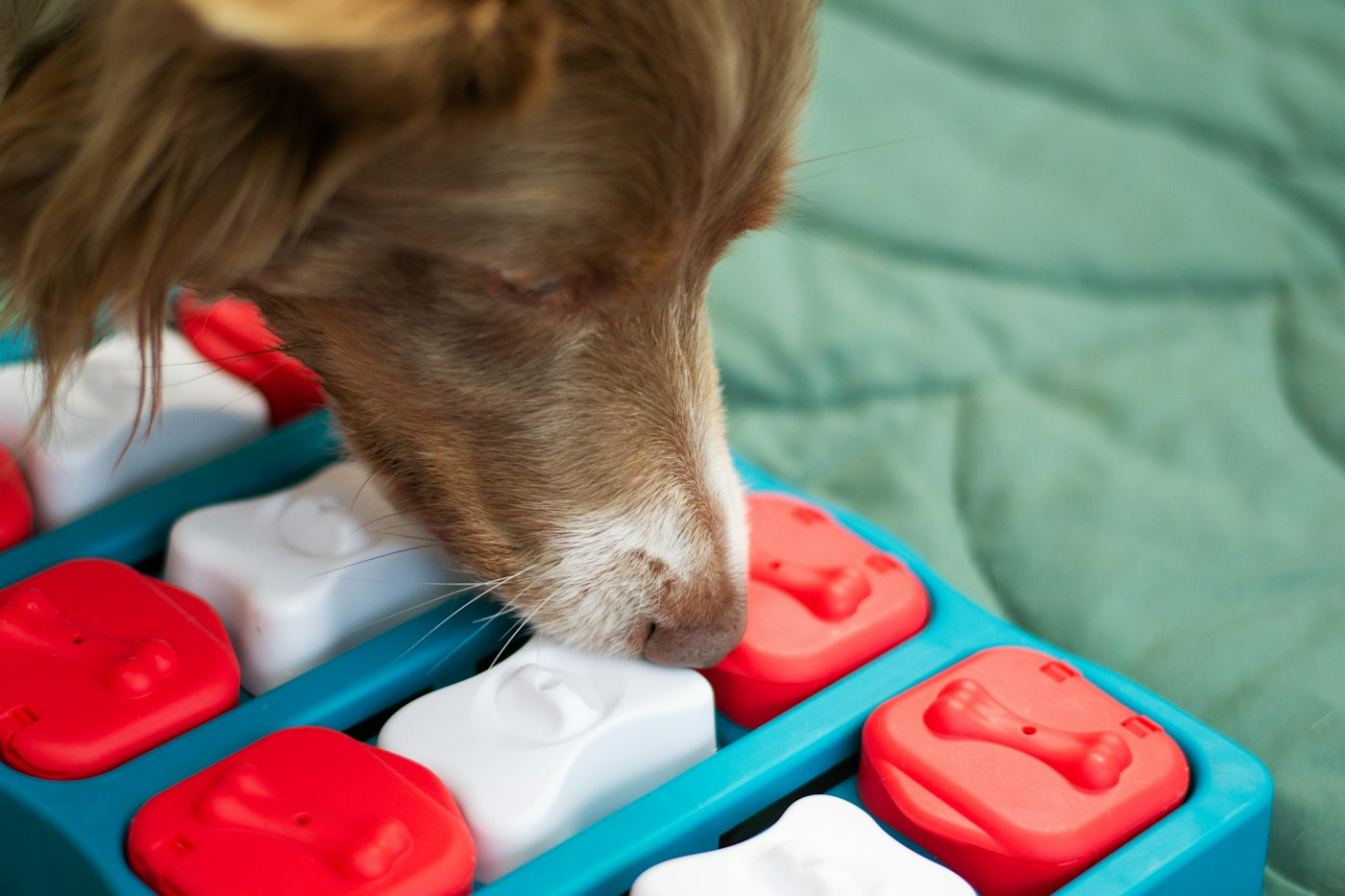
Puzzle feeders turn mealtime into a problem-solving game. Instead of finishing a bowl of food in seconds, a dog works for each bite by nudging, pawing, sliding or sniffing. For many dogs this is a satisfying way to use their brains. Not every dog understands puzzle feeders right away, though, and some get frustrated. A gradual introduction makes all the difference.
Why Use a Puzzle Feeder?
Puzzle feeders slow down fast eaters, add mental exercise to the day and give dogs a constructive outlet for energy. They can be especially helpful on days when outdoor exercise is limited by heat, rain or a busy schedule. Many owners find that a dog who has worked through a puzzle is more relaxed afterward.
If your dog has a medical condition, a special diet or issues with eating, ask your veterinarian before changing how they are fed.
Start Easy
The key to success is making the first experiences very easy. You want your dog to win right away.
- Choose a simple feeder, such as a slow feeder bowl or a basic treat ball.
- Use high-value food or treats for the first few sessions.
- Put food where it falls out easily, or leave compartments partly open.
- Sit with your dog and encourage them when they interact with the toy.
- Praise every success.
For stuffable rubber toys, start with loosely packed kibble that falls out with a little nudge, rather than a tightly packed frozen filling.
Raising the Difficulty
Once your dog is working the easy version confidently, gradually make it a bit harder. Make one change at a time.
- Pack food a little more tightly.
- Freeze a stuffed toy for a longer challenge.
- Switch to a puzzle with more steps, such as sliders plus lids.
- Hide the puzzle toy in a different room for your dog to find.
If your dog walks away, barks at the toy or tries to chew it apart, the challenge may have jumped too far. Go back to an easier level for a while.
Reading Your Dog
Healthy frustration looks like a dog trying different things: pushing with the nose, pawing, flipping. That is learning. Unhealthy frustration looks like giving up, barking or chewing the puzzle itself. Step in and help, or make it easier, when you see the second kind.
Some dogs are natural problem-solvers; others need more support. Neither is better. Every dog can benefit from enrichment at their own level.
Safety and Routine
- Supervise puzzle play, especially with new toys and dogs who chew.
- Choose puzzles that are sturdy and sized appropriately.
- Clean feeders regularly to prevent buildup of old food.
- If you have multiple dogs, feed them separately to avoid tension over food.
Many owners use puzzle feeders for one meal a day and a regular bowl for the other, or rotate different puzzles through the week. Mixing it up keeps the game interesting, and over time you may find your dog greeting mealtime with real excitement for the challenge ahead.












