

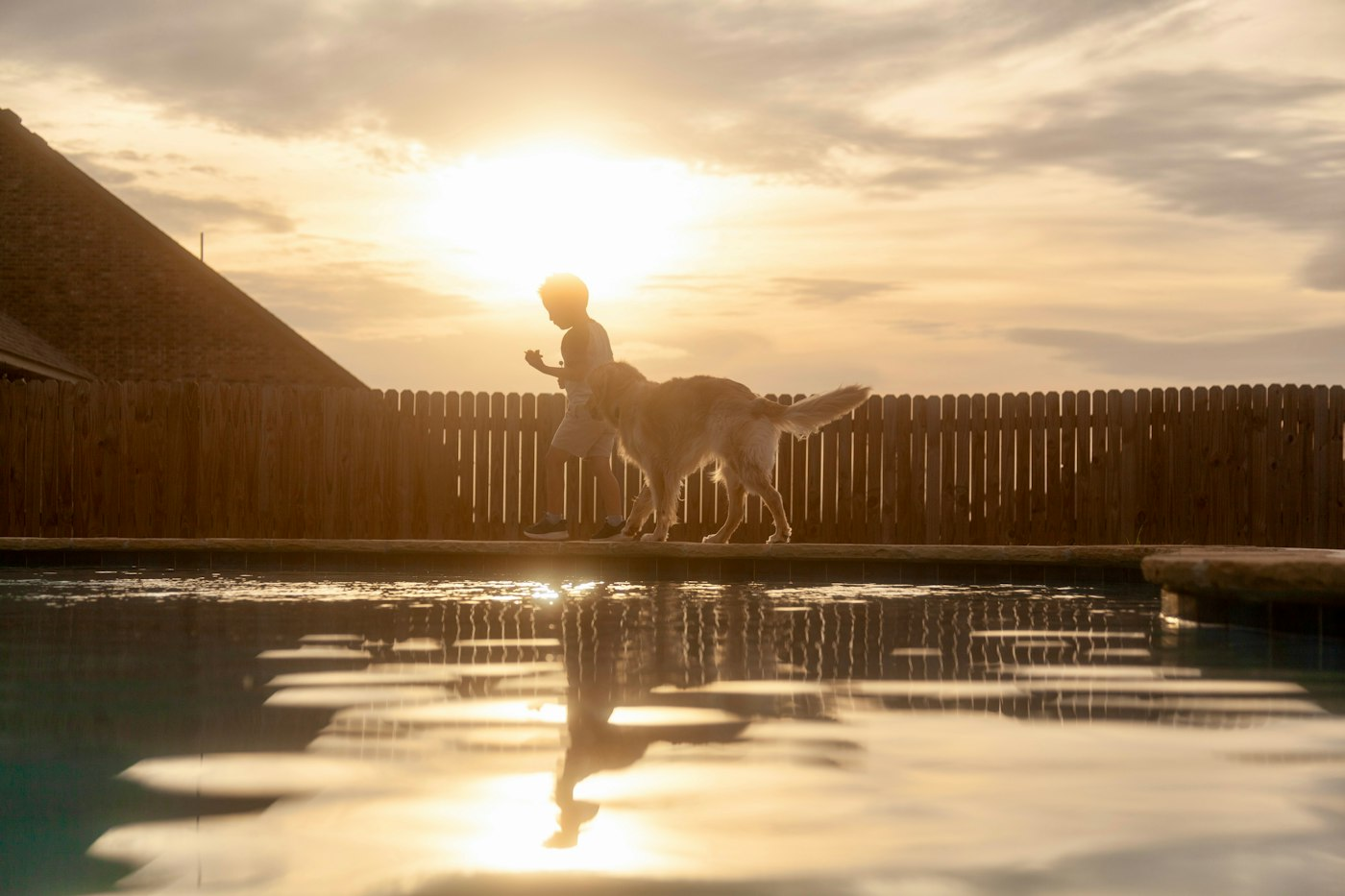
Backyard pools are a highlight of summer for many families, and plenty of dogs love them too. Pools also pose a serious risk. A dog who falls in when no one is watching may not be able to find the way out, and smooth pool walls make climbing out nearly impossible. A few precautions make a home pool far safer for dogs.
Barriers First
The most reliable safety step is controlling access to the pool area.
- A fence around the pool with a self-closing, self-latching gate keeps dogs out when unsupervised.
- Check for gaps a small dog could slip through or spots where a dog could dig under.
- Make sure doors from the house to the pool area stay closed.
- Consider a pool alarm that alerts you if something enters the water.
Many local building codes set rules for pool fencing, mainly for child safety. Those same features help protect dogs.
Teach the Way Out
The biggest danger in a pool is a dog not knowing how to exit. Dogs who fall in often swim to the nearest wall and try to climb out there, tiring themselves quickly.
Teach your dog where the steps are. With your dog in a life jacket, guide them into the water near the steps and help them climb out. Practice from different spots in the pool, always guiding your dog back to the steps and rewarding them when they get out. Over time, many dogs learn to head for the exit on their own.
For pools without easy steps, ramps designed for dogs can be attached to the edge. Mark the exit with a visual cue, such as a plant or flag beside the steps, which may help some dogs orient.
Supervision Rules
Never leave a dog alone in or near a pool, even a good swimmer.
- Keep swim sessions short and watch for signs of fatigue.
- Limit games that cause gulping water, which can contribute to water intoxication.
- Remove pool toys when you are done so your dog is not tempted back in alone.
- Do not let dogs walk on a pool cover; many covers cannot support their weight and can trap a dog underneath.
Pool Water and Chemicals
Pool water is treated with chemicals that help keep it clean. Discourage your dog from drinking pool water and provide fresh water nearby. Store pool chemicals securely, away from where dogs can reach them, since concentrated products can be very dangerous. Rinse your dog with fresh water after swimming to remove chlorine or salt from the coat and skin.
Other Hazards
Hot pool decks can burn paws on sunny afternoons. Wet surfaces can be slippery for older dogs. Electrical equipment and cords near the pool should be secured.
If your dog has health conditions or is a senior, talk with your veterinarian before letting them swim. And keep your dog’s collar and ID tag on during pool time if they are comfortable with it, in case they wander out of an open gate while everyone is busy enjoying the day.












