

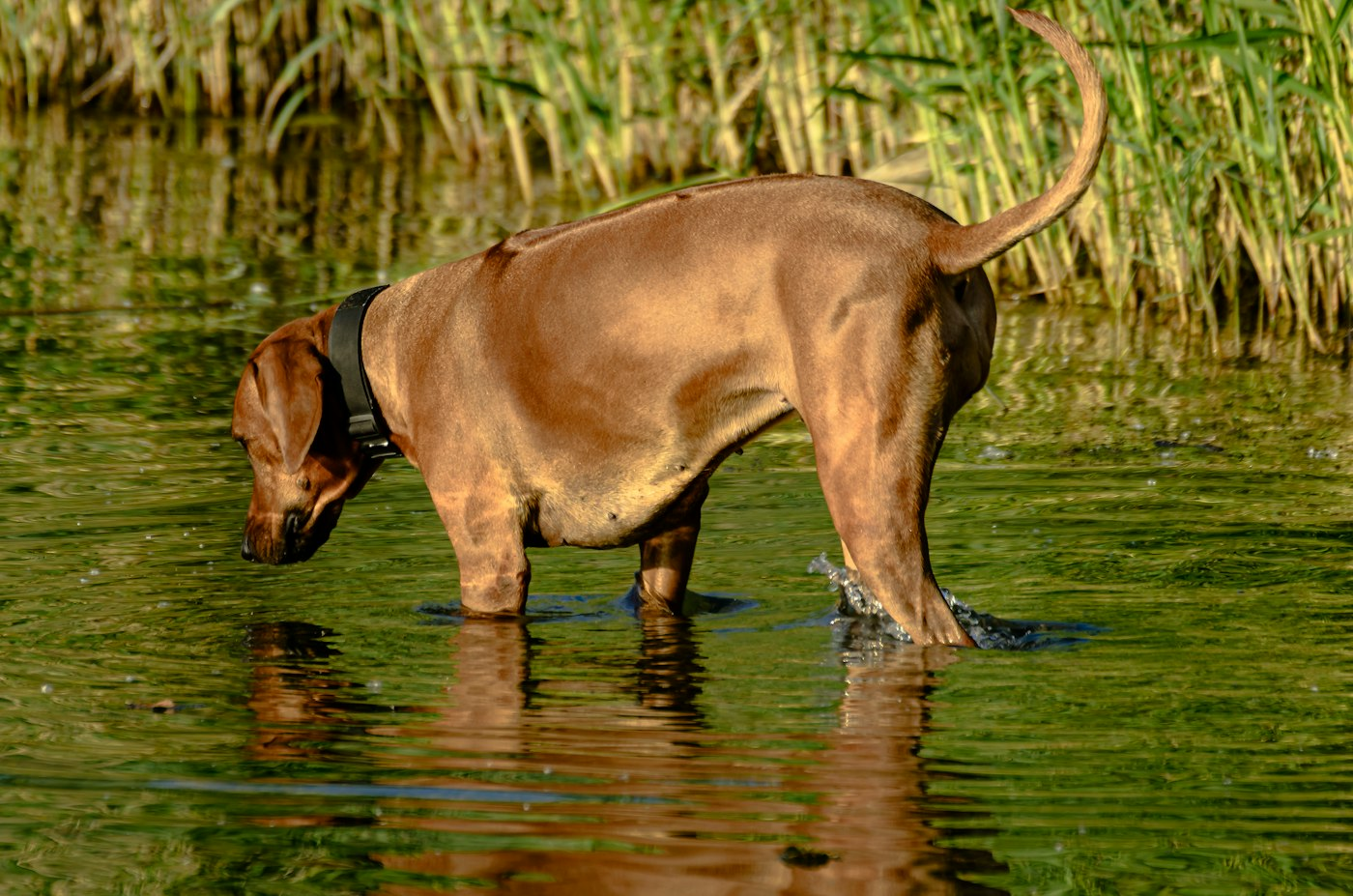
Lakes, ponds and slow-moving rivers are tempting places for dogs on warm days. In some conditions, though, these waters can develop harmful algal blooms. Some are caused by cyanobacteria, often called blue-green algae, which can produce toxins that are dangerous to dogs. Dogs are particularly at risk because they swim through it, drink the water and lick it off their coats.
Why It Matters
Some cyanobacteria toxins can affect the liver, the nervous system or both. Illness can come on quickly, sometimes within minutes to hours of exposure, and can be fatal. Not every bloom is toxic, and you cannot tell by looking whether a particular bloom is producing toxins. That is why the safest approach is to keep dogs out of water that looks suspicious.
What a Bloom Can Look Like
Blooms tend to occur in warm, sunny weather and in still or slow-moving water, especially water rich in nutrients. They can look like:
- Water that resembles pea soup or green paint
- Scum, foam or mats on the surface
- Streaks or swirls of green, blue, brown or red
- Discolored water near shorelines, where wind can push blooms
Some blooms are not obvious, and toxins can remain in the water after a visible bloom has faded. A strong, unpleasant odor can be another clue.
Check Before You Go
Many states and local agencies monitor water bodies and post advisories during bloom season. Before taking your dog to a lake or pond, check your state’s environmental or health department website and look for signs posted at the water’s edge. The U.S. Environmental Protection Agency offers general information on harmful algal blooms at epa.gov.
When in doubt, keep your dog out. A rule many owners follow: if you would not want to swim in it, your dog should not either.
If Your Dog Has Been Exposed
If your dog swims in or drinks water you suspect may contain a bloom:
- Rinse your dog thoroughly with clean fresh water right away, wearing gloves if possible.
- Do not let your dog lick their coat before rinsing.
- Contact your veterinarian immediately, even if your dog seems fine.
Signs of poisoning can include vomiting, diarrhea, drooling, weakness, stumbling, difficulty breathing, tremors and seizures. These are emergencies. If possible, note where the exposure happened and take a photo of the water to share with your veterinarian and local authorities.
Safer Water Days
Bring fresh drinking water on outings so your dog does not need to drink from lakes or ponds. Choose swimming spots with good water circulation and no advisories. Rinse your dog after natural-water swims as a habit, and clean their collar and other gear too, since residue can linger on fabric.
Harmful algal blooms are a growing area of public awareness, and many communities are expanding monitoring. Staying informed, checking advisories and acting quickly after any suspected exposure are the best ways to keep your dog safe.












