

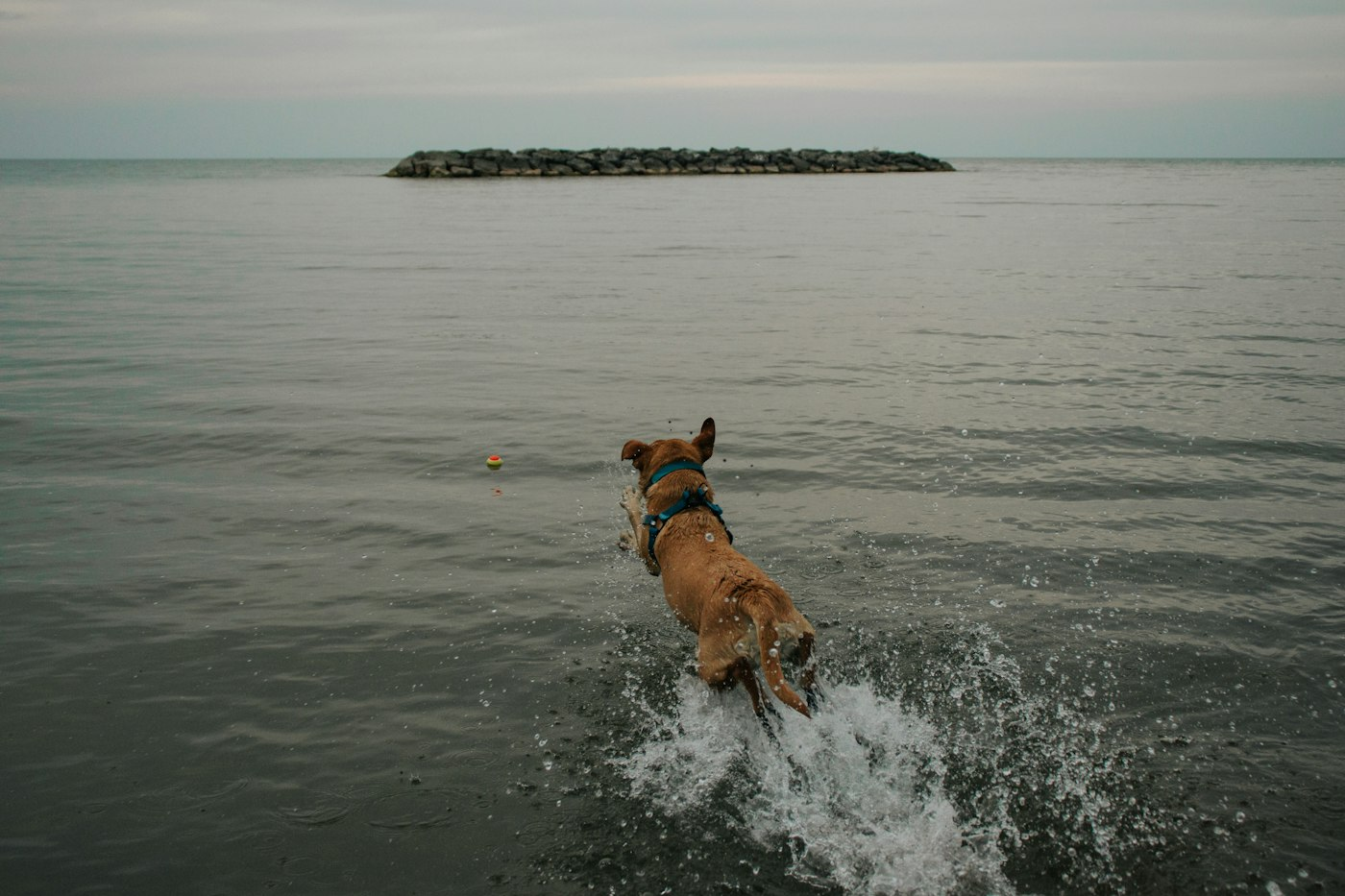
Most warm-weather water safety advice focuses on drowning and overheating. Another risk gets less attention: water intoxication. It is uncommon, but it can be serious, and it tends to affect the dogs who love water play the most. Knowing what it is and how to reduce the risk lets you enjoy summer water fun with more confidence.
What Is Water Intoxication?
Water intoxication, also called hyponatremia, happens when a dog takes in so much water in a short time that the balance of sodium in the body is disrupted. Sodium helps regulate fluid in and around cells. When levels drop too low, cells, including those in the brain, can swell. This can become an emergency.
It is not the same as drinking a normal amount of water after exercise. The concern is a large amount of water swallowed quickly, often without the dog realizing it.
How It Happens
Dogs can swallow a surprising amount of water during play. Common situations include:
- Repeatedly retrieving balls or toys from a lake or pool, scooping water with each grab
- Biting at water from hoses, sprinklers or splash pads
- Swimming for long periods with the mouth open
- Diving for objects underwater
High-energy dogs who will play for hours can be at greater risk, as can smaller dogs, since a given amount of water has a bigger effect on a smaller body.
Signs to Watch For
Signs can appear during or after water play. Watch for:
- Lethargy or seeming unusually tired
- Loss of coordination, staggering or stumbling
- Vomiting or excessive drooling
- Bloating
- Glazed eyes or dilated pupils
- Pale gums
- Difficulty breathing
- Collapse or seizures in severe cases
If you see these signs after water play, contact your veterinarian or an emergency veterinary clinic right away. Do not wait to see if it passes.
Reducing the Risk
Water play can still be a big part of summer. A few habits help:
- Take frequent breaks from swimming and fetch, letting your dog rest out of the water.
- Use flatter toys that are easier to grab without scooping water, such as flying discs designed for water or slim floating bumpers, rather than large balls that fill the mouth.
- Limit sprinkler and hose games, which can lead to a lot of swallowed water fast.
- Watch how your dog swims. If they seem to be gulping or swimming with an open mouth, slow things down.
- Keep sessions shorter for small dogs and very excited dogs.
Balancing Fun and Safety
None of this means water play should be avoided. Swimming can be excellent exercise and great fun. It simply helps to watch your dog closely and to build in rest. Pay attention to how much water your dog is getting along with the toys and splashes.
Every dog is different, and this is general information, not a substitute for veterinary advice. If your dog loves water, ask your veterinarian at your next visit about how to plan safe water activities for your specific dog.












