

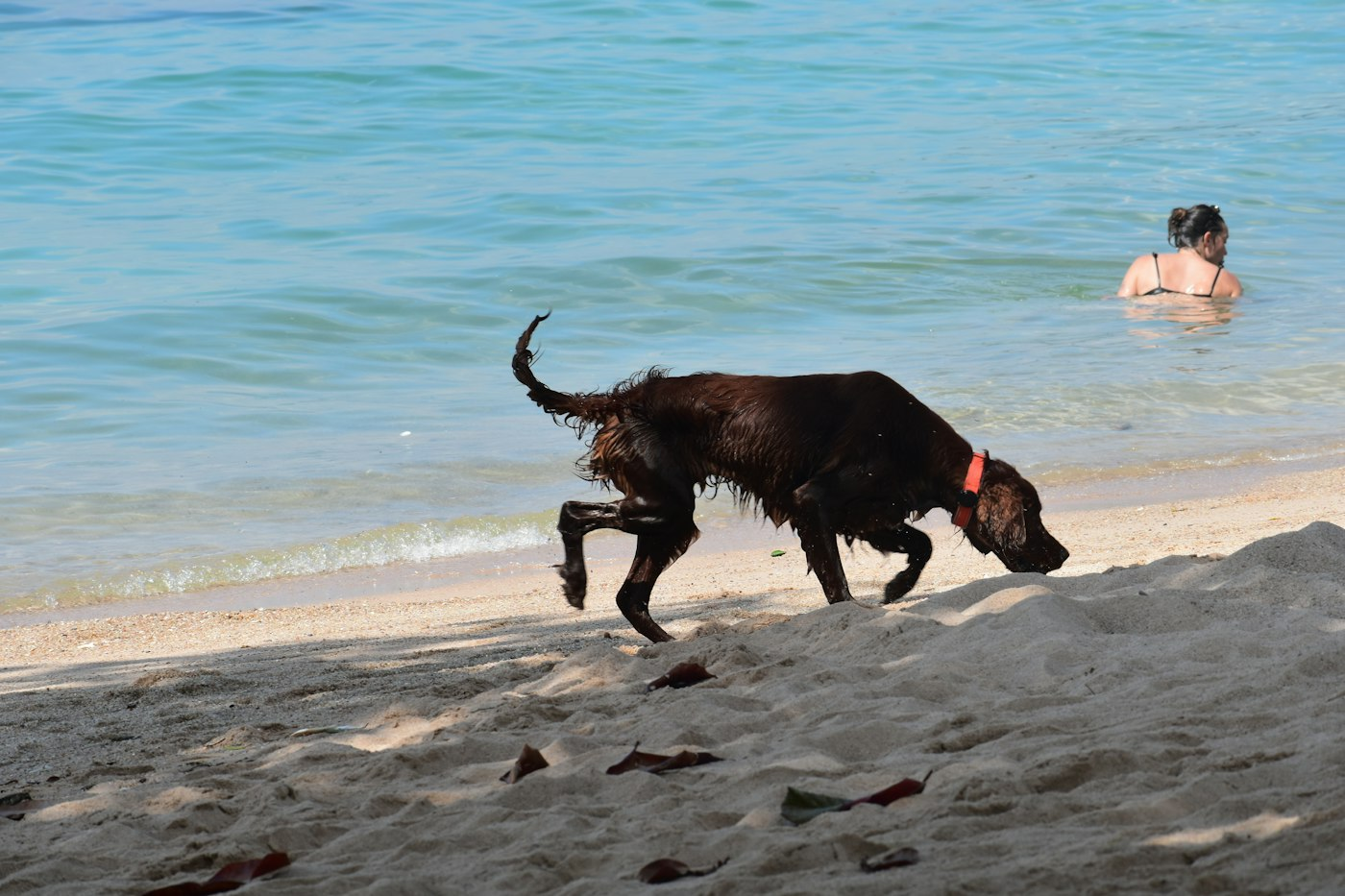
A day at the shore is wonderful for many dogs, but sand, salt and sun can leave their mark. Salt water can dry the coat and skin. Sand can work into fur and between toes. Damp ears can stay damp. A simple routine after every beach trip, whether at the shore or at a lake, helps your dog stay comfortable and catch small problems early.
Rinse Thoroughly
Rinsing with fresh water is the most important step. Salt left on the coat can make it feel stiff and may irritate the skin. Sand trapped near the skin can rub and cause discomfort.
- Many beaches have outdoor showers; check whether dogs may use them.
- Bring a jug of fresh water to rinse paws and legs before your dog gets in the car.
- At home, give a thorough rinse, working water down to the skin.
- A full bath with dog shampoo is not always needed, but helps if your dog rolled in something smelly.
For curly or thick coats, such as many doodle coats, sand and salt can lead to tangles. Brush or comb after the coat is clean and dry, working gently through any knots.
Check the Paws
Beach sand can be hot, rough and full of hidden hazards. After your outing, look between toes and at the pads for:
- Small cuts or scrapes from shells, rocks or debris
- Burns or blisters from hot sand
- Sand or burrs lodged between toes
- Redness, swelling or limping
Clean minor scrapes gently and keep an eye on them. Call your veterinarian for deeper cuts, burns or anything that seems painful or swollen.
Dry the Ears
Water that collects in ear canals can lead to problems for some dogs, especially those with floppy ears. After swimming, use a soft towel to gently dry the outside of the ear and the ear flap. Your veterinarian may recommend a drying ear cleaner for dogs who swim often. Watch for head shaking, scratching, odor or discharge in the days after a beach trip, and call your vet if you see them.
Watch for Signs of Trouble
Some beach issues show up hours later. Contact your veterinarian if your dog shows:
- Vomiting or diarrhea, which can follow drinking seawater or eating something on the beach
- Excessive thirst, weakness or lethargy
- Signs of overheating that do not resolve with rest, shade and water
- Sunburn, particularly on the nose, ear tips or belly of light-skinned dogs
Salt water ingestion can be serious in larger amounts. If your dog drank a lot of seawater and seems unwell, call your veterinarian promptly.
Clean the Gear, Too
Sand and salt are hard on gear. Rinse your dog’s collar, leash, harness and life jacket with fresh water after each trip and let everything air-dry completely before storing. Check buckles and clips for sand that could keep them from closing securely. Make sure your dog’s ID tag is still readable and firmly attached.
With a quick rinse, a towel and a close look, your dog will be ready for the next beach day, and your car and couch will thank you as well.












