

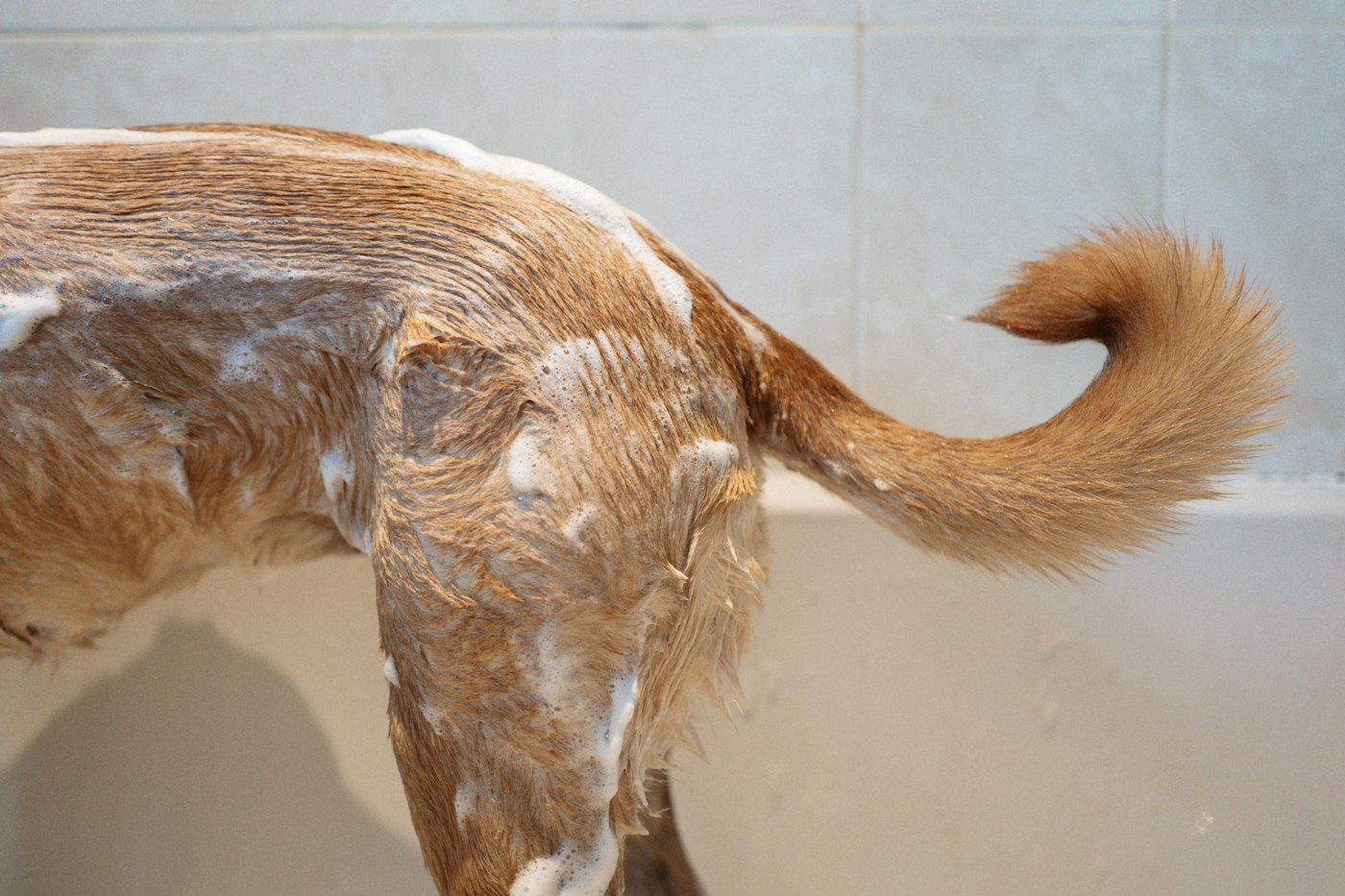
One of the most common grooming questions is how often a dog should be bathed. The honest answer is that it depends. A short-coated dog who spends most of the day on the couch has very different needs from a doodle who loves muddy trails and ponds. Bathing too rarely can leave a dog smelly and matted; bathing too often with harsh products can dry out skin. Here is how to think about it.
Coat Type
Coat type is one of the biggest factors.
- Short, smooth coats often stay clean with brushing and occasional baths.
- Double coats benefit from thorough brushing, and baths are often timed around heavy shedding.
- Curly or wavy coats, like many doodle and poodle coats, tend to trap dirt and mat more easily, so they often need more regular bathing and brushing, along with periodic professional grooming.
- Dogs with oily coats may need baths more often than dogs with dry coats.
Lifestyle and Season
Late spring tends to mean more baths. Dogs who swim, roll in things, hike or play in the yard get dirty faster. After swimming in a lake, pond or ocean, a rinse with clean water can help remove sand, salt or algae residue, even if a full shampoo is not needed. Indoor dogs with less outdoor time may go much longer between baths.
Some owners find that a simple routine of rinsing or wiping paws after walks reduces how often full baths are needed.
Skin Health
Dogs with skin conditions or allergies may need special bathing schedules and medicated shampoos as directed by a veterinarian. On the other hand, dogs with sensitive or dry skin may do better with fewer baths and gentle products. If your dog is scratching, has flaky or red skin, or develops a strong odor that comes back quickly after baths, talk to your veterinarian. These can be signs of an underlying issue rather than a need for more washing.
Bathing Tips
- Use a shampoo made for dogs. Human shampoos are formulated for human skin.
- Brush thoroughly before bathing. Water can tighten mats in curly coats, making them harder to remove.
- Use lukewarm water and rinse very well. Leftover shampoo can irritate skin.
- Protect ears from water and dry them afterward.
- Dry curly and thick coats completely, since damp fur close to the skin can cause irritation.
Finding Your Rhythm
A good bathing schedule is the one that keeps your dog’s skin and coat healthy and comfortable. For many dogs that is somewhere between every few weeks and every few months, with extra rinses after messy adventures. Your groomer and veterinarian can help you fine-tune it based on your dog’s coat and skin.
Between baths, regular brushing does a lot of the work. It removes dirt, loose hair and debris, spreads natural oils and lets you check for lumps, ticks, scratches or skin changes. For doodles especially, consistent brushing between baths is the key to avoiding painful mats.
While your dog is drying, it is a good moment to wipe down their collar and check it for wear. Clean gear and a clean dog make a good pair.












