

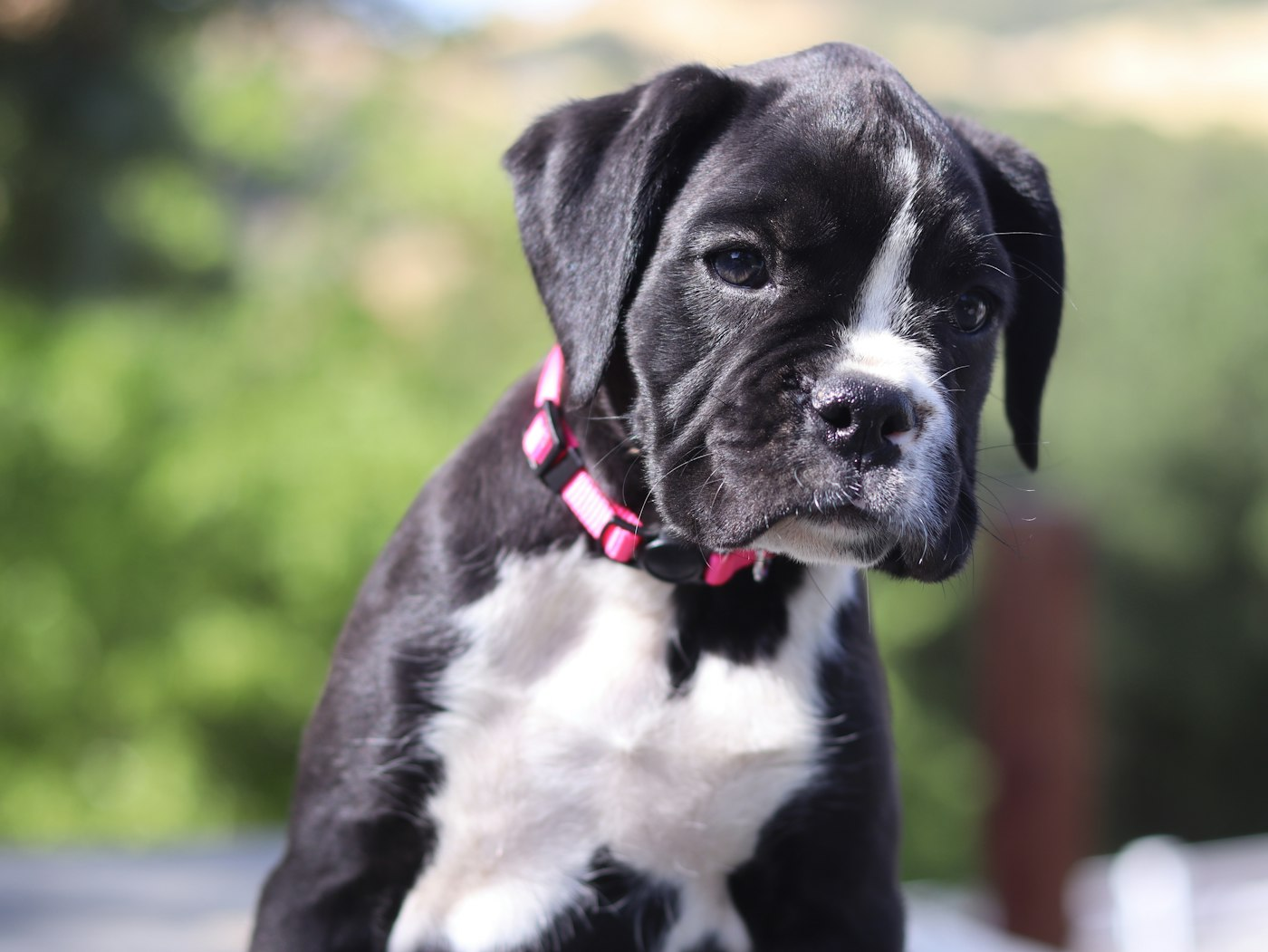
A puppy’s first collar has an important job. It holds the ID tag that could bring your puppy home if they get lost, and it helps your puppy get used to wearing gear. Because puppies grow quickly, though, a collar that fits well one week can be snug the next. Staying on top of collar fit is one of the easy, everyday habits that keeps a growing dog safe and comfortable.
The Two-Finger Check
The most common guideline for flat collars is the two-finger rule. With the collar buckled, you should be able to slide two fingers flat between the collar and your puppy’s neck. If you cannot fit two fingers, the collar is too tight. If the collar slides easily over your puppy’s head, it is too loose and could slip off during a startle or pull.
For very small puppies, two of your fingers may represent more room than they need. Use judgment: snug enough not to slip over the head, loose enough not to press into the neck.
How Often to Check
During the months of fastest growth, check your puppy’s collar at least weekly. A quick check during a cuddle or after a bath is enough. Look for:
- Fur that seems flattened or rubbed under the collar
- Redness or irritation on the skin
- The collar sitting higher up the neck than it used to
- The buckle or adjuster nearing the end of its range
Puppies with thick or fluffy coats, such as many doodles, can hide a collar that has become too tight. Part the fur and look at the skin, not just the outside of the coat.
When to Size Up
Many collars adjust across a range. Choosing one with your puppy’s current neck measurement near the smaller end of that range gives you room to loosen it as they grow. When you are using the last hole or the slider is fully extended, it is time for a larger size.
To measure, wrap a soft measuring tape around the middle of your puppy’s neck where the collar sits, then add enough room for the two-finger rule. Compare that to the size chart for the collar you are considering.
Getting a Puppy Used to a Collar
Some puppies scratch or roll when they first wear a collar. That is normal. Put the collar on before meals or playtime so your puppy is distracted by something fun, and offer treats. Most puppies stop noticing it within a few days.
Safety Notes
Collars are for ID and light everyday use. For puppies who pull, a well-fitted harness is often a better choice for walks, since it spreads pressure away from the neck. Remove collars during unsupervised crate time if your veterinarian or trainer recommends it, since collars and tags can occasionally catch on crate wire. Never leave a growing puppy in a collar that has not been checked in a while.
Each time you adjust or replace a collar, move the ID tag over and confirm the information on it is current. A well-fitting collar with a readable tag is a small thing that matters a great deal.












