

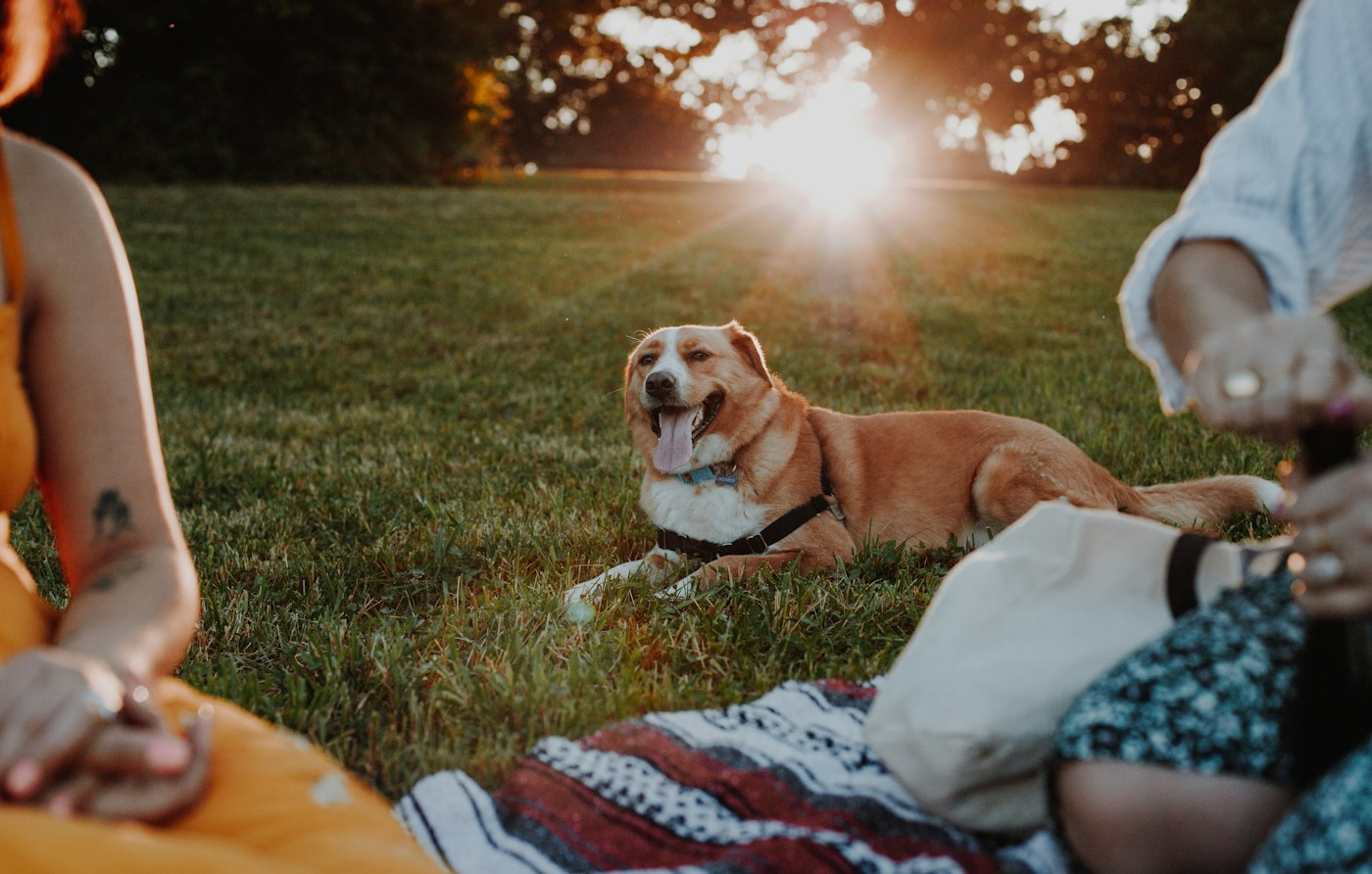
Many of the outings people enjoy with their dogs in late spring involve sitting still: a coffee on a patio, a picnic at a park, a long chat with a neighbor. Dogs do not automatically know that these moments call for relaxing. The good news is that relaxation on cue can be taught, and a simple mat makes it easier to carry that calm from home to new places.
Why a Mat Helps
A mat gives your dog a clear, physical answer to the question of where to be and what to do. Over time, the mat itself becomes associated with lying down and resting. Because you can roll it up and take it with you, it brings a bit of home into unfamiliar settings. Any washable mat, small rug or folded towel works, as long as your dog can lie down on it comfortably.
Step One: Build Interest in the Mat
Start at home in a quiet room. Put the mat on the floor and wait. The moment your dog looks at it, steps toward it or puts a paw on it, mark that with a word like “yes” and drop a treat on the mat. Keep sessions short, just a few minutes. Within a few sessions most dogs begin walking onto the mat on purpose because it pays.
Once your dog reliably steps onto the mat, wait for a sit or a down before rewarding. Then start rewarding only downs. Place treats between your dog’s front paws so they do not need to get up to eat.
Step Two: Reward Relaxation
This is the part people often skip. A dog lying stiffly on the mat, staring at you, is not yet relaxed. Watch for small signs of settling and reward them calmly:
- Shifting weight onto one hip
- Resting the chin on the floor or paws
- A slow exhale or sigh
- Softening of the eyes and ears
Deliver treats quietly and slowly. You are not trying to excite your dog; you are paying them for calm. When your dog is routinely settling, add a cue such as “settle” or “mat” just before they go to it.
Step Three: Add Duration and Distractions
Gradually extend the time between rewards. Then practice with mild distractions: the TV on, someone walking through the room, a doorbell sound at low volume. Next, move the mat to a different room, then to the porch or yard, then to a quiet park bench. Each new location is a fresh challenge, so lower your expectations at first and reward more often.
Taking It on the Road
When your dog can settle on the mat in a few different places, try a short visit to a calm cafe patio. Bring high-value treats and a safe chew to give once your dog is lying down. Keep the first visit brief and leave while things are going well.
If your dog struggles, go back a step. Practice in a slightly easier setting, or sit farther from the action. Every dog learns at their own pace, and some dogs are genuinely more comfortable staying home from crowded places. Respecting that is part of good training.
If your dog shows persistent anxiety in public, a qualified trainer or your veterinarian can help you find the cause and a plan.












