

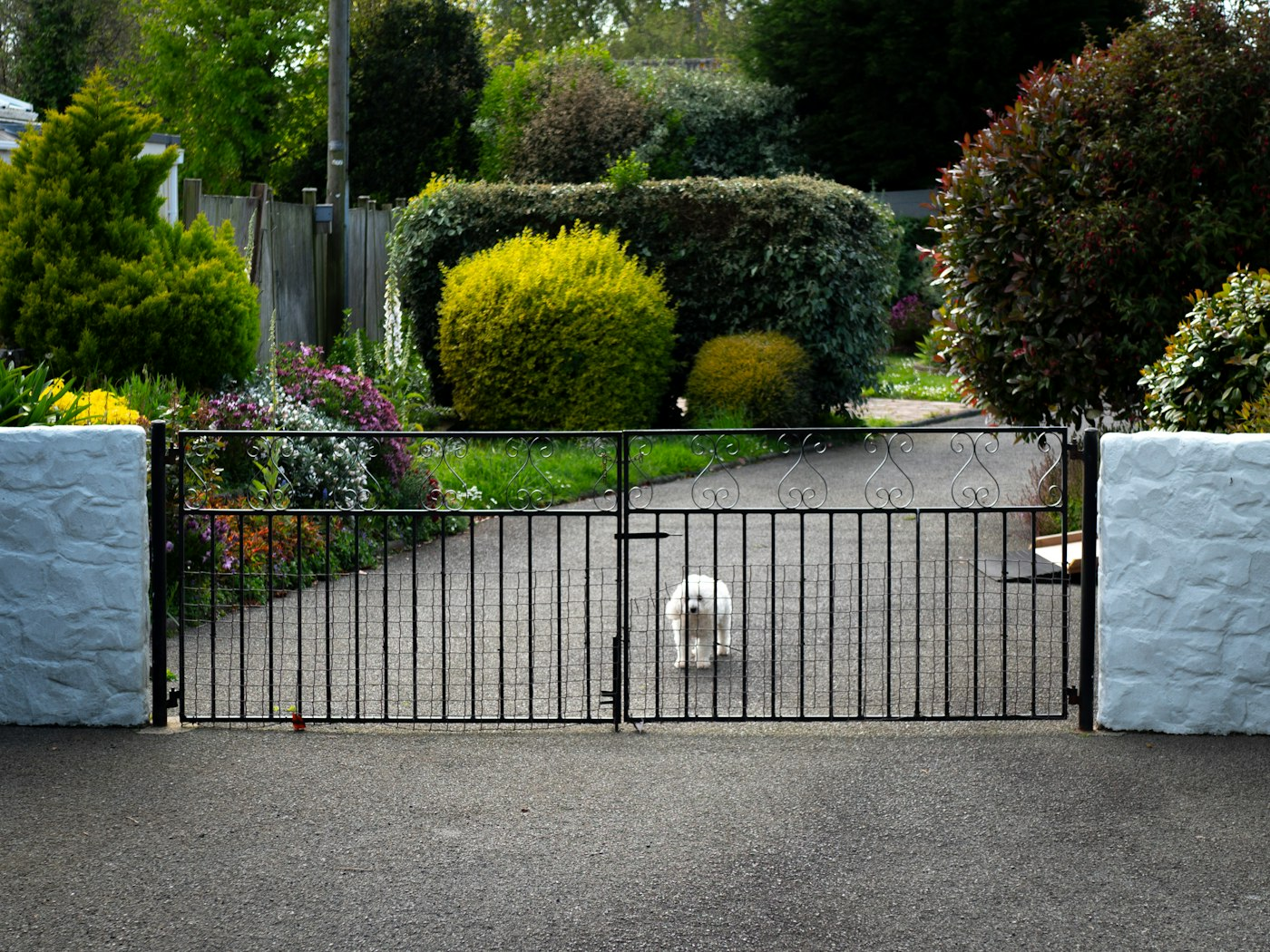
A fenced yard gives many dogs a safe place to play, sniff and lounge in the sun. But winter weather can be hard on fences, gates and the ground beneath them. Freezing and thawing can shift posts, heavy snow can bend panels, and spring rain softens soil that a determined dog can dig through. Before your dog spends long spring afternoons outside, take a careful walk around your yard.
Walk the fence line
Go slowly along the entire perimeter, looking at the fence from your dog’s height as well as your own.
- Gaps: look for spaces between boards, under the bottom rail and where the fence meets the house or a neighbor’s fence. Small dogs can squeeze through surprisingly narrow openings.
- Loose or broken boards: push gently on boards and panels to find anything wobbly.
- Leaning posts: frost heave can shift posts, opening gaps or weakening sections.
- Damaged wire: check chain-link or wire fencing for bent sections, loose ties or sharp ends that could injure a dog.
- Climbing aids: woodpiles, snowbanks, trash bins, patio furniture or compost bins near the fence can give a dog a boost over the top.
Check the ground
Soft spring soil makes digging easier. Look for any existing holes or depressions along the fence line, especially where your dog likes to hang out. If your dog is a digger, options include burying wire mesh along the bottom of the fence, placing large stones or pavers along the base, or giving your dog a designated digging spot elsewhere in the yard. A trainer can help if digging is a persistent problem.
Test the gates
Gates are a common escape point. Make sure each gate closes fully on its own or latches securely. Check hinges for rust and sagging, which can stop the latch from catching. Self-closing hinges and latches can help in busy households. Consider a lock or a clip on gates that service workers, delivery drivers or neighbors might use, and remind visitors to close gates behind them.
Look for other yard hazards
While you are out there, look for anything else that could hurt your dog. Spring can uncover sharp debris, broken glass and old toys. Check for mushrooms, which can appear after rain and can be toxic to dogs; if you are not sure what a mushroom is, remove it and keep your dog away. Note any new plantings, lawn treatments or garden products, and keep compost and garden supplies secure. Make sure your dog has shade and fresh water available.
Supervision still matters
Even a well-maintained fence is not a substitute for supervision. Some dogs climb, dig or jump when they are bored, frightened or excited by something on the other side. Keep an eye on your dog, especially when they are new to the yard, during thunderstorms and when wildlife or other dogs are about. Make sure your dog always wears a collar with current ID, including a QR tag if you use one, and that their microchip registration is up to date.












