

A little preparation goes a long way on the trail. Spring hikes can bring changing weather, muddy paths, stream crossings and longer outings than your dog is used to. Packing a few essentials means you are ready for small problems before they become big ones. Here is a checklist for a typical day hike.
The basics
- A sturdy leash, generally six feet or shorter if that is what the trail requires. Check the rules for the park you are visiting.
- A well-fitted collar or harness with current ID, including a QR tag if you use one.
- Waste bags, and a way to carry used bags out, such as a sealed container or a carrier that clips to your pack.
- Treats for rewarding good trail manners and recall.
Water and food
Dogs can get thirsty faster than you expect on a hike, especially on warm spring afternoons. Bring enough fresh water for your dog as well as yourself, along with a collapsible bowl or a bottle designed for dogs. Avoid relying on streams and ponds, which can carry parasites, bacteria or toxic algae. For longer hikes, pack a small meal or extra snacks. Ask your veterinarian how much your dog should eat around strenuous exercise.
A simple first-aid kit
A small kit can handle minor issues and help you stabilize a problem until you reach a veterinarian. Many owners include:
- Gauze pads and a roll of self-adhering bandage wrap
- Saline solution for rinsing cuts or eyes
- Fine-tipped tweezers or a tick removal tool
- Blunt-tipped scissors
- A pet-safe antiseptic recommended by your vet
- A towel or small blanket
- Your veterinarian’s phone number and the location of an emergency clinic near the trail
Ask your veterinarian what else to include for your dog, and what you should and should not do in an emergency. Some owners take a pet first-aid class for added confidence.
Weather and visibility
Spring weather can shift fast. A light raincoat can help a thin- or curly-coated dog on a cool, wet day. Bright colors or reflective gear make your dog easier to see on shaded trails and during hunting seasons in areas where hunting is permitted. A clip-on light is useful if there is any chance you will be out near dusk.
Paws and coat
Trails can be rough on paws. Some dogs benefit from booties on rocky terrain, but practice wearing them at home first. A small brush or comb helps remove burrs before they work into the coat, and an extra towel keeps a muddy dog from soaking your car seat.
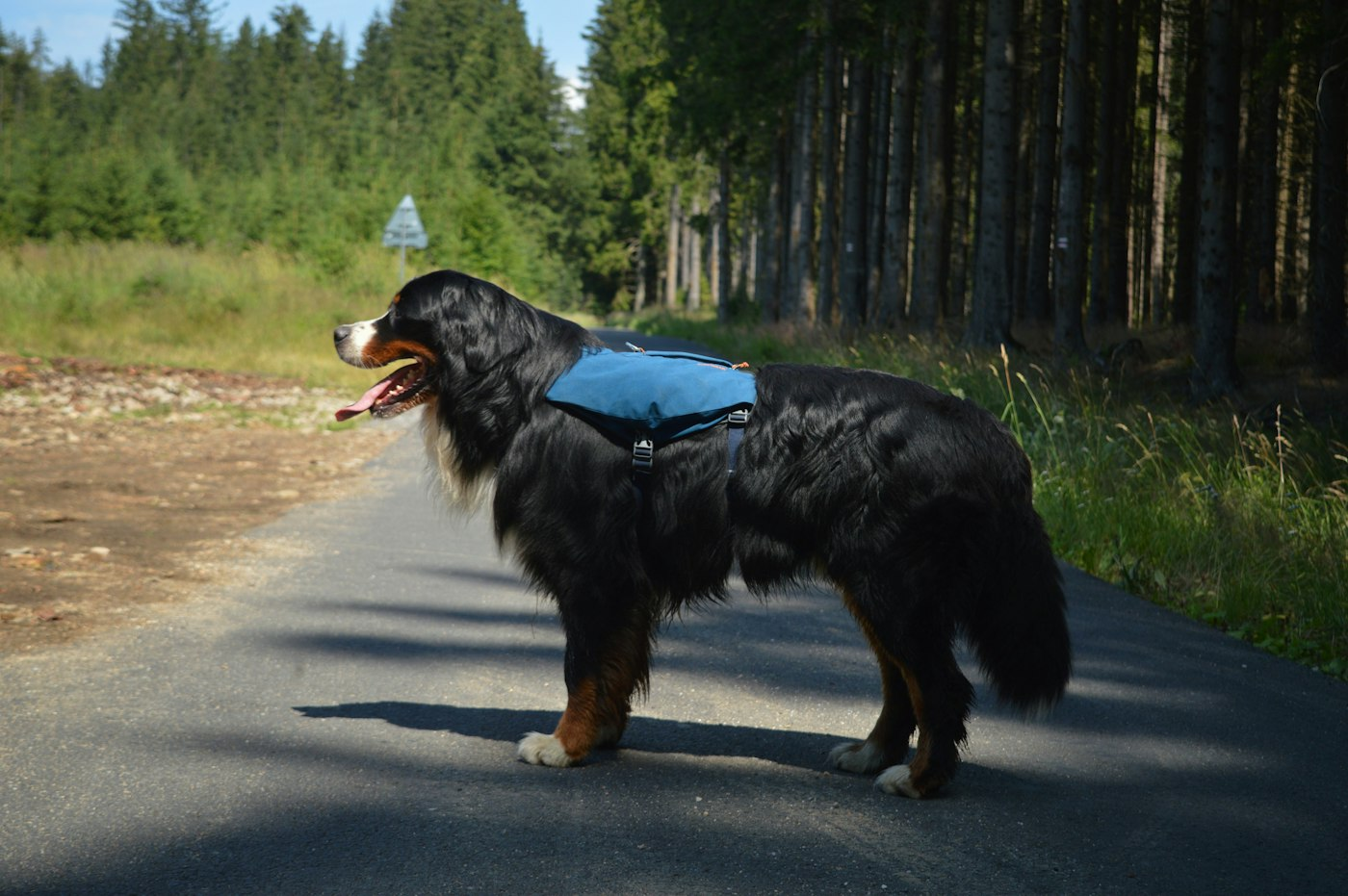
If your dog will carry a pack of their own, introduce it gradually and keep the load light. Ask your veterinarian how much weight is appropriate, and avoid loading puppies or dogs with joint issues. A well-packed kit means you can relax and enjoy the trail together.












