

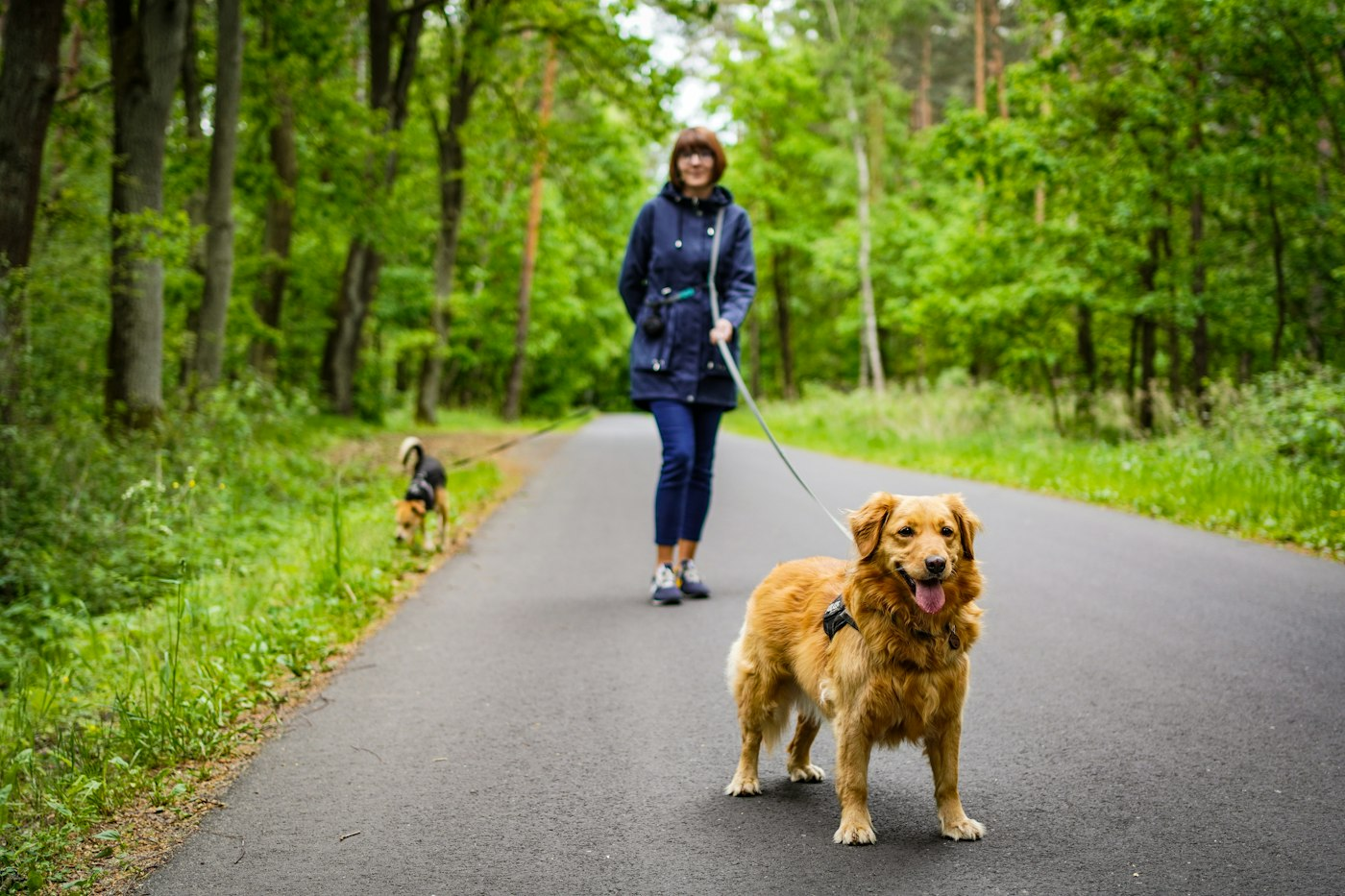
Dogs share trails with hikers, runners, cyclists, horses, other dogs and wildlife. How dog owners behave on those trails affects whether dogs stay welcome there. Good trail etiquette is mostly common sense, but it helps to think it through before your spring hiking season begins.
Follow the leash rules
Leash rules vary from place to place, and they are posted for good reasons, including wildlife protection and visitor safety. In national parks, where pets are allowed, they generally must be on a leash no longer than six feet. State parks, local parks and national forests each set their own rules. Check the official website for the specific park or trail before you go. The National Park Service explains its pet guidelines at nps.gov.
Even where off-leash time is allowed, keep your dog leashed unless their recall is reliable around distractions like other dogs, people and wildlife.
Passing other trail users
Not everyone loves dogs. Some people are afraid of them, some are allergic, and some are with dogs of their own who do not want to be greeted. When you meet others on the trail:
- Shorten the leash and keep your dog close to your side.
- Step off the trail to let others pass when there is room, ideally on a durable surface rather than delicate plants.
- Ask before letting your dog greet anyone, person or dog.
- Give horses plenty of space and follow the rider’s lead. A sudden move by a dog can startle a horse.
- Let cyclists and runners know you see them, and keep your dog from lunging into their path.
Leave no trace, including dog waste
Dog waste does not simply disappear on the trail. It can carry parasites and bacteria, it can wash into streams, and it is unpleasant for other hikers. Pick it up and carry it out. Do not leave bags beside the trail to collect later, since they are easily forgotten. A small waste bag carrier or a sealed container in your pack makes carrying it more pleasant.
The Leave No Trace principles, widely used across public lands, also apply to dogs: stay on established trails, minimize impacts on plants and soil, and leave the place as you found it.
Respect wildlife
Spring is nesting and birthing season for many animals. A dog chasing or even approaching wildlife can cause stress, separate young animals from parents or put your dog at risk from defensive animals. Keep your dog leashed and close, especially near water, meadows and nesting areas. Do not let your dog dig up dens or chase birds. If you see wildlife, give it plenty of space and move on.
Be prepared to manage your dog
Barking, lunging or jumping on strangers can ruin a quiet hike for others. If your dog is reactive, choose quieter trails and times, and turn around if conditions get too busy. Bring water so your dog is not drinking from streams, and check your dog for ticks and burrs afterward. Good trail manners help keep trails open for everyone who wants to bring a dog along.












