

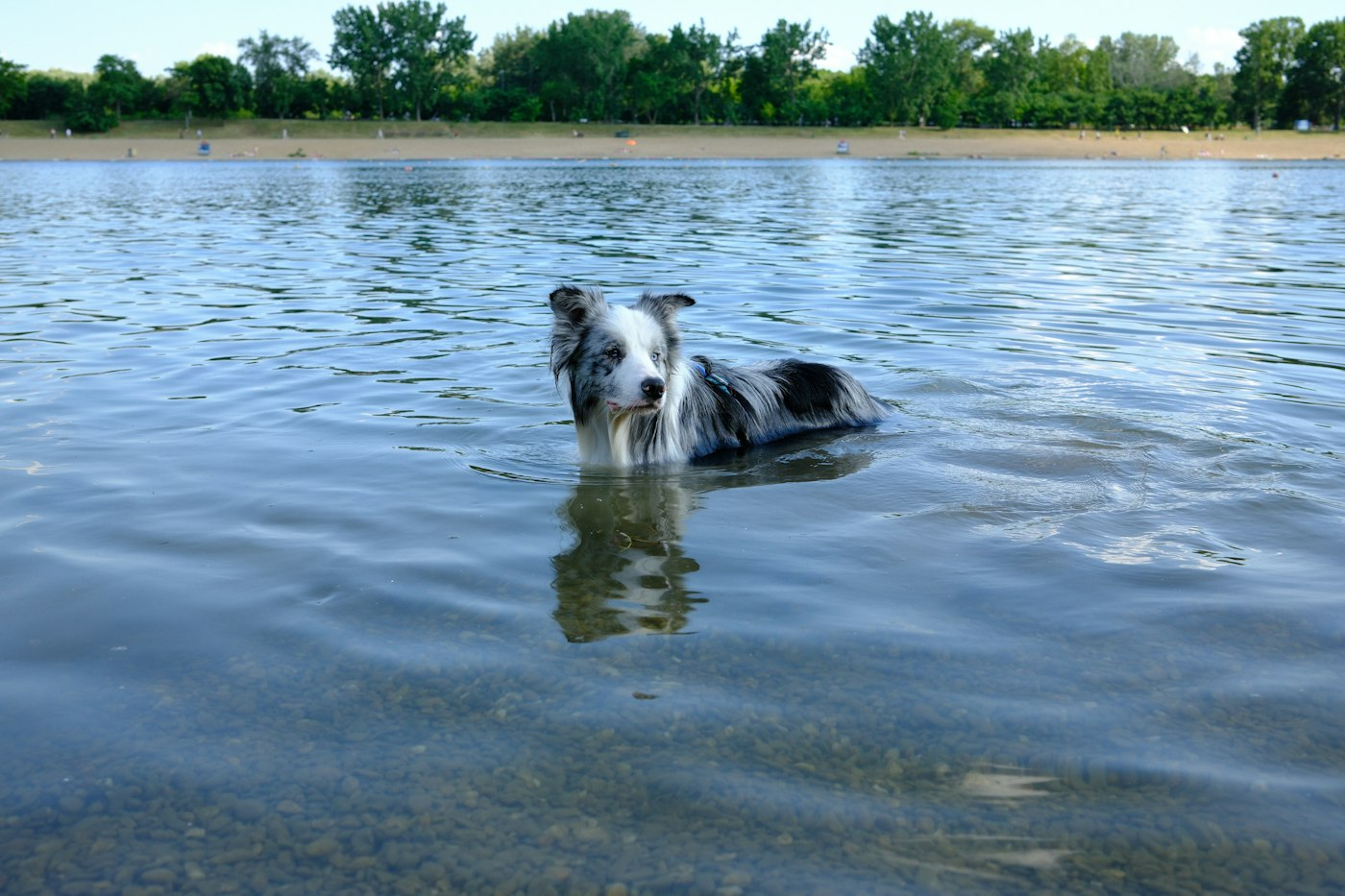
For water-loving dogs, the first open water of spring is irresistible. But early spring water can be risky in ways summer swimming is not. Snowmelt makes streams faster and higher, lakes and ponds stay very cold, and ice along the edges can be thin and unstable. A little caution keeps your dog’s first splash of the season a happy one.
Thin and melting ice
In late winter and early spring, ice on ponds, lakes and rivers weakens as it melts, often from below or around the edges, where it can look solid but is not. Dogs chasing a ball, a bird or another dog can run onto ice that will not hold them.
- Keep your dog leashed near frozen or partially frozen water.
- Do not throw toys onto ice.
- If your dog falls through, do not go onto the ice after them. Call for emergency help and encourage your dog toward you from a safe position on shore. People who go onto weak ice after a pet can easily fall through themselves.
Fast, high water
Streams and rivers swollen with snowmelt and spring rain can move much faster than they look, and the water can be murky, hiding rocks and debris. Even strong swimmers can be swept downstream. Drainage ditches and culverts can be dangerous during runoff too.
Keep dogs out of fast or rising water, choose calm, shallow areas with gentle entry points if your dog wades, and keep a close eye on changing conditions after heavy rain.
Very cold water
Spring water can be cold enough to chill a dog quickly, especially small dogs, thin-coated dogs, puppies and seniors. A dog who stays in cold water for long, or comes out soaked on a windy day, may get chilled. Limit swims in cold water, dry your dog off afterward, and head home if your dog shivers. If your dog seems weak, confused or lethargic after time in cold water, contact your veterinarian.
Other things to watch for
- Drinking from open water: lakes, ponds and puddles can carry parasites, bacteria and runoff. Bring fresh water for your dog to drink.
- Algae: some algal blooms can be toxic to dogs. They are more common in warmer weather, but if water looks discolored, scummy or smells unusual, keep your dog out. Check local advisories from your state or park agency.
- Muddy, slippery banks: can make it hard for a dog to climb out.
Gear and preparation
A well-fitted harness gives you a better grip than a collar if you need to help your dog out of water. For dogs who swim often, a life jacket made for dogs, with a handle on the back, adds a margin of safety. Bring a towel and a dry spot for your dog in the car.
Above all, know your dog. Not all dogs are natural swimmers, and some breeds struggle in water. Supervise every swim, and never assume a dog can handle conditions you would not want to swim in yourself.












