

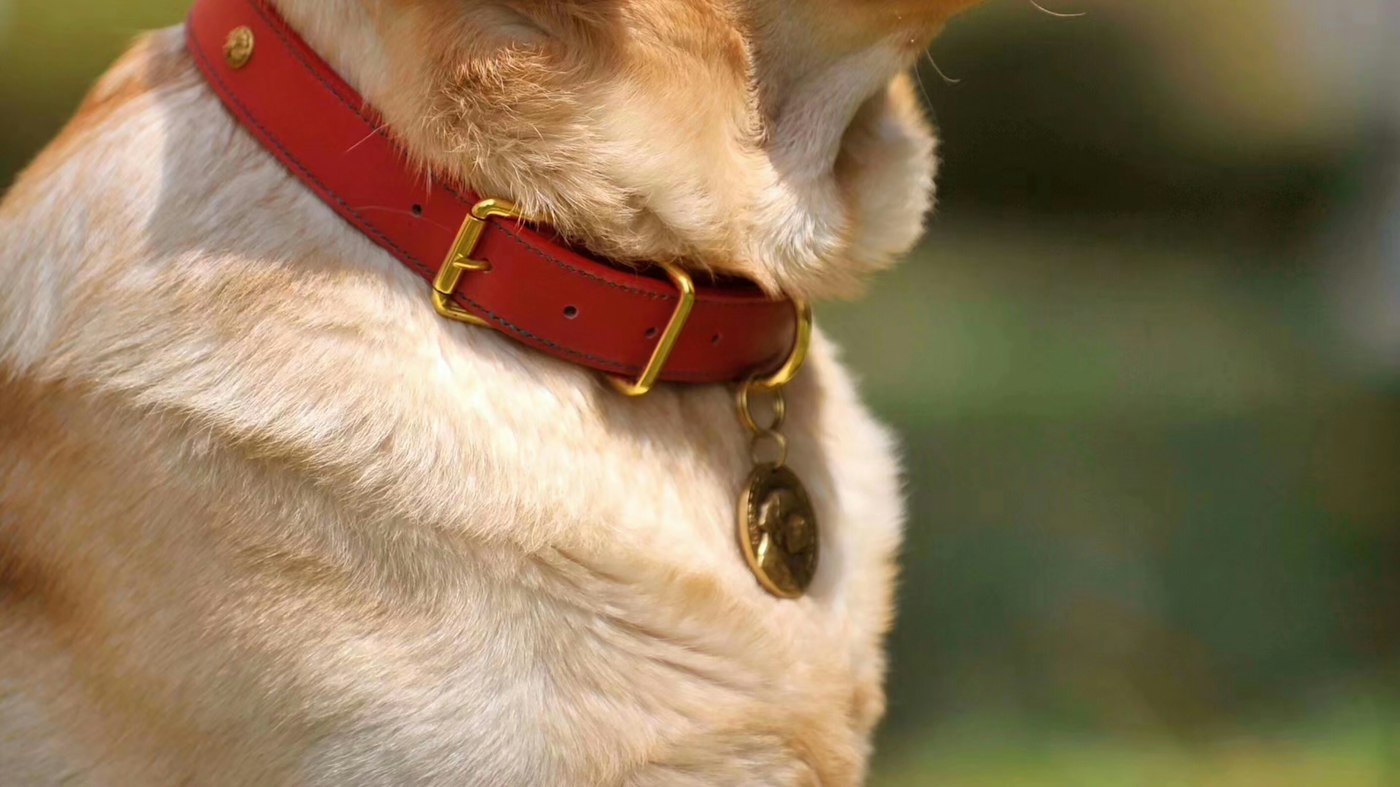
A well-fitted collar holds your dog’s ID tag and gives you a secure point to clip a leash. A poorly fitted one can slip over the head during a scare, or rub, chafe and dig in. Fit changes over time, too, as puppies grow, coats are clipped or grow out, and adult dogs gain or lose weight. Here is how to get it right and keep it that way.
How to measure your dog’s neck
Use a soft, flexible measuring tape. Wrap it around your dog’s neck where the collar will sit, usually the middle of the neck, not right behind the ears and not down at the base of the neck. Keep the tape snug but not tight. Then add room for comfort; many makers suggest adding about two inches for medium and large dogs, and a little less for very small dogs, but check each brand’s sizing advice.
If you do not have a soft tape, wrap a piece of string around the neck, mark it, and measure the string against a ruler. You can also measure an existing collar that fits well, from where the buckle prong rests to the hole you use.
The two-finger rule
Once the collar is on, slide two flat fingers between the collar and your dog’s neck. They should fit comfortably without a lot of extra room. If you cannot fit two fingers, the collar is too tight. If you can fit your whole hand or easily twist the collar around, it is probably too loose. For very small dogs, one finger may be the better guide.
Also test whether the collar can slide over the head. Gently pull it forward toward the ears. If it slips off easily, it is too loose and could come off if your dog backs away on the leash.
Width and style
Wider collars spread pressure over more area and are often more comfortable for large, strong dogs. Narrow collars suit small dogs and puppies, for whom a heavy, wide collar can be uncomfortable. Dogs with long or curly coats may develop mats under the collar, so regular brushing in that area helps.
Check the fit regularly
- Puppies: check weekly. Puppies can outgrow a collar remarkably fast, and a collar that is too tight can become embedded in the skin.
- After grooming: a fresh trim can make a collar suddenly loose, while a grown-out coat can make it snug.
- With weight changes: recheck if your dog gains or loses weight.
- When wet: some materials stretch or shrink when wet, so check after rainy walks.
While you are checking fit, look at the skin under the collar for redness, hair loss or sores, and check the collar for fraying and worn hardware. If you notice irritation, take the collar off and talk to your veterinarian. PUPWEAR makes collars for dogs, and every collar, whatever the brand, depends on a good fit to do its job.












