

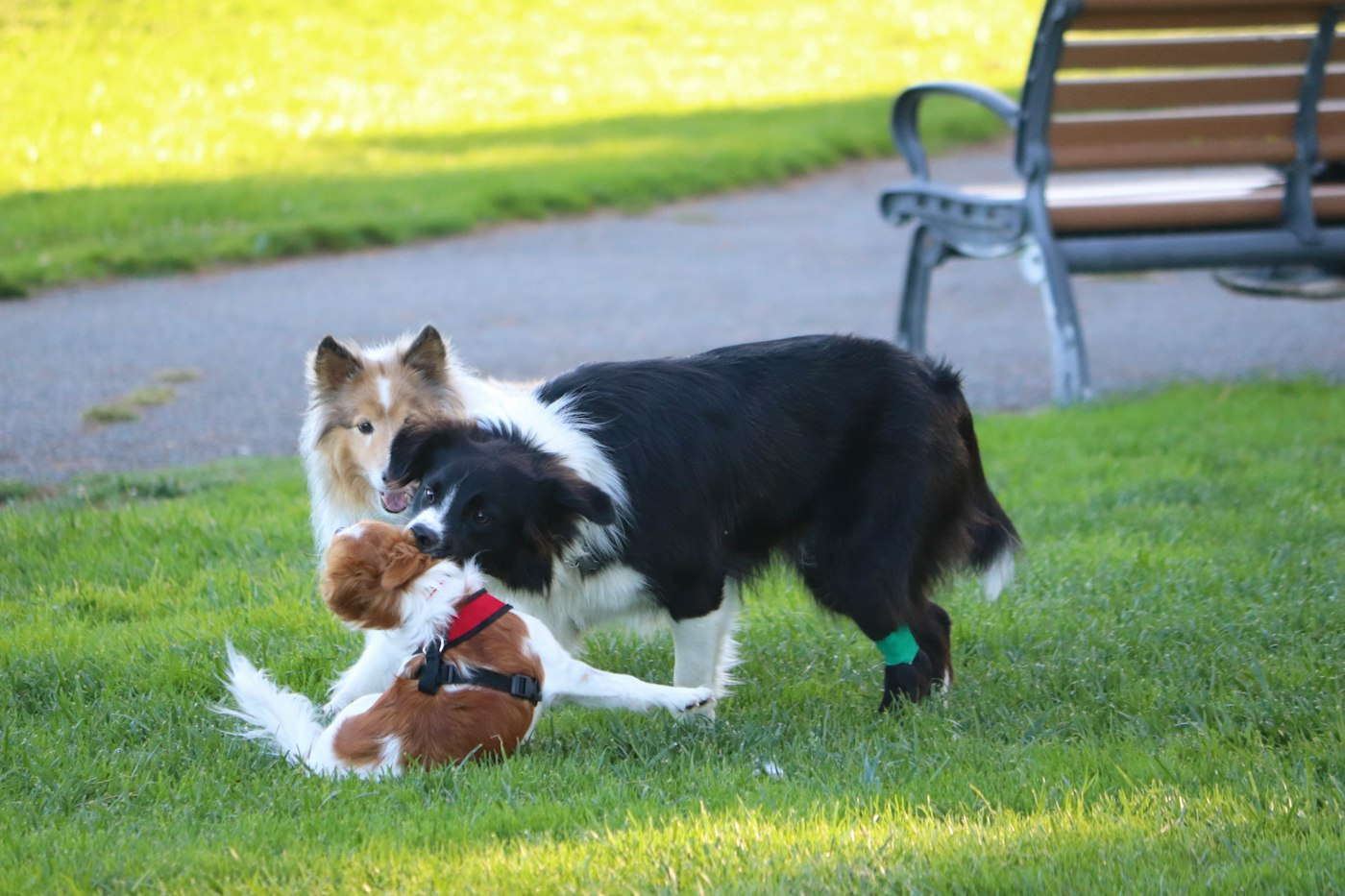
Dogs at play can look chaotic: chasing, wrestling, growling, mouthing. Much of it is perfectly healthy. But play can also tip into fear or conflict, sometimes quickly. Learning to read body language helps you enjoy watching your dog play and know when to step in. Spring brings more meetups at parks and in backyards, so it is a good time to sharpen your eye.
Signs of healthy play
Healthy play tends to look loose, bouncy and a little silly. Common signs include:
- Play bows: front end down, rear end up, often used to invite or restart play.
- Loose, wiggly bodies with curved, relaxed movements rather than stiff, straight lines.
- Open, relaxed mouths, sometimes called a play face.
- Exaggerated, inefficient movements, like bouncing, flopping over or running in a silly way.
- Role reversals: dogs take turns chasing and being chased, or being on top and on the bottom during wrestling.
- Self-handicapping: a bigger or stronger dog holds back, lies down or lets a smaller dog “win.”
- Frequent pauses: dogs take short breaks, shake off, sniff the ground, then return to play.
Play growls and noisy wrestling can be normal when the rest of the body is loose and both dogs keep coming back for more.
Signs that play needs a break
Watch for changes that suggest one dog is no longer enjoying it or that arousal is getting too high:
- Bodies becoming stiff, tense or still
- One dog repeatedly trying to get away, hide or stay close to their owner
- Chasing that is always one-directional, especially with several dogs chasing one
- Pinning that does not switch, or one dog standing over another for long periods
- Hard stares, raised hackles together with stiff movement, lips pulled tight, or growls that sound different from play
- Play getting faster and rougher without pauses
The consent test
If you are not sure whether both dogs are enjoying play, many trainers suggest a simple check. Gently separate the dogs, holding the one who seems to be doing more of the chasing or pinning. Then watch the other dog. If they come right back to keep playing, the play was probably mutual. If they move away or stay close to their owner, they likely wanted a break.
Stress signals to know
Dogs also show subtle signs of discomfort, sometimes called calming or stress signals. These include lip licking, yawning, turning the head away, showing the whites of the eyes, a tucked tail, ears pinned back and sniffing the ground in the middle of an interaction. One signal on its own may not mean much, but several together suggest a dog is uneasy. Giving the dog space or ending the session early is a kind response.
If your dog often seems stressed or reactive around other dogs, a qualified trainer or veterinary behaviorist can help. And if your dog suddenly avoids play they once enjoyed, a check-up with your veterinarian can rule out pain.












