

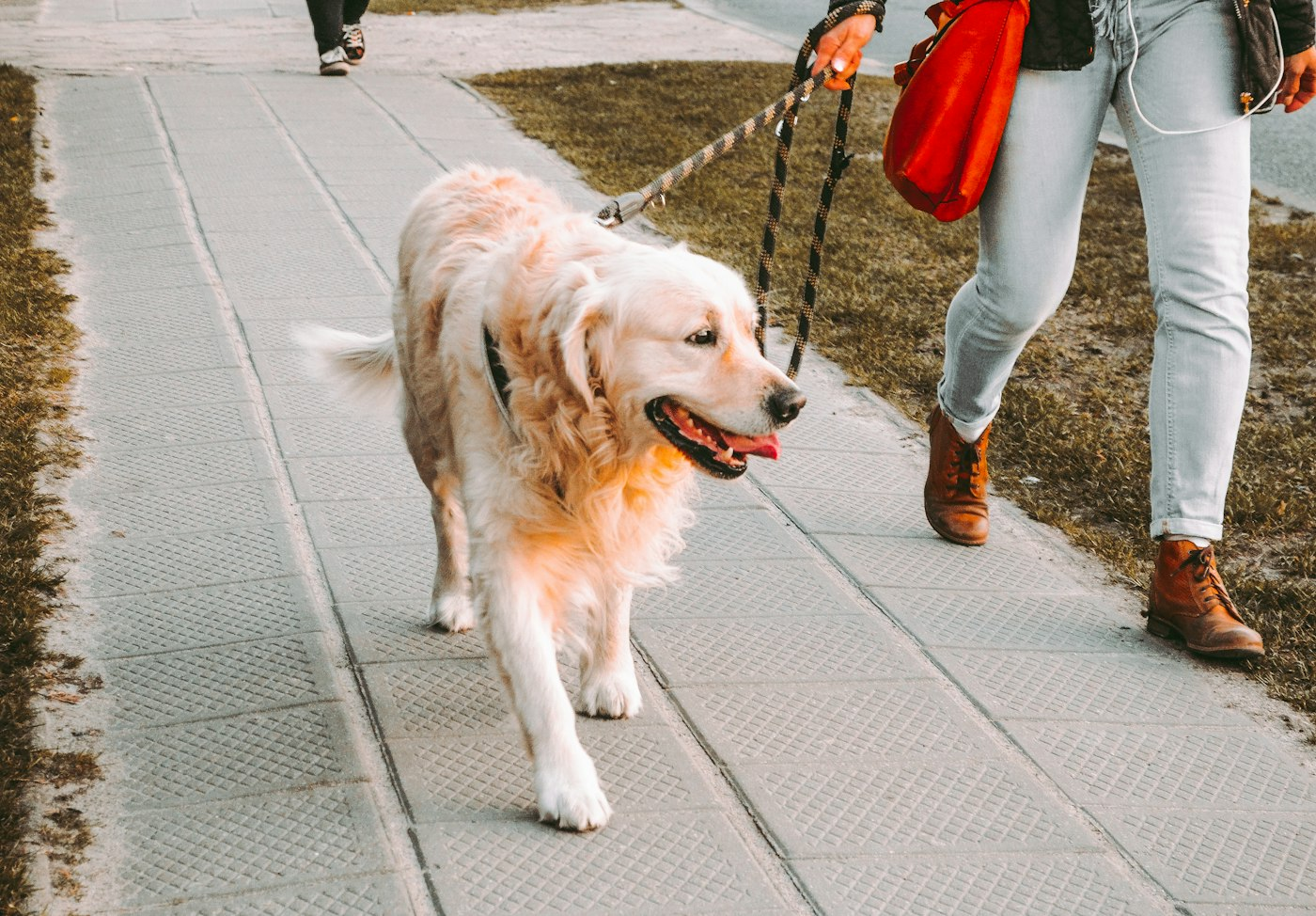
Spring is prime walking season, and nothing takes the joy out of a walk like a dog towing you down the sidewalk. Loose-leash walking means your dog moves along with you while the leash hangs in a relaxed curve. It does not require a formal heel. It simply means no constant pulling. Most dogs can learn it with clear rewards and consistent practice.
Why dogs pull in the first place
Dogs naturally walk faster than people, and the world is full of interesting smells. When pulling gets them where they want to go, they learn that pulling works. Loose-leash training changes that equation: a slack leash earns rewards and progress, while a tight leash means the walk pauses.
Start somewhere boring
Begin indoors or in a quiet yard with few distractions. Hold the leash so it has some slack. Pick a side for your dog to walk on and keep your treats on that side.
- Take a step. If your dog is near you with a loose leash, mark it with a word like “yes” and give a treat right at your side.
- Take a few more steps and reward again.
- Reward often at first, every step or two, then gradually space rewards out.
- Deliver treats at the position you want, close to your leg, so your dog learns where the good things happen.
What to do when the leash goes tight
When your dog pulls, stop walking. Stand still and wait. Most dogs will eventually glance back or step toward you, which puts slack in the leash. The moment the leash loosens, mark it and either reward or start walking again. Forward movement itself is a reward.
Another approach is to turn and walk the other way when your dog pulls, rewarding them when they catch up beside you. Many trainers combine both methods. Whatever you choose, stay calm and consistent. Yanking or jerking the leash can cause pain or injury and can make some dogs more anxious and reactive.
Add distractions gradually
Once your dog walks well in a quiet place, move to slightly busier areas. Expect some backsliding when there is more to see and smell. Make it easier by rewarding more often and using higher-value treats. Short, successful sessions build skill faster than long, frustrating ones.
Let your dog sniff, too. Many trainers use a cue such as “go sniff” to release the dog to explore on a loose leash, then ask them to return to walking. Sniffing can become a reward for good leash manners.
Gear and expectations
A comfortable, well-fitted flat collar or harness and a standard leash of about four to six feet work well for training. Some dogs benefit from a front-clip harness, which can make pulling less effective. Choose equipment that does not cause pain.
Be patient. Loose-leash walking takes weeks or months of practice, especially for young or energetic dogs. If you are struggling, a qualified positive-reinforcement trainer can help. If your dog suddenly starts pulling or lagging when they used to walk well, check with your veterinarian, since discomfort can change how a dog moves.












