

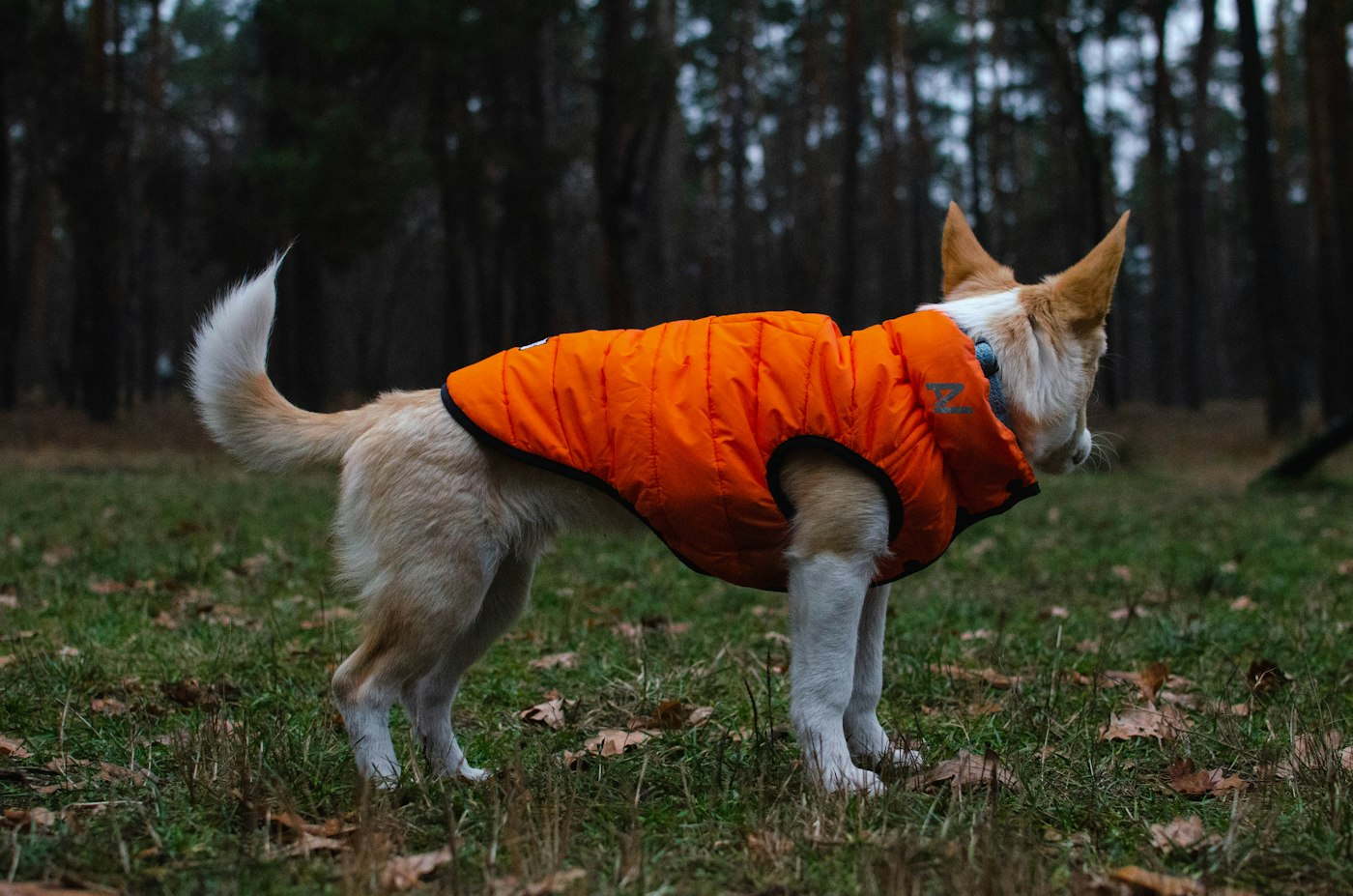
Once you have decided your dog would benefit from a raincoat, the next question is which one. Dog raincoats vary a lot in design, and the features that matter depend on your dog’s shape, coat and the kind of weather you walk in. Here is what to look at.
Waterproof or water-resistant?
These terms are not the same. Water-resistant fabrics shed light rain and drizzle but can soak through in a steady downpour. Waterproof fabrics are designed to keep water out for longer, often with a coating or membrane, and may have taped or sealed seams so water does not seep in at the stitching. If you walk in heavy rain, look for a truly waterproof shell. If you mostly face drizzle and short outings, water resistance may be enough.
Breathability matters too. A coat that traps all moisture can leave a dog damp from the inside on an active walk. Lightweight, breathable fabrics or mesh linings can help on milder spring days.
How much of the dog it covers
- Back-only coats cover the neck, back and sides. They are easy to put on and suit dogs who mainly need their topline kept dry.
- Belly coverage helps low-slung dogs and those with long or curly coats that collect water and mud underneath. Check that the panel leaves plenty of room for males to urinate without soiling the coat.
- Full-body or legged suits keep more of the coat clean but can be harder to put on, and some dogs find them restrictive.
- Hoods can keep rain off the head and ears, but some dogs dislike them, and a hood must never block vision or hearing.
Closures and leash access
Hook-and-loop strips, buckles, snaps and zippers all have tradeoffs. Hook-and-loop is quick but can collect fur and lose grip over time. Buckles are secure but add a little bulk. Zippers can catch fur, so look for a fabric guard. Many raincoats include an opening so you can clip the leash to a harness or collar underneath. Make sure the opening lines up with your dog’s gear.
Visibility
Rainy days are often dark days, and drivers have a harder time seeing a dog in wet, gray conditions. Bright colors and reflective trim can make a big difference, especially on early morning and evening walks.
Getting the fit right
Measure your dog before you buy. Common measurements include the neck, the widest part of the chest just behind the front legs, and the back length from the base of the neck to the base of the tail. Size charts differ between makers, so compare your numbers to each specific chart.
A well-fitting raincoat lets your dog walk, sit, lie down, sniff and relieve themselves comfortably. It should not rub under the front legs, gape open at the neck or slide sideways. Check for chafing after the first few walks, especially in the armpits.
PUPWEAR makes jackets for dogs, and the same principle holds for any coat: the best features are the ones that match your dog’s body and your weather.












