

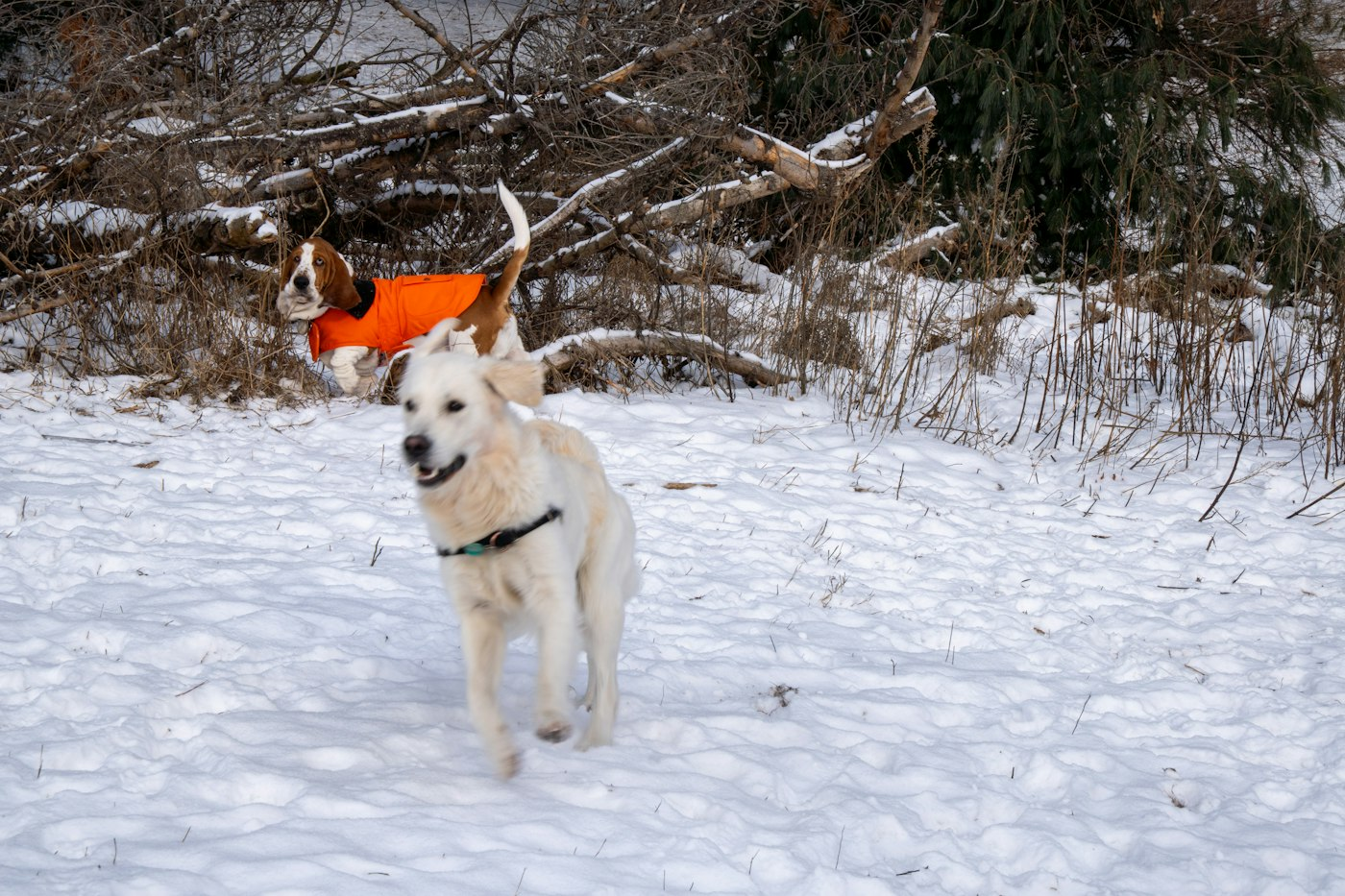
By the end of winter, many households notice the same thing: a dog who seems to have more energy than the house can hold. Short, cold walks and early sunsets can leave dogs under-exercised and under-stimulated. The result may be zoomies, chewing, barking at every sound or pestering for attention. The good news is that the coming spring offers more chances to burn energy, and a few changes now can help bridge the gap.
Why dogs get restless
Dogs need both physical exercise and mental stimulation. Working and sporting breeds, young dogs and doodles with energetic parent breeds often need a lot of both. When winter weather shortens outdoor time, that need does not go away. Boredom can show up as unwanted behaviors that are really a dog’s way of finding something to do.
A sudden change in energy or behavior can also have a medical cause. If your dog seems unusually agitated, is not sleeping well, or shows other changes in appetite or habits, check in with your veterinarian.
Add mental work to physical exercise
Mental effort can tire a dog surprisingly well. A few minutes of training or problem solving can take the edge off on days when a long walk is not possible.
- Short training sessions of five to ten minutes, a few times a day
- Food puzzles and slow feeders instead of a plain bowl
- Scatter feeding or hiding treats around a room for your dog to find
- Learning the names of toys and fetching them by name
- Practicing calm behaviors, such as settling on a mat
Make the most of milder days
As temperatures rise, look for chances to lengthen walks gradually. If your dog has been less active all winter, avoid jumping straight to long hikes or hours of fetch. Build up over a few weeks, just as you would for yourself. Watch for limping, stiffness or soreness the next day, and ease back if you see them.
Sniffing is enriching too. Letting your dog explore and sniff on a walk, rather than marching at a steady pace, gives their brain a workout. A slower, sniff-focused walk can leave many dogs more relaxed than a fast one.
Reward calm, not just activity
It is tempting to try to wear a restless dog out with more and more activity. Some dogs, though, become more wound up the more they do. Teaching and rewarding calm behavior matters just as much. Give your dog a comfortable resting spot, reward them for lying quietly, and build predictable quiet times into the day.
Plan for spring
Use these last weeks of winter to sharpen skills you will want outdoors in spring, like coming when called, walking on a loose leash and waiting at doors. A dog who has practiced indoors will be better prepared when the days get longer and the world gets more interesting. If restlessness turns into behavior you cannot manage, a qualified trainer can help you build a plan.












