

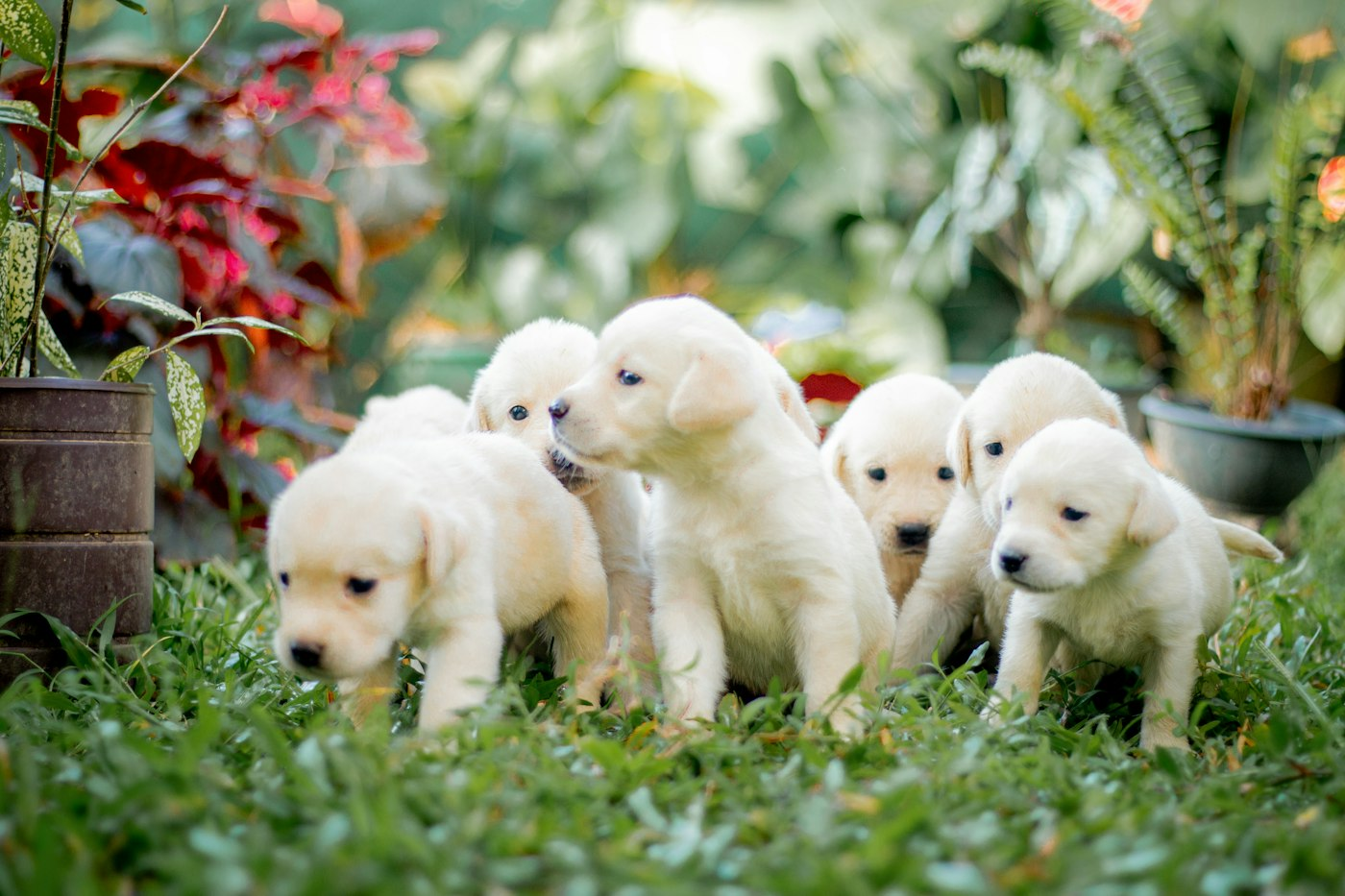
If you are bringing a puppy home this spring, you may hear people talk about the socialization window. It refers to a period early in a puppy’s life when they are especially open to new experiences. What a puppy encounters during these weeks can have a lasting effect on how comfortable they feel around people, other animals, sounds and places as an adult dog.
What the socialization period is
Behavior researchers have long described a sensitive period in puppies, generally starting at around three weeks of age and lasting until somewhere around twelve to fourteen weeks. The exact timing varies by individual and breed. During this time, puppies tend to approach new things with curiosity. As the window closes, they naturally become more cautious about things they have not encountered before.
That is why breeders and early caregivers play an important role, and why the first weeks in a new home matter so much. Socialization does not stop at fourteen weeks, but the early period is a special opportunity. A puppy who meets the world gently and often during these weeks has a head start on becoming a relaxed, adaptable adult dog. A puppy who meets very little may find ordinary things, like a stranger at the door or the rumble of a truck, harder to cope with later.
What good socialization looks like
Socialization is not about overwhelming a puppy with as much as possible. It is about positive, gentle exposure to a wide range of everyday experiences, at a pace the puppy can handle.
- Meeting calm people of different ages, sizes and appearances
- Hearing household sounds such as the vacuum, doorbell, dishwasher and traffic
- Walking on different surfaces like grass, tile, carpet, gravel and wet pavement
- Being handled gently on the paws, ears and mouth
- Riding in the car for short, pleasant trips
- Seeing umbrellas, bikes, strollers and people wearing hats or raincoats
Pair new experiences with treats and praise, and let your puppy observe from a distance before getting closer. If your puppy hides, trembles or tries to escape, back off and try again more gradually another day.
Balancing socialization and health
Young puppies are still completing their vaccination series, so many owners wonder how to socialize safely. Many veterinary behavior experts encourage early socialization in controlled settings, such as well-run puppy classes that require vaccination records and clean facilities, while avoiding places where many unknown dogs gather, like dog parks. Ask your veterinarian how to balance socialization with your puppy’s vaccine schedule and the disease risks in your area.
Keep going after the window closes
Socialization is an ongoing process. A puppy who had good early experiences still benefits from regular, positive exposure to new things throughout adolescence and adulthood. If your puppy seems very fearful, or you have adopted an older puppy who missed early experiences, a qualified trainer or veterinary behaviorist can help you build confidence step by step.












