

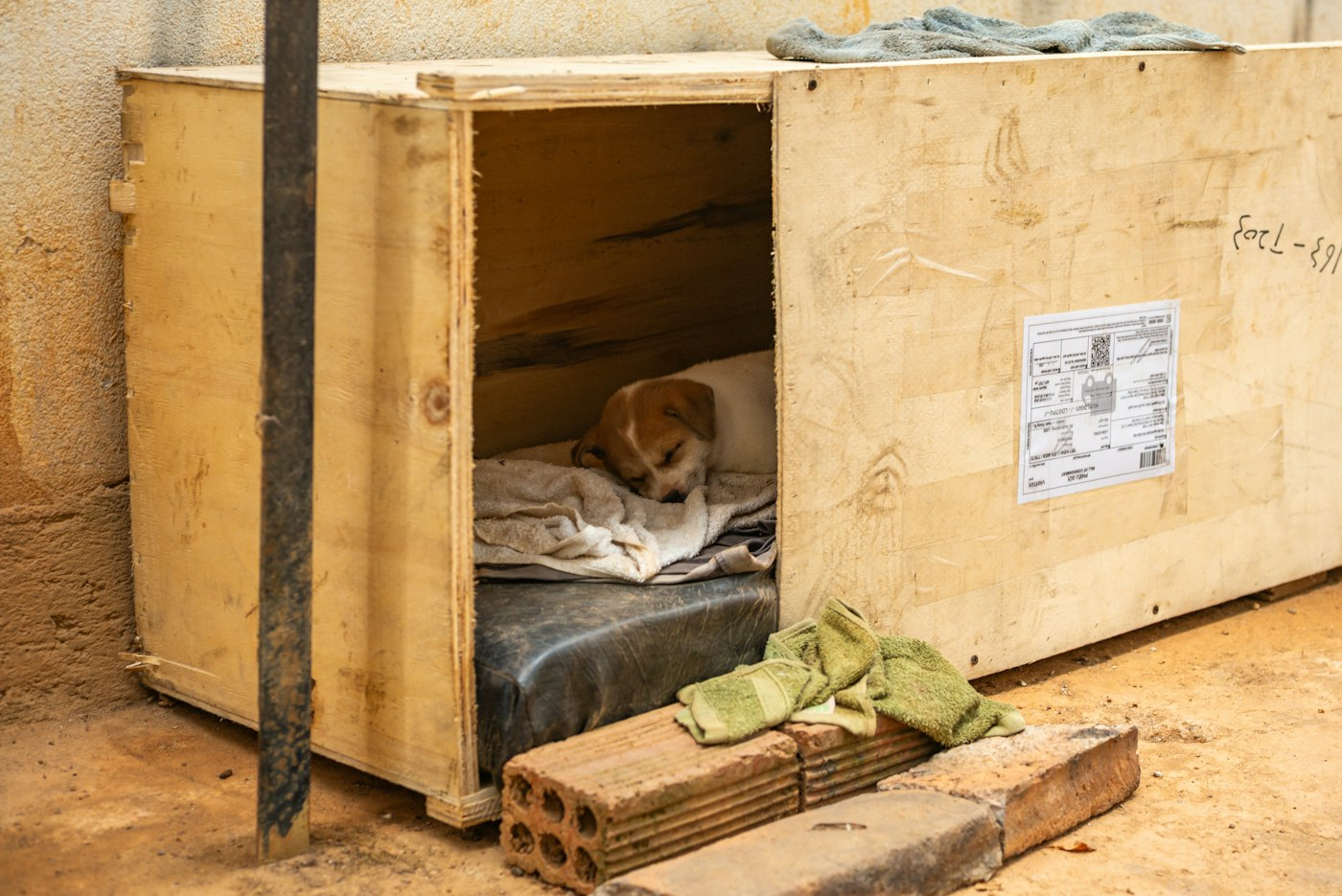
Used well, a crate gives a dog a quiet, secure spot of their own and gives you a safe place for them when you cannot supervise. It can also help with house training, since many dogs avoid soiling the area where they rest. The key is to build the crate up as a pleasant place, never as a punishment. Here is a gradual approach that works for many puppies and adult dogs.
Choose the right crate and spot
The crate should be large enough for your dog to stand up, turn around and lie down comfortably. For a puppy who will grow, many crates come with a divider so you can adjust the space as they get bigger. Too much room can make house training harder.
Place the crate in a part of the home where the family spends time, such as the living room, rather than a far-off room. Dogs are social, and being near you helps them settle. Add a soft bed or blanket if your dog does not chew it.
Introduce it slowly
Leave the crate door open and let your dog explore at their own pace. Toss a few treats inside, near the door at first, then farther in. Praise any interest. Some dogs walk right in; others need several sessions before they will step all the way inside.
- Feed meals inside or near the crate.
- Offer a long-lasting chew that only appears in the crate.
- Keep the door open during these early sessions.
Start closing the door for short periods
Once your dog goes in willingly, close the door for a few seconds while they eat or chew, then open it before they become upset. Gradually extend the time. Sit nearby at first, then step out of sight briefly and return. Build up minutes at a time rather than jumping to long stretches.
Try to let your dog out when they are calm rather than while they are whining or scratching, so they learn that quiet behavior opens the door. If your dog is in real distress, though, let them out and make the next step easier.
Work up to longer stays
When your dog can rest calmly in the crate with you in another room, practice short absences from the house. Make departures and returns low-key. Puppies cannot hold their bladder for long, so plan frequent bathroom breaks and talk to your veterinarian or a trainer about reasonable crate times for your dog’s age.
Crate training an adult or rescue dog
The same steps apply to adult dogs, though some move faster and some need more time, especially if they have had bad experiences with confinement. Watch for signs of anxiety, such as drooling, heavy panting, trying to break out, or damage to the crate. Those can be signs of separation anxiety or confinement stress, and they deserve attention from your veterinarian or a qualified trainer or behavior professional.
A few ground rules apply to every dog:
- Never use the crate as punishment.
- Remove collars with dangling tags while your dog is crated, so nothing can catch on the wire.
- Give plenty of exercise and attention outside the crate.
- Avoid leaving a dog crated for longer than they can comfortably manage.












