

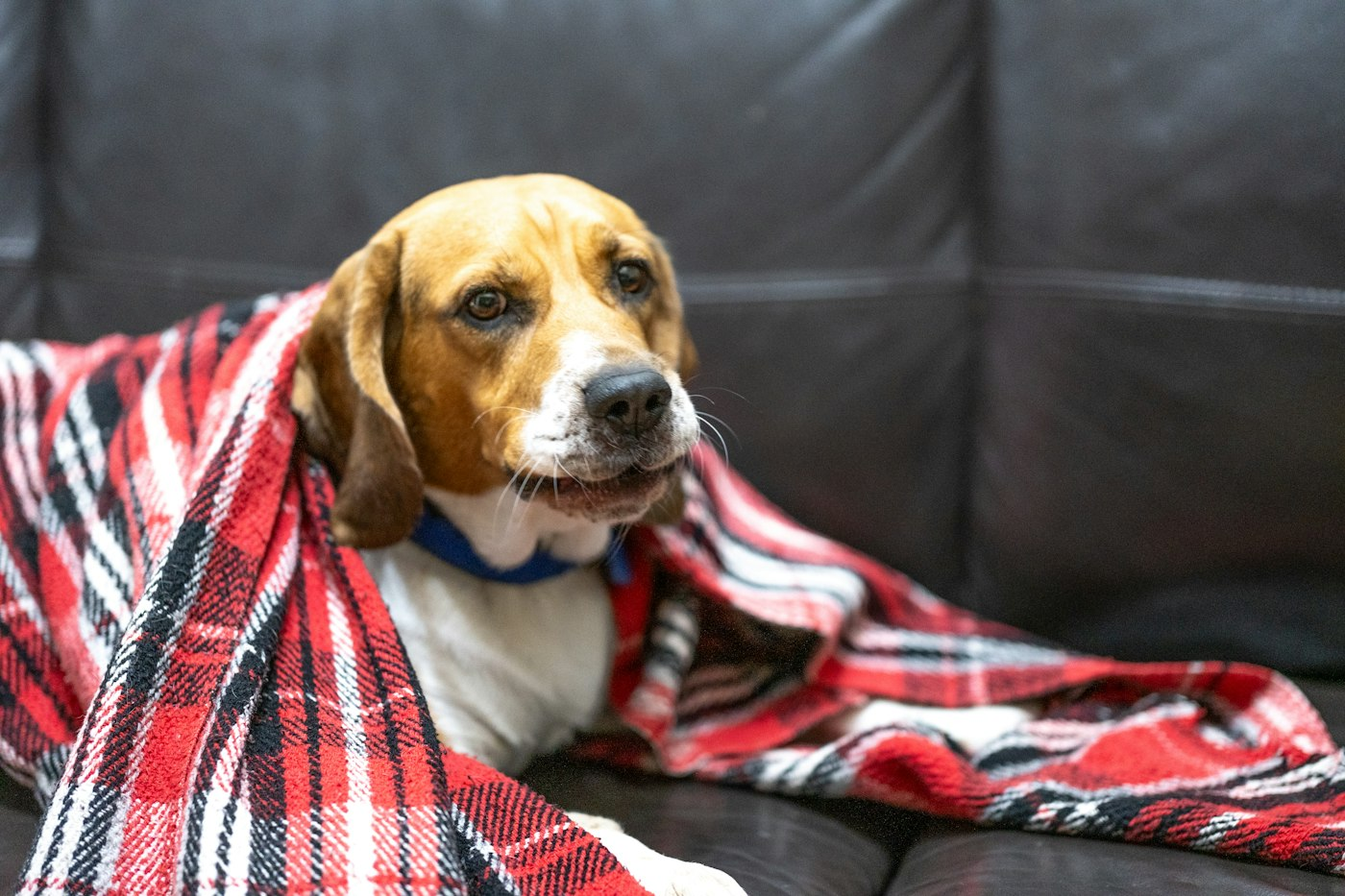
In winter, many homes have warm spots and cold spots. Rooms near entry doors, large windows and uninsulated walls can feel noticeably cooler, and floors are often the chilliest surface in the house. Dogs spend much of their day resting, so where their bed sits can make a real difference to their comfort. A little thought about placement can help your dog rest better all season.
Get off the cold floor
Tile, stone, concrete and even hardwood floors can feel cold in winter, especially in basements and on ground floors. A bed with a thick base or one raised slightly off the floor puts space between your dog and the cold surface. Cushioned or orthopedic beds can be especially welcome for older dogs and those with stiff joints. Many small dogs and short-coated dogs also enjoy a blanket they can burrow under.
Avoid drafts
Drafts often come from exterior doors, windows, fireplaces, vents and gaps in older houses. To find a good spot:
- Move the bed away from entry doors that open frequently
- Keep it away from windows that feel cold to the touch
- Notice where your dog chooses to lie on their own, which is often a clue to comfort
- Try placing the bed against an interior wall
- Consider a covered crate or a bed with raised sides for draft protection
Not too close to the heat
It is natural to want to put a dog’s bed near a radiator, space heater, fireplace or wood stove, but these can pose risks. Dogs can get too hot, especially thick-coated dogs, or suffer burns from hot surfaces. Space heaters can tip over or catch fur and fabric. Fireplace sparks are a hazard. Keep beds a safe distance from heat sources, and keep space heaters in a spot your dog cannot knock over. The air near heaters is also very dry, which can be hard on skin and coat.
Warming products
Some owners use self-warming beds, which reflect a dog’s own body heat, or heated pads made for pets. If you use any heated product, choose one designed specifically for pets, follow the maker’s instructions closely and inspect it for damage. Watch cords carefully, since chewing on a cord is dangerous. Make sure your dog can move off the heat if they get too warm. Older dogs and dogs with limited mobility or reduced sensation may not move away from heat on their own, so check with your veterinarian before using heated products for them.
Comfort and routine
Many dogs like to rest near their people, so a winter bed in a room where the family spends time may get more use. Wash bedding regularly, especially after snowy or muddy days, and dry it thoroughly before putting it back. A spare blanket or bed lets you swap while one is in the wash. If your dog seems restless, cannot get comfortable or appears stiff after resting, mention it to your veterinarian. A warm, quiet spot to rest is one of the simplest comforts you can offer your dog in winter.












