

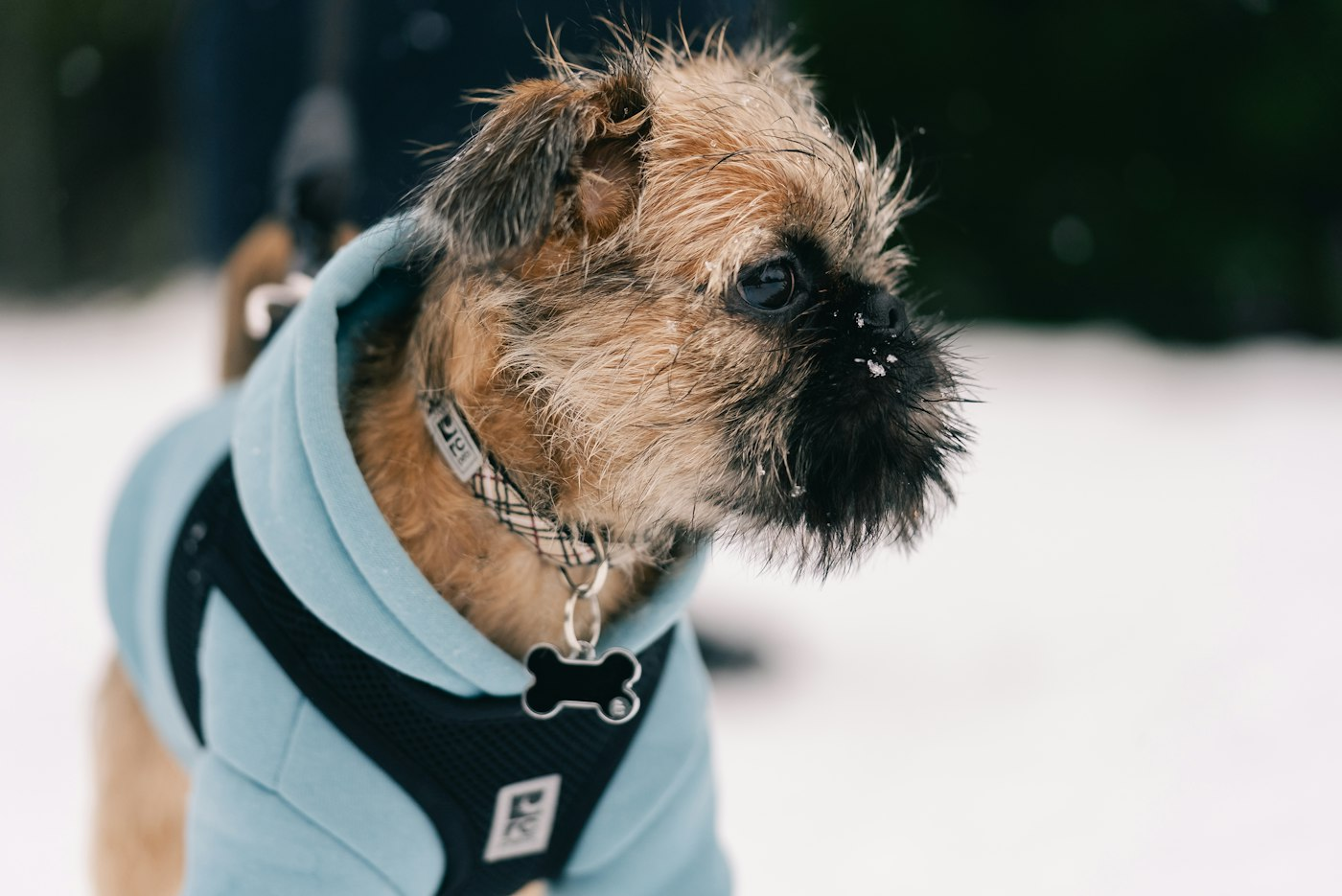
For a small dog, a modest snowfall can be a wall of white. Toy and small breeds face particular challenges in winter: they lose body heat more quickly, their bellies sit close to the cold ground and deep snow can be exhausting or even impossible to navigate. With some thoughtful adjustments, little dogs can stay comfortable and enjoy the season too.
Why small dogs get cold faster
Small dogs have more skin surface relative to their body mass, which means they lose heat faster than large dogs. Many small breeds, such as Chihuahuas, Italian Greyhounds, Miniature Pinschers and many toy breeds, also have thin coats and little body fat. Their short legs keep their bellies and chests in contact with snow and slush. Puppies, seniors and dogs with health conditions are even more vulnerable. Ask your veterinarian how much cold exposure is appropriate for your dog.
Make the outdoors manageable
- Shovel a path and a small bathroom area close to the door
- Keep outings short and frequent rather than long
- Walk on cleared paths when possible, while watching for salt
- Stay close to home on very cold or windy days
- Pick your dog up to cross deep drifts or icy patches if needed
A well-fitted jacket that covers the chest and belly can make a real difference for many small dogs. Booties or paw balm can help protect paws from cold and salt.
Gear that fits little bodies
Fit is especially important for small dogs, because even a little extra fabric can bunch, drag or get in the way. Measure carefully and check sizing charts for each product. Harnesses are often recommended for small breeds, particularly those prone to tracheal problems, since they reduce pressure on the neck. Ask your vet whether a harness suits your dog. Make sure the ID tag stays visible and is not so heavy that it bothers a tiny dog.
Safety around snow and ice
Small dogs can be hard to see in snow, especially at dusk. Use reflective gear and a light, and keep your dog on a leash near roads and driveways. Watch for hazards such as snow piles sliding off roofs, plowed banks along roads and frozen ponds. Small dogs can also be at risk from wildlife and large birds in some areas, so stay close and supervise yard time.
Indoor comfort and enrichment
Many small dogs are happy to spend more time indoors in winter. Give them a warm bed raised off cold floors and away from drafts. Blankets they can burrow into are popular with many small breeds. Because they may get less exercise in winter, use indoor games, food puzzles and training to keep them active and engaged, while watching food portions so they do not gain weight. Watch for shivering, lethargy or reluctance to go outside, and contact your veterinarian if you have concerns. Small dogs may need a bit more help in winter, but with the right setup they can be as comfortable as any big dog.












