

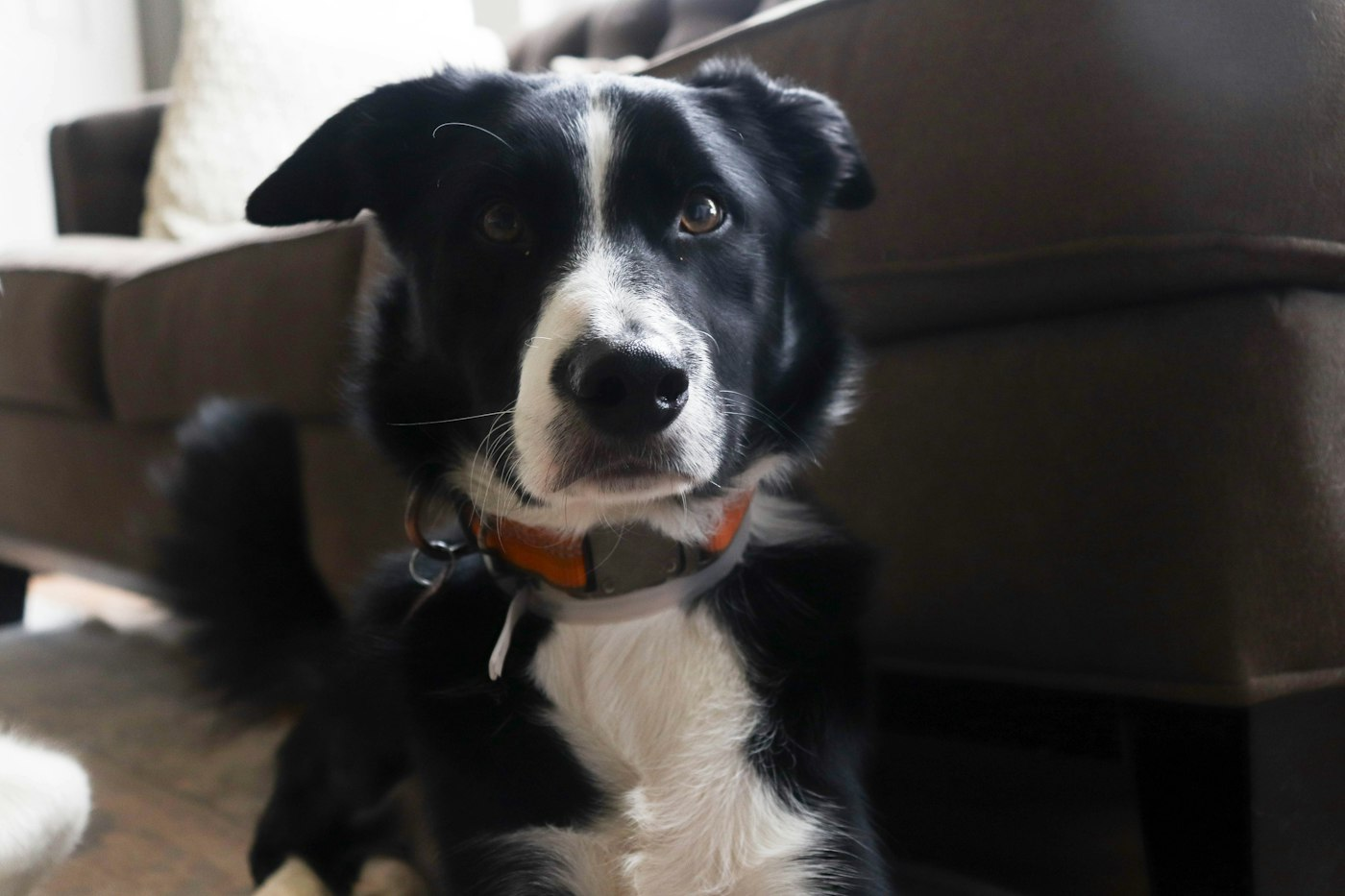
For many dogs, a new collar is a non-event. For others, it is a big deal. Some dogs freeze, scratch at their neck, shake repeatedly or seem upset by the jingle of a new tag. Sensitive, anxious or touch-averse dogs, as well as puppies wearing a collar for the first time, may need a little help. A slow, positive introduction can make the transition easier.
Why some dogs react
A collar is a new sensation around a sensitive area. Different materials, widths and weights can feel strange. Tags add sound and movement, and the clink of metal against a bowl or the floor can startle some dogs. Dogs who have had uncomfortable experiences with handling around the neck may be especially wary. The goal is to help your dog associate the new gear with good things.
Check fit first
Discomfort can look like a training problem. Make sure the collar fits properly: snug enough that it will not slip over your dog’s head, with enough room for two fingers underneath. A collar that is too tight can rub or press. One that is too loose can catch on things or swing around. Look for rough edges or stiff spots. Some dogs prefer lighter, softer materials or a narrower width.
A step-by-step introduction
- Let your dog sniff the collar, then reward
- Touch the collar to your dog’s neck briefly, then reward
- Place it around the neck without fastening, reward and remove
- Fasten it for a few seconds while offering treats, then remove
- Gradually increase the time it stays on, pairing it with meals, play or walks
Keep sessions short and stop before your dog shows signs of stress. If your dog scratches or shakes, distract them with a game or a treat puzzle rather than scolding.
Adding tags
If your dog is bothered by tag noise, there are options. Some owners use silicone tag silencers or pouches. Others choose tags that sit flat against the collar or attach directly to it. If you add multiple tags, like an ID tag, rabies tag and QR tag, consider how they hang together, since a cluster of tags makes more noise and movement. You can also introduce one tag at a time. Make sure any QR tag remains visible and scannable, and that your phone number stays easy to read.
When to get help
Most dogs adjust within days or a couple of weeks. If your dog continues to scratch or rub at the collar, look for redness, hair loss, bumps or sores underneath. Skin irritation, allergies or sensitivity to a material can be the cause, so talk to your veterinarian if you notice any of these. If your dog remains very fearful of having anything around the neck, a qualified trainer or veterinary behaviorist can help. A collar with ID is one of the most important things a dog can wear, so taking the time to help a sensitive dog accept it is well worth the effort.












