

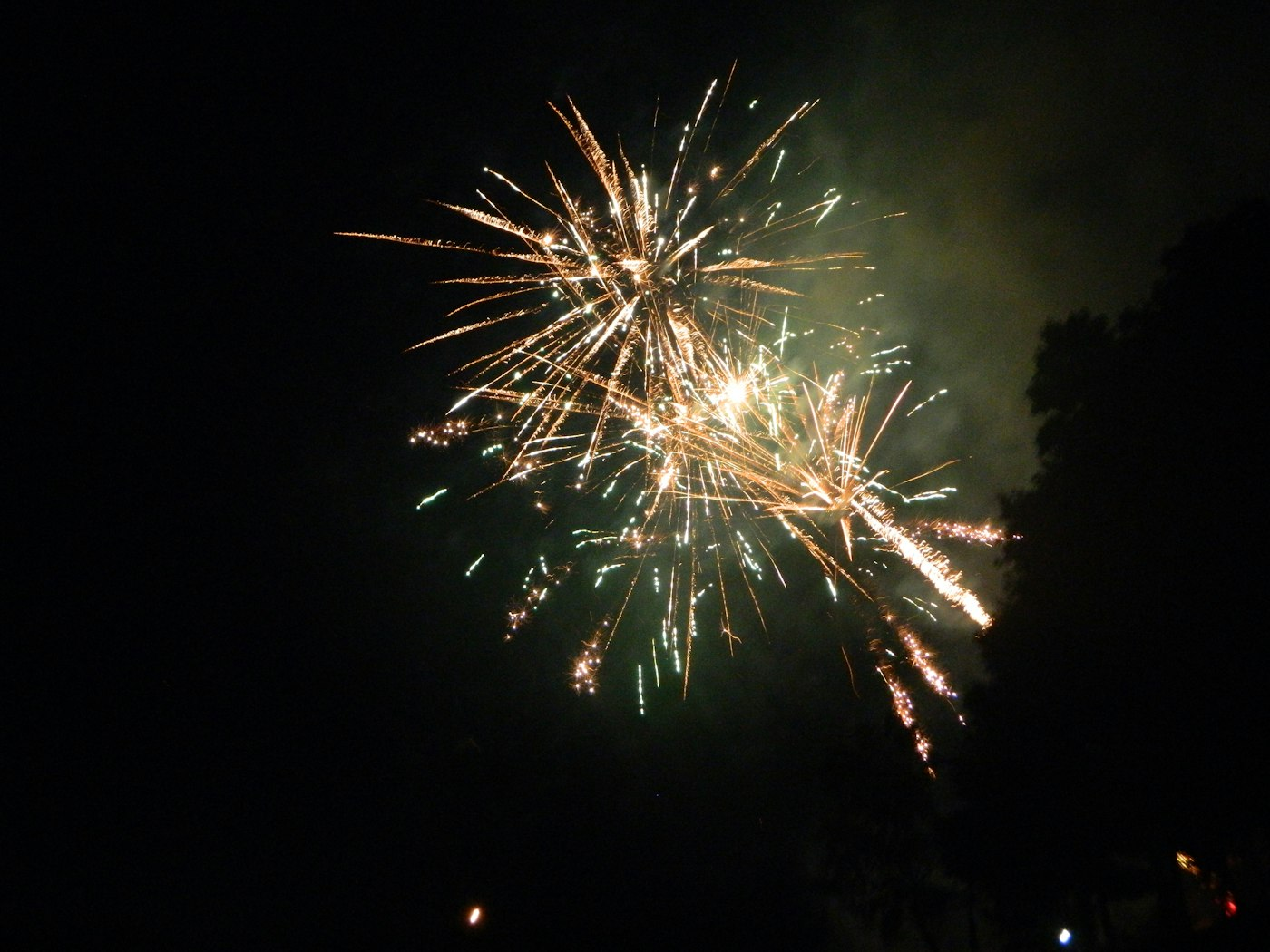
For many dogs, New Year’s Eve is the hardest night of the year. Sudden booms, flashes and crackling noises can leave dogs trembling, panting, hiding or trying to escape. If your dog struggled this year, January is actually a good time to start preparing for the next round of celebrations. With the noise fresh in your memory and months before the next big holiday, you have time to build a plan.
Why fireworks frighten dogs
Dogs hear a wider range of sounds than people do and can detect quieter sounds. Fireworks are loud, unpredictable and often happen at night, with no visible source a dog can understand. Some dogs also react to the vibration, smell and flashes. Fear of loud noises is common in dogs, and it can get worse over time without help. Signs include shaking, panting, pacing, drooling, hiding, clinging to people, barking, trying to escape and having accidents indoors.
Take notes while you remember
Write down what you saw this year. How did your dog react? When did the reaction start and how long did it last? Where did your dog try to hide? What seemed to help, and what made it worse? These notes will be valuable when you talk to your veterinarian and when you set up a plan for next time.
Talk to your veterinarian early
Your veterinarian can help you understand whether your dog’s fear is mild or more serious and discuss options. For some dogs, that might include behavior modification, products designed to reduce stress or, in some cases, medication. Some medications need to be tested ahead of time to see how a dog responds, which is another reason to start the conversation well before the next holiday. Your vet may also refer you to a veterinary behaviorist or a qualified trainer.
Building a safe space
Many anxious dogs feel better with a den-like retreat. Set it up now so it feels familiar long before the next noisy night:
- An interior room or a covered crate with the door open
- A comfortable bed and favorite toys
- Window coverings to block flashes
- Background sound such as a fan, soft music or white noise
- Chews or food puzzles your dog enjoys
Let your dog choose to go there, and never force them in or out.
Gradual sound work and escape prevention
Some trainers use a gradual approach called desensitization and counterconditioning, pairing very quiet recordings of firework sounds with treats and play, then raising the volume slowly over weeks. It must be done carefully, at a level that never frightens the dog, so working with a qualified professional is wise. Meanwhile, remember that dogs often bolt during fireworks. Check that your dog’s collar fits securely, that ID tags and any QR tag profile show your current number, and that the microchip registration is up to date. Keep dogs indoors during celebrations and on a leash for bathroom breaks. A plan made in January can make next year’s celebrations much calmer for your dog.












