

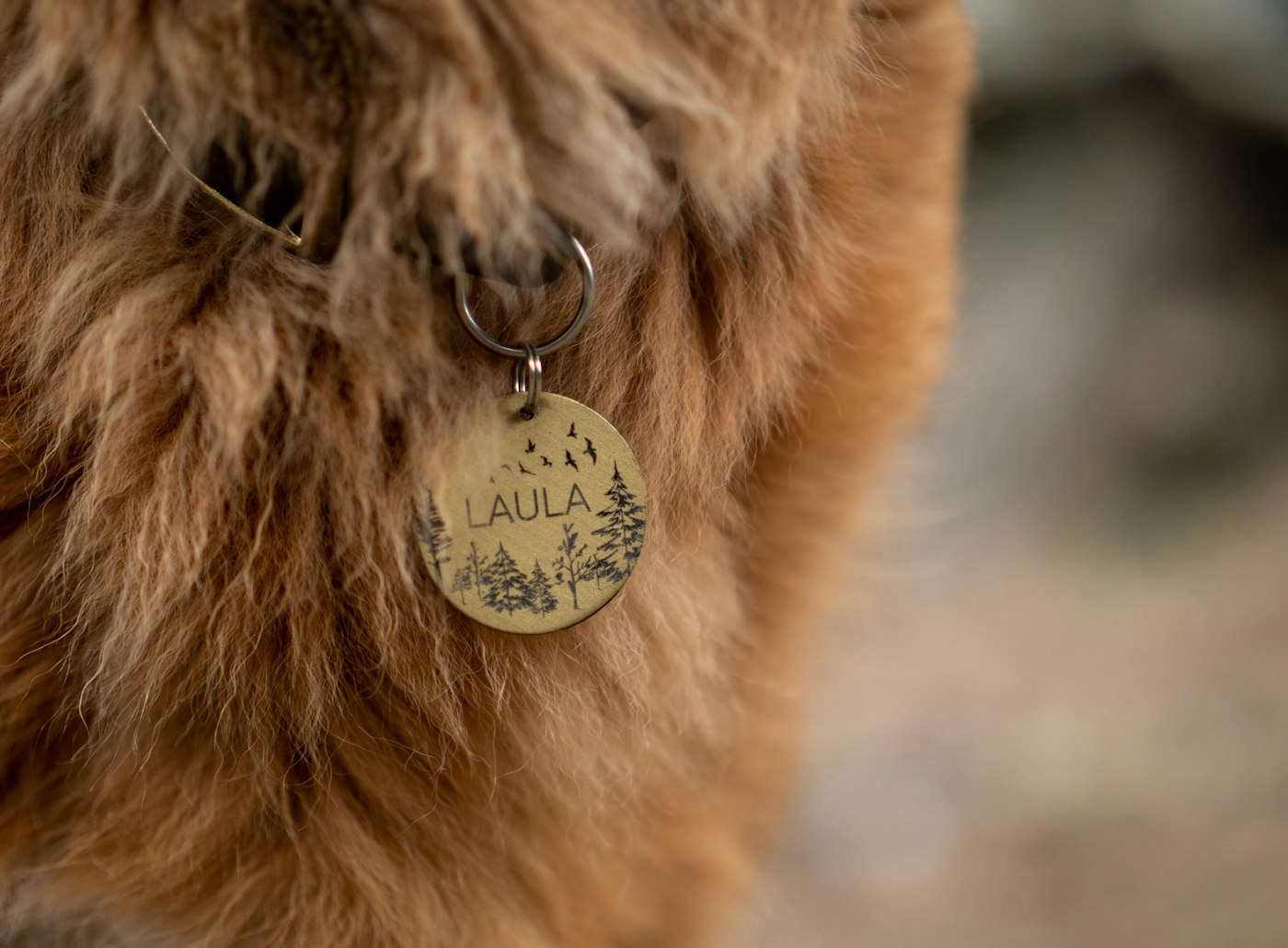
An ID tag is small, but it has an important job: helping the person who finds your dog reach you quickly. With only a few lines to work with, it is worth thinking carefully about what to include. Here is a practical approach to deciding what goes on the tag.
The essentials
If you only have room for one thing, make it your phone number. A finder’s first instinct is to call, and a phone number lets them do that immediately. If there is space, add a second number, such as a partner’s or a trusted family member’s, in case you cannot answer.
- Your phone number, including area code
- A second phone number, if space allows
- Your dog’s name, if you choose to include it
The name question
Some owners like having the dog’s name on the tag, since calling a dog by name can help a finder calm and approach them. Others prefer to leave it off, reasoning that a stranger who knows the name might more easily claim the dog. There is no single right answer. Think about your dog’s personality and your own comfort level.
Helpful extras
Depending on space and your dog’s needs, you might add a short note such as:
- I am microchipped
- Needs medication
- Deaf, or another condition a finder should know about
- Shy, please be gentle
- Your city or town
A microchip note can encourage a finder to take your dog to a vet or shelter for a scan if they cannot reach you. A medical note signals urgency. If your dog has significant medical needs, a QR tag that links to a fuller profile can hold more detail than engraving allows.
What to consider leaving off
Many owners choose not to put their full home address on a tag for privacy reasons. A town name or neighborhood can be enough to tell a finder your dog is local. You may also want to skip anything that changes often. The more stable the information, the longer the tag stays accurate.
Keep it readable
Small text crowded onto a tag can be hard to read, especially if the tag gets scratched. Prioritize the phone number in the clearest, largest text the tag allows. Check the tag every few months to make sure the engraving or print has not worn away, and replace it when it becomes hard to read. If you move or change your number, update the tag right away, along with your microchip registry and any QR profile. Some cities and counties require rabies or license tags to be worn as well, so check local rules. A tag takes only a minute to look at, and that minute can make the difference in how quickly your dog gets home.












