

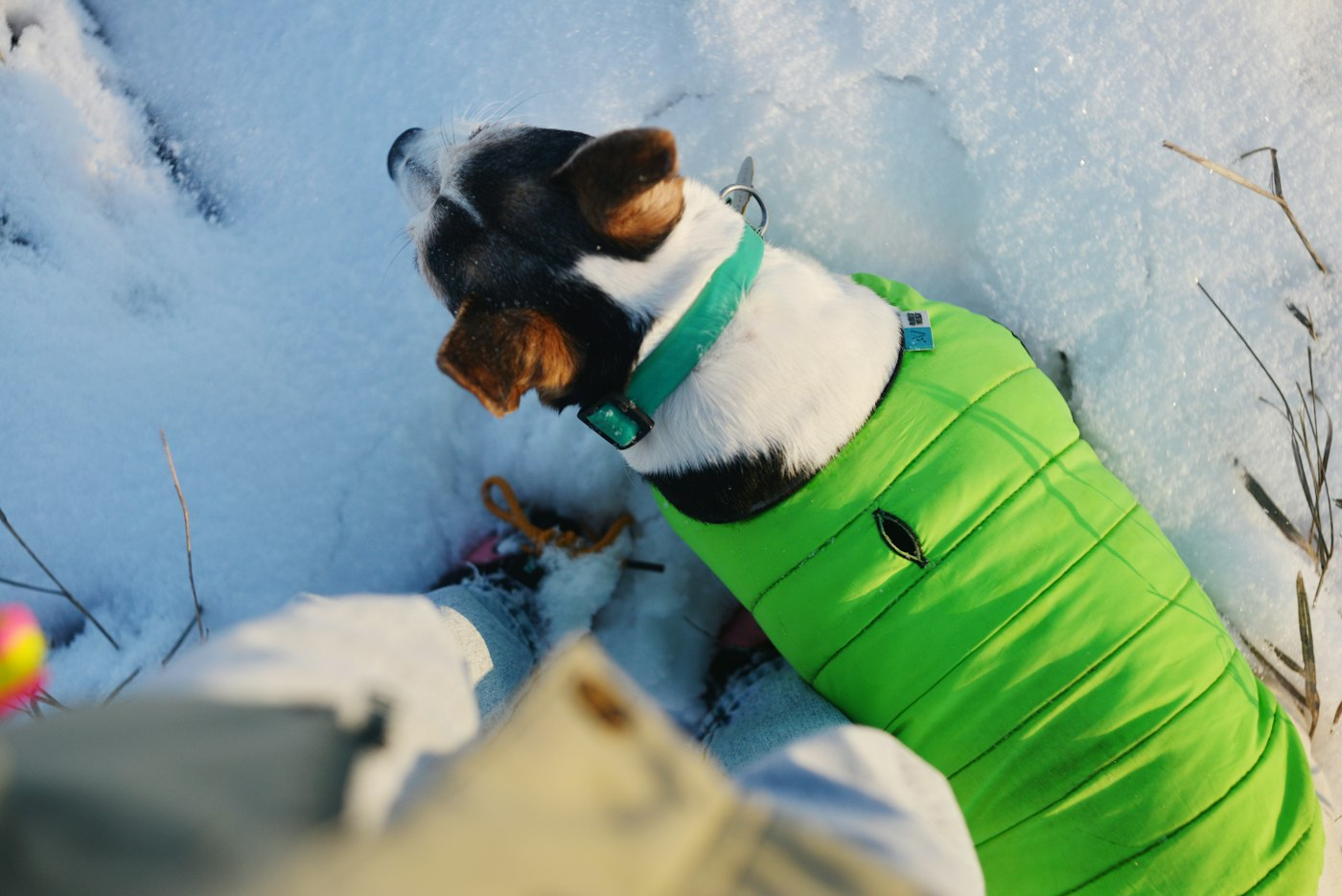
Measuring your dog gets you close, but the real test is how a jacket looks and feels once it is on. Before you head out into the cold, take a few minutes indoors to check the fit. A jacket that sits well stays in place, keeps your dog warm and lets them move naturally. One that does not can rub, slip or make your dog miserable.
Around the neck
The neck opening should be comfortable without gaping. You should be able to slide two fingers between the jacket and your dog’s neck. If it is tight, it can press on the throat, especially when your dog pulls or lowers the head to sniff. If it is very loose, cold air and snow will find their way in, and the jacket may slide backward.
Through the chest and belly
Look at the chest and belly coverage. The fastening, whether it is a strap, wrap or buckle, should lie flat and secure without squeezing. Check that the jacket does not shift sideways when your dog shakes. On male dogs, make sure the belly panel stops short of where it could get wet during bathroom breaks.
- Two fingers fit under straps and around the neck
- Fasteners close fully without straining
- The jacket stays centered after a good shake
- No fabric bunches behind the front legs
Legs and shoulders
Watch your dog walk, trot and sit. The front leg openings or edges should not rub the armpits, which is a common spot for chafing. Your dog’s shoulders should move freely, with a normal stride. If your dog walks stiffly, takes short steps or keeps stopping, the jacket may be restricting movement, or your dog may simply need time to adjust.
Back length and tail
The jacket should usually end near the base of the tail. Too short and the lower back is exposed. Too long and it can interfere with the tail or get soiled. Have your dog sit and lie down to see whether the back edge pushes up awkwardly or the jacket rides forward over the neck.
Next, decide how you will attach the leash. Some jackets work over a harness, some under it, and some have an opening for a leash attachment. Make sure the leash clip can reach the ring easily without pulling the jacket out of place. If your dog wears a collar with an ID tag, confirm the tag is still visible or reachable, since that information matters most if your dog ever slips away.
The comfort test
Leave the jacket on indoors for a few short sessions with treats and praise before your first real walk. Afterward, check for red skin, rubbed fur or damp patches where moisture is trapped. On doodles and other long-coated dogs, look for early tangles where straps sit. A little adjustment now can prevent mats and sore spots later. If you notice skin irritation that does not settle quickly, check with your veterinarian. A good fit is something your dog should barely notice, which is exactly the point.












