

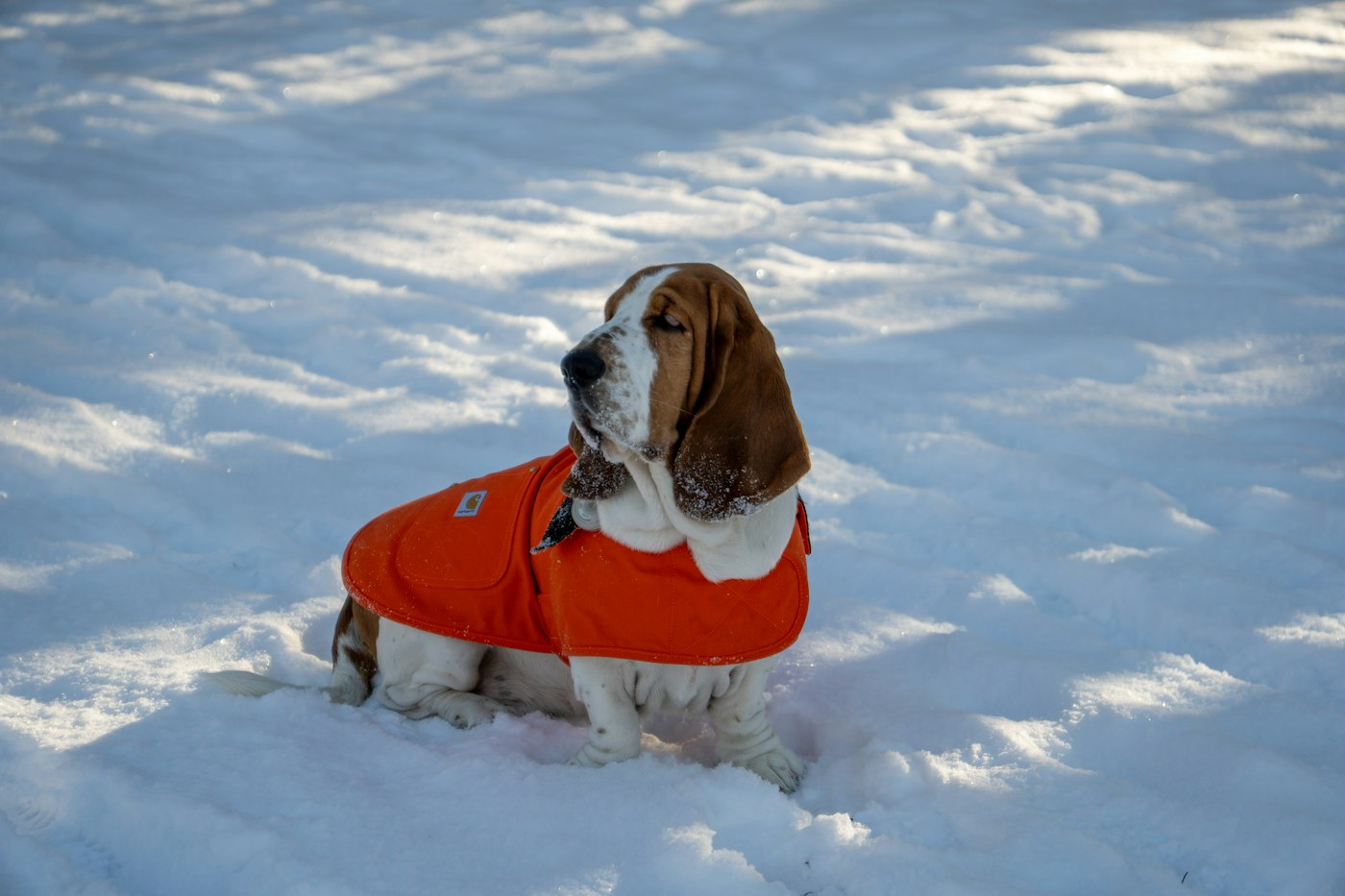
Every winter, dog owners stand at the door with the same question: does my dog actually need a coat, or is that just for us? The honest answer is that it depends on the dog. Fur, body size, age and health all change how well a dog handles cold air, wind and wet snow. Thinking through a few factors will help you make a sensible call for your own dog.
Start with the coat your dog already has
Breeds developed for cold climates, such as Siberian Huskies, Alaskan Malamutes, Bernese Mountain Dogs and Newfoundlands, usually carry a dense double coat: a soft, insulating undercoat beneath longer guard hairs that shed snow and water. Many of these dogs are comfortable in weather that would chill a person, and a jacket can make some of them too warm.
Dogs with short, single coats are a different story. Greyhounds, Whippets, Boxers, Dobermans, Chihuahuas and many terrier mixes have little insulation and often feel the cold quickly. Doodles and Poodles fall somewhere in between. Their curly or wavy coats can be warm when dry, but they tend to hold snow and moisture, and a damp coat insulates far less than a dry one.
Size and body shape matter
Small dogs lose heat faster than large dogs because they have more skin surface relative to their body mass. Toy breeds also sit closer to the ground, which means their bellies brush through snow and slush on every walk. Lean, deep-chested dogs with little body fat can feel the chill even if they are medium or large. A heavier, well-insulated dog will generally cope better than a slim one of the same height.
Age and health change the picture
Puppies have not fully developed their ability to regulate body temperature, and senior dogs often lose some of it. Older dogs may also have arthritis or stiff joints that feel worse in the cold. Dogs with certain health conditions, including some hormonal and heart conditions, may be less tolerant of low temperatures. If your dog is very young, elderly or managing a medical issue, talk to your veterinarian about how much cold exposure is appropriate and whether added warmth would help.
Watch the weather, not just the thermometer
Temperature is only part of it. Wind pulls heat away from the body, and wet snow or freezing rain soaks fur and skin. A dry, still day at a given temperature can feel very different from a windy, sleety one at the same reading. Time matters too. A quick trip to the yard is not the same as a long walk through the neighborhood.
- Is your dog short-coated, small, lean, very young or senior?
- Will you be out in wind, wet snow or freezing rain?
- Will the walk be longer than a few minutes?
- Does your dog lift paws, hunch or shiver soon after going outside?
If you answered yes to a few of these, a well-fitted coat is worth considering.
Let your dog tell you
Behavior is often the clearest signal. Shivering, a tucked tail, a hunched posture, slowing down or trying to turn back home all suggest your dog is uncomfortable. On the other hand, panting, seeking shade or trying to wriggle out of a jacket may mean your dog is already warm enough. At PUPWEAR we make jackets for dogs, and we would still be the first to say that not every dog needs one. The right choice is the one that keeps your particular dog comfortable, dry and happy to keep walking.












